Sometimes a simple sentence carries more emotion than a long speech. One such phrase in English is “it meant a lot to me.”
People use it when something touches their heart, whether it’s kindness, support, or a meaningful moment. Instead of just saying thank you, this expression shows deeper gratitude and emotional connection.
In this article, we’ll explore its meaning, real-life usage, and why this phrase feels so powerful in everyday communication.
What Does “It Meant a Lot to Me” Mean?
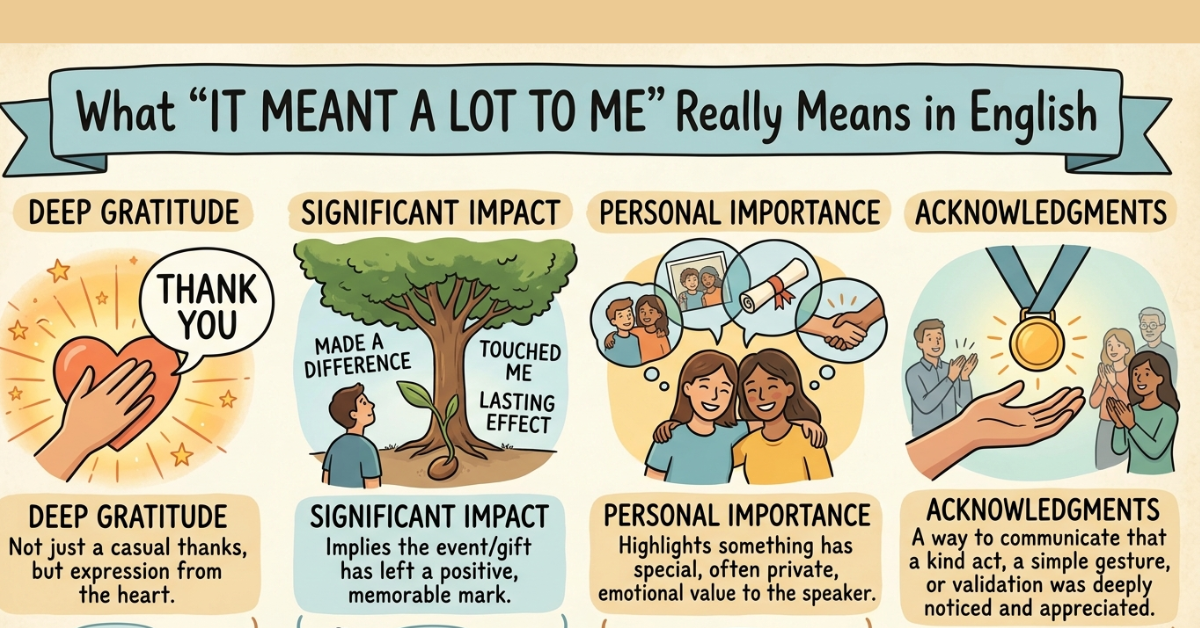
The phrase is used to express deep appreciation and emotional impact.
It means that something:
- Was emotionally important
- Had personal value
- Left a strong impression
In simple terms, it shows that an action or word affected you in a meaningful way.
For example:
- “Your support during my exams was really meaningful to me.”
Why People Use This Expression
This phrase is more than polite language—it reflects genuine feelings.
Common reasons include:
- Expressing heartfelt gratitude
- Acknowledging emotional support
- Strengthening relationships
- Showing sincerity in conversation
Unlike a simple “thank you,” this phrase adds emotional weight and honesty.
Real-Life Usage Examples
You’ll hear this expression in many everyday situations.
1. Friends & Family
- “Your advice helped me a lot. It really mattered to me.”
2. Work or Study
- “Your feedback on my project was very helpful and meaningful to me.”
3. Emotional Moments
- “Your presence during that difficult time meant so much.”
Alternative Ways to Express the Same Feeling
Instead of repeating the same phrase, you can also say:
- I truly appreciate it
- That really touched me
- I’m very grateful
- It was very meaningful
- I can’t thank you enough
These variations help your communication sound more natural and expressive.
Why This Phrase Feels So Powerful
What makes this expression special is its emotional honesty.
It works because:
- It feels personal
- It builds emotional connection
- It shows vulnerability
- It strengthens relationships
People remember sincerity more than perfect grammar.
Common Mistakes to Avoid
Even though it’s simple, avoid:
- Using it without real feeling
- Overusing it in casual chats
- Saying it in a robotic way
Use it only when you truly mean it—that’s where its strength comes from.
FAQs
1. What does this phrase actually mean?
It means something had emotional importance or personal impact on you.
2. Is it formal or informal?
It is neutral and can be used in both casual and professional settings.
3. Can I replace it with “that meant a lot to me”?
Yes, both are correct and commonly used.
4. When should I use it?
Use it when you want to express genuine gratitude or emotional appreciation.
5. Is it overused in English?
It can be, but when used sincerely, it still feels powerful and meaningful.
Conclusion
The phrase “it meant a lot to me” is simple, but its emotional value is deep. It helps you express gratitude in a way that feels real, personal, and human.
When used naturally, it strengthens relationships and makes communication more heartfelt. Instead of repeating it too often, focus on using it in moments that truly matter.
Because in the end, what makes this phrase powerful is not how often you say it—but how sincerely you mean it.