Expressing gratitude is a big part of natural communication, and one phrase that often appears in messages and emails is “thanks as always.” Understanding the thanks as always meaning helps you use it in a way that feels polite, warm, and genuinely human.
In simple terms, this expression is used when you appreciate someone who consistently helps or supports you. It is a softer and more personal way of saying thank you, especially in repeated interactions.
This article breaks down what it means, how to use it correctly, and when it might sound most natural in real conversations.
What Does “Thanks as Always” Mean?
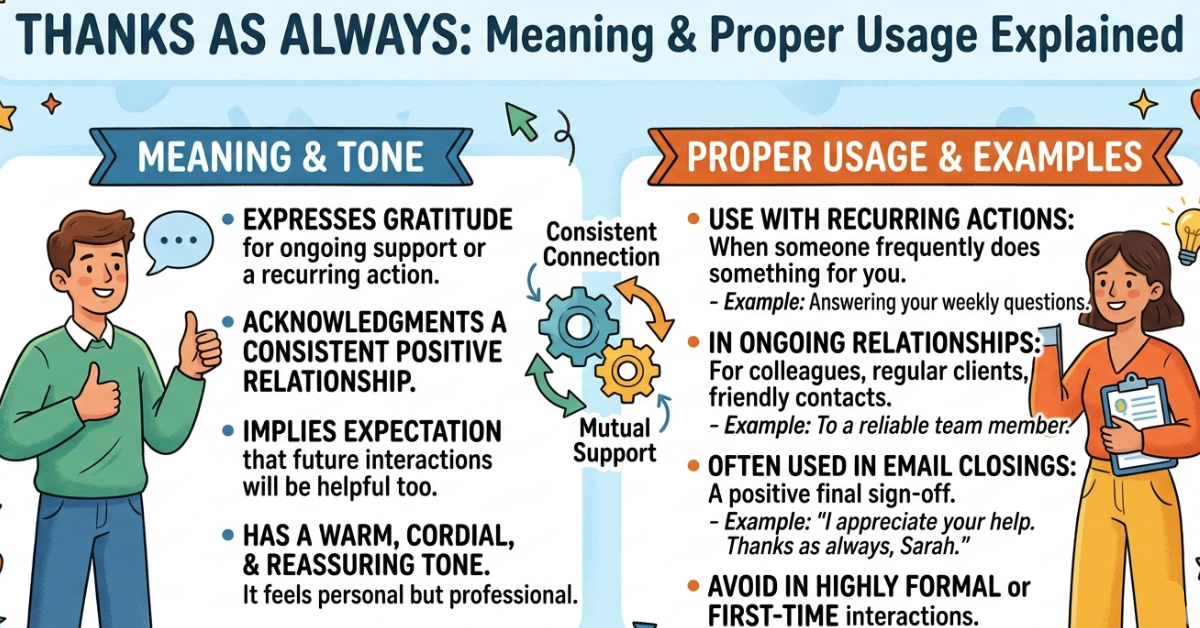
The phrase thanks as always meaning refers to showing appreciation for someone’s regular or ongoing help.
Instead of thanking someone only once, this phrase highlights their consistent support. It suggests that their help is not new—it is something you rely on.
In simple language, it can mean:
- “I appreciate your help again, like every time”
- “You always help me, and I’m grateful for that”
- “Thank you once more for being dependable”
It adds emotional warmth and familiarity to a message.
When to Use This Expression
This phrase works best in situations where someone repeatedly supports you.
1. Repeated help or support
When a person often assists you with tasks, assignments, or guidance.
2. Professional communication
In workplace emails or messages where teamwork is ongoing.
3. Friendly conversations
When talking to someone who regularly supports or checks in on you.
Example:
- “Thanks as always for your help with the presentation.”
Why People Use This Phrase in English
People prefer this expression because it feels more personal than a simple “thank you.”
It helps to:
- Build stronger relationships
- Show appreciation for consistency
- Add warmth to professional messages
- Sound more natural in repeated interactions
Even in formal communication, it keeps the tone friendly without being too casual.
Natural Alternatives You Can Use
If you want to avoid repeating the same expression, here are some smooth alternatives:
- “I really appreciate your continued support”
- “Thanks again for everything you do”
- “Grateful for your ongoing help”
- “Really appreciate your consistency”
- “Thanks once more for your help”
These options keep your message fresh while maintaining the same emotional meaning.
Real-Life Usage Examples
Email Example
“Hi Ali, I really appreciate your continued support on this project. It makes a huge difference.”
Casual Chat Example
“Hey, thanks again—you’re a lifesaver!”
Workplace Example
“Grateful for your consistent guidance during the meetings.”
Common Mistakes to Avoid
While the phrase is simple, people sometimes overuse it or place it awkwardly.
Avoid:
- Using it in every single sentence
- Repeating it in the same message
- Using it in very serious or formal legal documents
Instead, keep it natural and balanced so it doesn’t feel repetitive.
FAQs
1. What does “thanks as always” mean?
It means showing appreciation for someone’s repeated or consistent help over time.
2. Is it formal or informal?
It is semi-formal and can be used in both professional and casual settings.
3. Can I use it in emails?
Yes, it is commonly used in emails to express polite and ongoing gratitude.
4. Is it grammatically correct?
Yes, it is grammatically acceptable and widely used in modern English communication.
5. What can I say instead?
You can use phrases like “thanks again,” “I appreciate your support,” or “grateful for your help.”
Conclusion
Understanding the thanks as always meaning helps you express gratitude in a more natural and meaningful way. It is a simple phrase, but it carries warmth, appreciation, and consistency in communication.
Whether you are writing emails, texting friends, or speaking in a professional setting, using expressions like this can make your language feel more human and connected.
If you want your communication to sound even more natural, try mixing it with alternative phrases and using it only when someone truly deserves ongoing appreciation.