Many English learners often get stuck on a very small but common confusion: untill or until. At first glance, both look similar, but only one is correct in standard English. If you’ve ever paused while writing an email, essay, or message wondering which spelling is right, you’re not alone.
The focus keyword untill or until is searched frequently because people want clarity on spelling rules and proper usage. In this article, we’ll break everything down in a simple, human way so you never hesitate again. You’ll learn the correct form, why the confusion happens, and how to use it confidently in everyday writing.
Untill or Until: Which One is Correct?
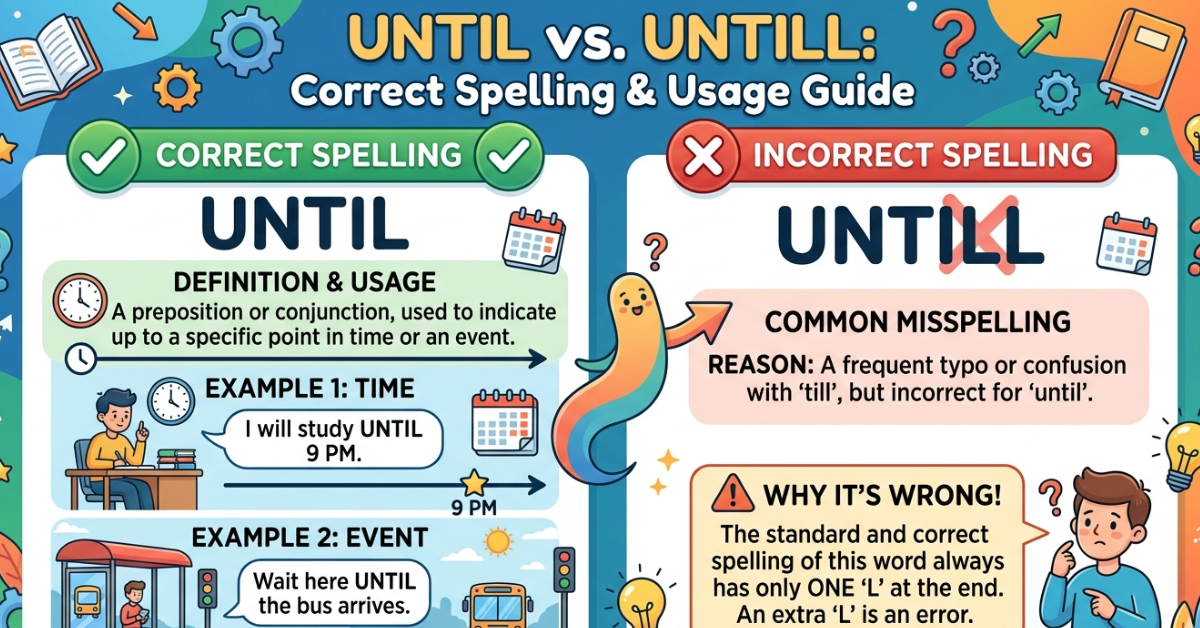
Let’s clear the biggest doubt right away: “until” is the correct spelling, while “untill” is incorrect in modern English.
The confusion between untill or until happens because many English words double their final consonants (like “full” or “till”), so people assume “until” should also have two L’s. However, that is not the case here.
So remember:
- untill (incorrect spelling)
- until (correct spelling)
Why People Get Confused About Untill or Until
The confusion around untill or until is very common, especially among new learners. Here are a few reasons why:
- The word “till” already exists and looks similar
- People assume doubling the “l” makes it grammatically correct
- Informal writing on social media spreads incorrect spelling
- Lack of exposure to formal grammar rules
Even native speakers sometimes type “untill” by mistake due to habit or typing speed.
How to Use “Until” Correctly in Sentences
The word “until” is used to show time limits or duration. It means something continues up to a certain point.
Here are some examples:
- I will wait until you arrive.
- The shop is open until 10 PM.
- She studied until midnight.
When writing professionally, always remember that untill or until is not a choice between two correct options—only “until” should be used.
Common Mistakes with Untill or Until
A lot of writing errors happen because of overthinking the spelling. Let’s look at the most common mistakes:
- Writing “untill” instead of “until”
- Using “till” and “until” incorrectly in formal writing
- Mixing both spellings in the same document
- Assuming both are acceptable in modern English
A simple rule to follow: if you’re writing formally, always stick with “until.”
Easy Trick to Remember the Correct Form
If you struggle with, here’s a simple memory trick:
Think of it this way:
- “Un” + “til” = until
- No need for extra letters
Another helpful tip:
- “Till” already means the same thing, so “until” is just a complete form of it.
Once you remember this, the confusion disappears quickly.
Real-Life Usage Examples
To make things even clearer, here are some natural examples using “until”:
- Don’t open the gift until your birthday.
- Stay here until I come back.
- We can’t leave until the work is done.
- He didn’t stop practicing until he improved.
Notice how natural “until” sounds in each sentence, confusion no longer appears once you learn the correct form.
FAQs
1. Is “untill” ever correct?
No, “untill” is always incorrect in standard English. The correct spelling is “until.”
2. Why do people write untill or until incorrectly?
Most confusion comes from the word “till,” which makes people assume an extra “l” is needed.
3. Can I use “till” instead of until?
Yes, “till” is acceptable in informal writing, but “until” is more formal and widely preferred.
4. What is the difference between untill or until?
There is no difference in meaning—only spelling. “Until” is correct, while “untill” is wrong.
5. How can I avoid this mistake?
Practice writing sentences with “until” and remember it does not need double “l.”
Conclusion
Understanding the difference between untill or until is simple once you know the rule: only “until” is correct. The extra “l” in “untill” is just a common spelling mistake with no place in standard English.
By practicing correct usage and remembering the simple spelling rule, you can confidently avoid this error in writing. Whether you’re writing emails, assignments, or social media posts, using the right form will instantly make your English look more polished and professional.