Have you ever paused while writing and wondered calender or calendar—which one is actually correct? You’re not alone. This is one of the most commonly confused spellings in English, and it often trips up even confident writers.
The correct word is calendar, but the confusion around is it calender or calendar comes from pronunciation and typing habits. In this article, we’ll clear up the confusion, explore the meaning, and help you never mix it up again.
What Does Calendar Mean?
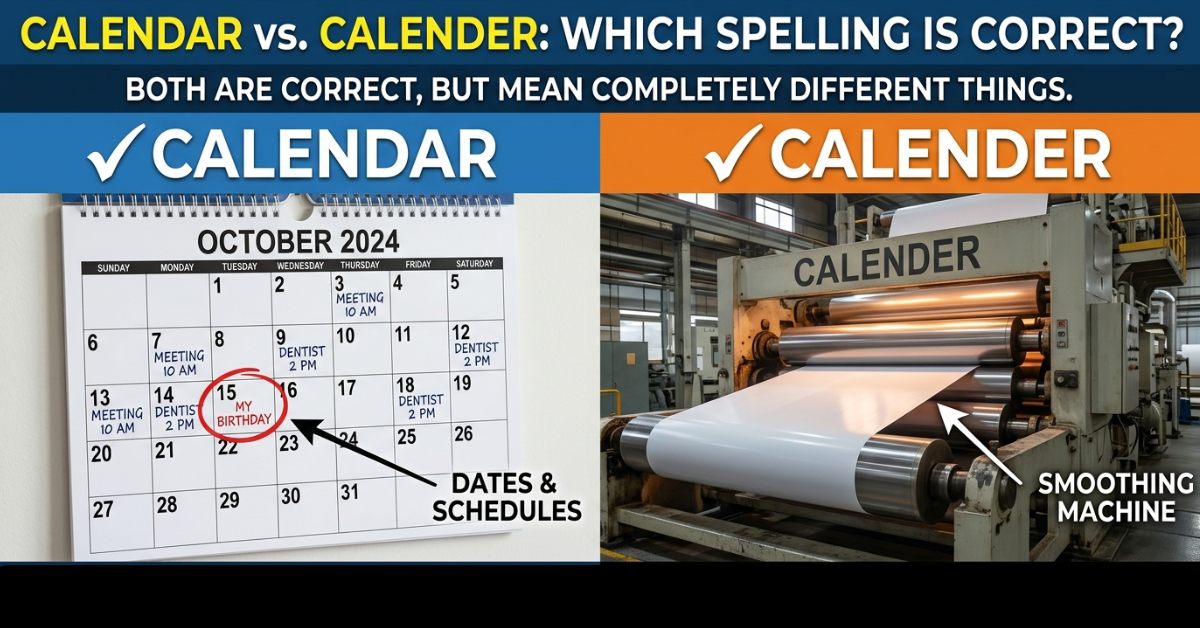
A calendar is a system used to organize days, weeks, and months. It helps us track important dates like birthdays, holidays, meetings, and events.
Common uses of a calendar include:
- Planning daily or monthly schedules
- Tracking deadlines and appointments
- Organizing academic or work tasks
- Marking special events and holidays
Simply put, a calendar keeps life structured and time manageable.
Calender or Calendar: Which One Is Correct?
Let’s settle the confusion once and for all—calendar is the correct spelling.
The word calender is actually incorrect in modern usage when referring to time schedules. Many people mistakenly type it due to phonetic spelling, but it does not represent the correct term.
So, whenever you’re unsure about calender or calendar, remember:
- Calendar = correct
- Calender = incorrect (in this context)
Why Do People Get Confused Between Calender and Calendar?
The confusion around is it calender or calendar usually happens for a few reasons:
1. Pronunciation Similarity
Both words sound almost identical when spoken quickly, leading to spelling mistakes.
2. Typing Errors
Fast typing on mobile phones often leads to accidental misspellings.
3. Lack of Word Awareness
Some learners are simply unfamiliar with the correct spelling early on.
The Meaning of “Calender” (Different Context)
Interestingly, calender is not always wrong—it just has a different meaning.
In industrial terms, a calender is a machine used to smooth or press materials like paper, cloth, or rubber.
However, in everyday writing and scheduling, calendar is the only correct choice.
Easy Tricks to Remember the Correct Spelling
If you struggle with calender or calendar, here are some simple memory tricks:
- Think: “A calendar has an A for appointment”
- Remember: “C-A-L-E-N-D-A-R = correct arrangement of days”
- Break it down: “Can + end + ar → helps you end planning confusion”
These small tricks can help you avoid spelling mistakes in the future.
Common Uses of Calendar in Daily Life
A calendar is more than just a date tracker. It plays an important role in everyday organization:
- School exam schedules
- Office meeting planning
- Travel bookings
- Personal reminders
- Project deadlines
Without a calendar, managing time becomes much more difficult.
FAQs About Calender or Calendar
1. What is the correct spelling: calender or calendar?
The correct spelling is calendar. “Calender” is usually a spelling mistake in this context.
2. Why do people write calender instead of calendar?
It happens due to pronunciation confusion and typing errors.
3. Is calender ever a correct word?
Yes, but only in industrial contexts referring to a machine used for smoothing materials.
4. How can I remember the correct spelling?
Link it with time planning: a calendar organizes dates, and it contains the correct letter pattern “-dar” at the end.
5. What is the meaning of calendar?
A calendar is a system used to organize days, weeks, and months for planning and scheduling.
Conclusion
Understanding calender or calendar is simple once you know the difference. The correct spelling is calendar, and it is used in daily life to manage time, events, and schedules.
The confusion around is it calender or calendar is common, but now you know the rule: one letter makes all the difference. Keep practicing the correct spelling, and soon it will become second nature.
If you want to improve your writing further, focus on commonly confused words like this—they can make your communication much clearer and more professional.