The words committment or commitment often confuse writers, students, and even professionals. While they may look similar, only one is correct in standard English spelling, and understanding the difference can improve both your writing accuracy and communication skills.
In this article, we’ll break down committment or commitment, explore its meaning, common mistakes, and how it is used in everyday language. Whether you’re writing an essay, an email, or improving your vocabulary, getting this right truly matters.
What Does “Commitment” Mean in English?
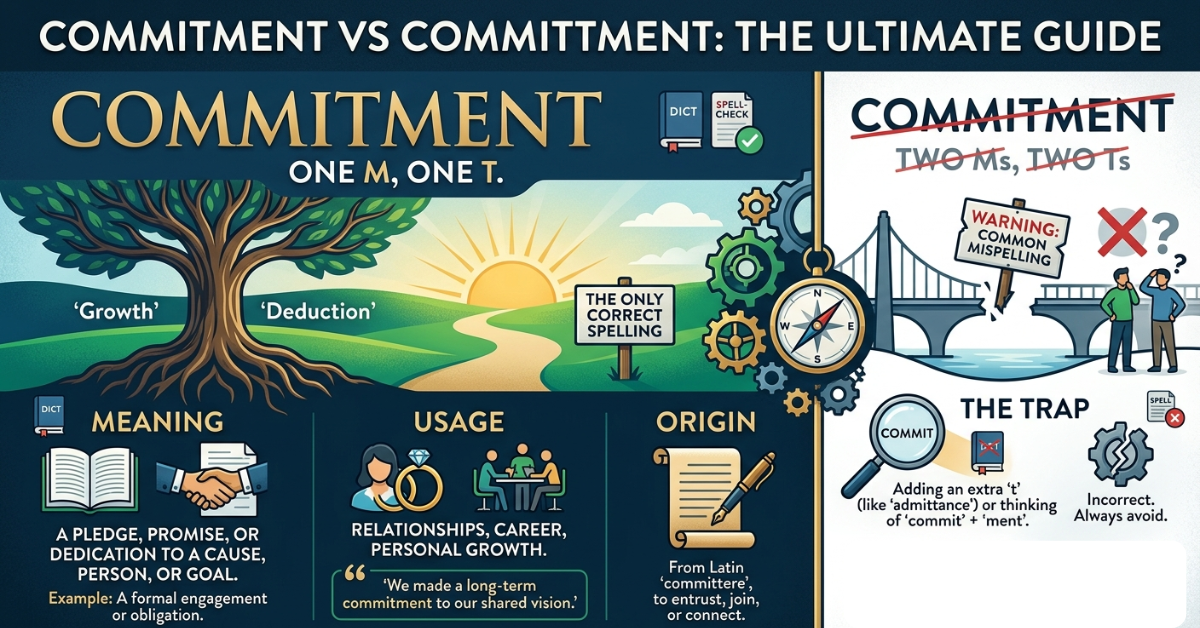
When we talk about committment or commitment, we are referring to dedication, responsibility, or a promise to do something. The correct spelling is commitment, while “committment” is a common spelling mistake.
Meaning in Simple Words
Commitment refers to:
- A promise to do something
- Dedication toward a goal or person
- A strong sense of responsibility
For example:
- A student shows commitment to studies by working consistently.
- A relationship requires emotional commitment from both sides.
Why “Committment or Commitment” Confuses Many People
The confusion around committment or commitment usually comes from pronunciation. Since we often stress the double “t” sound when speaking, people mistakenly add an extra “t” in writing.
Common Reasons for the Mistake:
- Phonetic spelling habits
- Lack of exposure to correct written form
- Typing errors and autocorrect assumptions
Even though “committment” appears frequently in informal writing, it is not grammatically correct.
The Correct Spelling: Commitment Explained
Understanding committment or commitment helps you avoid one of the most common English spelling errors.
Correct Form: Commitment
The word “commitment” is derived from the verb commit, meaning to dedicate or pledge.
Examples in Sentences:
- Her commitment to learning is inspiring.
- The company showed strong commitment to sustainability.
- Success requires discipline and commitment.
Notice how natural the word feels in different contexts—it fits both personal and professional situations.
Types of Commitment in Real Life
Commitment isn’t just a word—it plays a major role in our daily lives.
1. Personal Commitment
This refers to promises you make to yourself:
- Fitness goals
- Education plans
- Personal growth habits
2. Professional Commitment
Used in workplaces:
- Meeting deadlines
- Completing tasks efficiently
- Staying loyal to a job or organization
3. Relationship Commitment
Involves emotional dedication:
- Trust
- Loyalty
- Long-term stability
Each type shows how important committment or commitment is in shaping success and relationships.
Why Correct Spelling Matters in Communication
Using the correct form of committment or commitment improves credibility. Small spelling mistakes can sometimes affect how professional your writing appears.
Benefits of Correct Usage:
- Better academic scores
- Professional writing credibility
- Clear communication
- Improved vocabulary skills
Even in digital communication like emails or blogs, accuracy builds trust with readers.
How to Remember the Correct Spelling
If you often get confused between committment or commitment, here are simple tricks:
Easy Memory Tips:
- Think: “commit + ment = commitment”
- Only one “t” is needed before “ment”
- Associate it with “promise” or “dedication”
Practicing writing the word a few times can also help reinforce the correct spelling.
Common Mistakes to Avoid
Many learners repeatedly misspell committment or commitment. Here are the most frequent errors:
- Adding an extra “t” → committment
- Dropping letters → comitment
- Mixing phonetic spelling with written form
Being aware of these mistakes helps you avoid them in exams and professional writing.
FAQs About Commitment
1. What is the correct spelling: committment or commitment?
The correct spelling is commitment. “Committment” is incorrect.
2. Why do people write committment or commitment incorrectly?
It usually happens due to pronunciation confusion and typing habits.
3. What does commitment mean in simple terms?
It means dedication, responsibility, or a promise to do something.
4. Is commitment only used in relationships?
No, it is used in education, work, personal goals, and many other areas.
5. How can I improve my spelling of commitment?
Practice writing it, break it into parts (commit + ment), and use it in sentences regularly.
Conclusion
Understanding committment or commitment is more than just learning spelling—it’s about improving communication skills and expressing ideas clearly. The correct form, commitment, represents dedication, responsibility, and consistency in all areas of life.
Whether you’re writing for school, work, or personal growth, using the right spelling makes your message stronger and more professional. Keep practicing, stay consistent, and your writing will naturally improve over time.