Have you ever paused while writing and wondered whether to use fatal vs fateful? You’re not alone. These two words look similar, but their meanings are very different—and confusing them can completely change what you’re trying to say.
In this article, we’ll break down fatal vs fateful in a simple, human way so you never mix them up again. You’ll learn their meanings, differences, real-life examples, and practical tips to use them correctly in writing and conversation.
What Does “Fatal” Mean?
The word fatal is usually associated with something serious, dangerous, or deadly. It comes from the idea of “death” or “ending something in a destructive way.”
Simple Meaning:
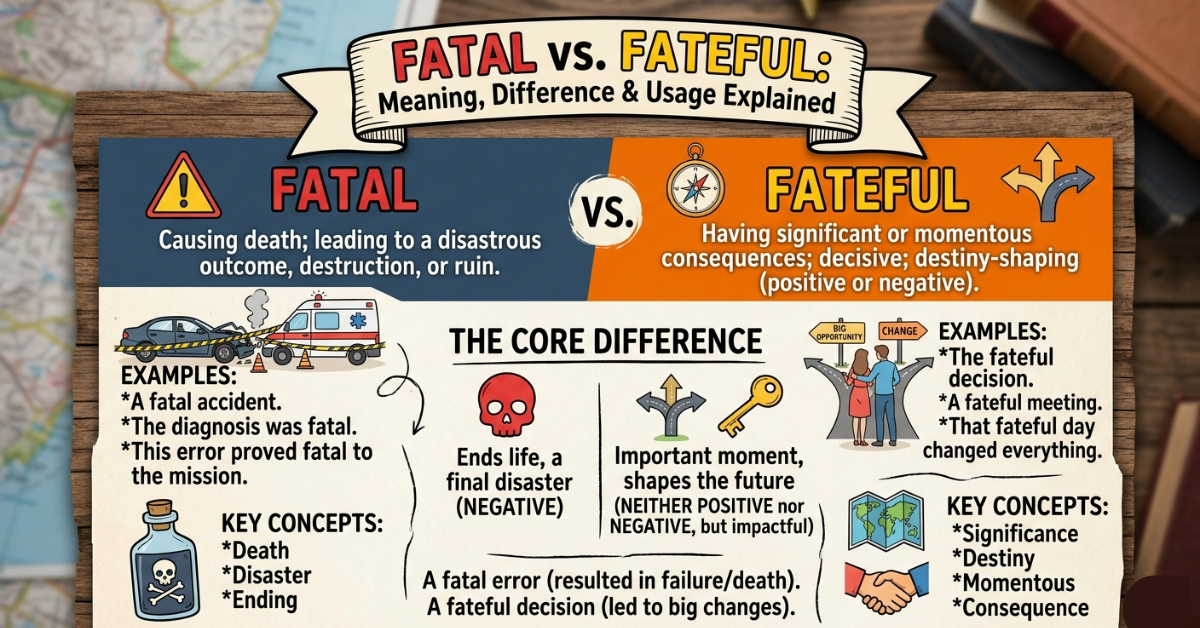
Fatal = causing death or disaster
Common Uses of Fatal:
- Fatal accident
- Fatal injury
- Fatal mistake
- Fatal disease
Examples:
- The car crash was fatal for one of the passengers.
- Ignoring safety rules can lead to a fatal outcome.
- A fatal error in the system caused it to shut down completely.
In short, fatal always carries a negative and often irreversible meaning.
What Does “Fateful” Mean?
Now let’s look at fateful. Unlike fatal, this word is not always negative. It refers to something important that has a big impact on the future.
Simple Meaning:
Fateful = having significant consequences or shaping destiny
Common Uses of Fateful:
- Fateful decision
- Fateful meeting
- Fateful night
- Fateful journey
Examples:
- That was a fateful decision that changed her career forever.
- They had a fateful meeting at the airport.
- The fateful night led to unexpected changes in their lives.
So, fateful is more about destiny, turning points, and life-changing moments.
Fatal vs Fateful: Key Differences
Understanding fatal vs fateful becomes easy when you compare them side by side.
1. Meaning Difference
- Fatal: Leads to death or destruction
- Fateful: Leads to important life changes or outcomes
2. Emotional Tone
- Fatal = negative, tragic
- Fateful = neutral or meaningful (can be positive or negative)
3. Usage Context
- Fatal is used in medical, safety, or accident-related contexts
- Fateful is used in storytelling, history, and life events
4. Impact Level
- Fatal = ends life or situation
- Fateful = changes direction of life or events
Easy Trick to Remember the Difference
If you’re struggling with fatal vs fateful, here’s a simple memory hack:
- Fatal = “F” for Final (death or end)
- Fateful = “F” for Future (changes what comes next)
This small trick makes it much easier to choose the right word while writing.
Common Mistakes People Make
Many learners confuse these words because they look similar. Here are some common errors:
- A fateful accident (wrong)
- A fatal accident (correct)
- A fatal meeting changed her life (wrong)
- A fateful meeting changed her life (correct)
Mixing them up can completely change your sentence meaning, so be careful.
When to Use Each Word
Use “Fatal” when:
- Talking about accidents or injuries
- Describing deadly outcomes
- Referring to serious system or human errors
Use “Fateful” when:
- Describing turning points in life
- Talking about destiny or major decisions
- Writing stories, history, or emotional events
Why People Confuse Fatal vs Fateful
There are a few reasons why this confusion happens:
- They look almost identical
- Both are adjectives
- Both relate to serious outcomes
- They are often used in storytelling or news contexts
But once you understand their core meaning, the confusion disappears quickly.
FAQs About Fatal vs Fateful
1. What is the main difference between fatal and fateful?
Fatal refers to death or destruction, while fateful refers to important events that shape the future.
2. Can fateful be positive?
Yes, fateful can be positive or negative depending on the situation. It simply means “significant.”
3. Is a fatal accident correct English?
Yes, “fatal accident” is correct because it refers to a deadly incident.
4. Can I use fatal in emotional situations?
Generally, no. Fatal is mostly used for physical harm, accidents, or serious failures.
5. Why do fatal and fateful sound similar?
They share the same root word related to “fate,” but their meanings evolved differently over time.
Conclusion
Understanding fatal vs fateful is all about recognizing the difference between “ending” and “changing.” One word describes something tragic and final, while the other describes something meaningful and life-shaping.
Next time you write, pause for a second and think:
Is it about death or destruction? Go with fatal.
Is it about destiny or a turning point? Choose fateful.
Mastering this small but powerful difference will instantly improve your clarity and confidence in English writing.