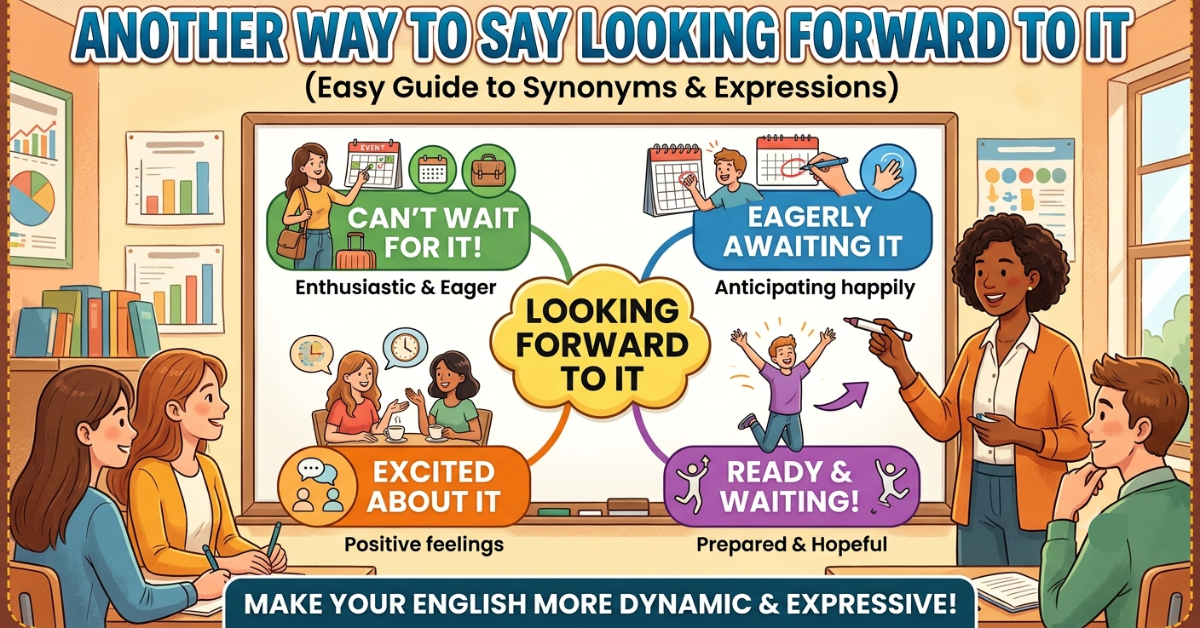
Finding another way to say looking forward to it can make your communication sound more natural, polished, and expressive. Whether you’re writing an email, replying to a message, or ending a professional note, using the same phrase repeatedly can feel repetitive.
In this guide, we’ll explore another way to say looking forward to it using simple, human-sounding alternatives that fit both formal and casual situations. You’ll also learn when and how to use each phrase so your tone always matches the context.
Why You Need Alternatives for “Looking Forward to It”
Using the same phrase again and again can make your writing feel predictable. That’s why learning another way to say looking forward to it is useful in both personal and professional communication.
Benefits of using alternative phrases:
- Makes your writing more engaging
- Helps you sound more natural and fluent
- Improves tone in professional emails
- Adds personality to casual conversations
Professional Ways to Say “Looking Forward to It”
If you’re writing emails, job applications, or business messages, here are some polished alternatives.
Formal alternatives:
- I look forward to your response
- I’m eagerly awaiting your reply
- I anticipate your feedback
- I await your update with interest
- I am excited about our upcoming meeting
These phrases are great when you need another way to say looking forward to it in a respectful and professional tone.
Casual Ways to Express Excitement
In everyday conversations, you don’t need to sound too formal. Here are relaxed and friendly options.
Informal alternatives:
- Can’t wait!
- Really excited for it
- Super excited about this
- Counting down the days
- This is going to be great
These expressions are perfect when searching for another way to say looking forward to it in chats with friends or social media posts.
Polite and Friendly Alternatives
Sometimes you want a balance between formal and casual. These phrases work well in most situations.
Neutral expressions:
- I’m excited about what’s coming next
- I’m happy to hear that
- I look forward to hearing more
- Excited to see how it goes
- I’m eager to see the results
These are flexible options when you need another way to say looking forward to it without sounding too stiff or too casual.
How to Choose the Right Phrase
Choosing the right expression depends on your audience and purpose.
Ask yourself:
- Is this formal or informal communication?
- Am I writing or speaking?
- What tone do I want—professional, friendly, or excited?
Quick guide:
- Emails → Use formal phrases
- Friends & chats → Use casual expressions
- Mixed settings → Use neutral tone
Understanding context helps you pick the best another way to say looking forward to it naturally.
Common Mistakes to Avoid
Even simple phrases can be misused if you’re not careful.
Avoid:
- Overusing the same phrase repeatedly
- Using overly casual slang in professional emails
- Sounding robotic or unnatural
- Mixing tones in one message
The goal is to sound natural while using another way to say looking forward to it appropriately.
FAQs
1. What is another way to say looking forward to it in emails?
You can say “I look forward to your response” or “I await your feedback” in professional emails.
2. What is a casual way to say looking forward to it?
You can use phrases like “can’t wait” or “super excited about it.”
3. Is “I’m looking forward to it” formal or informal?
It is neutral, suitable for both professional and casual communication.
4. How can I sound more natural in messages?
Use varied expressions instead of repeating the same phrase and match your tone to the situation.
Conclusion
Learning another way to say looking forward to it helps you communicate more effectively and naturally. Whether you’re writing a formal email or chatting with friends, the right phrase can improve clarity, tone, and engagement.
Instead of repeating the same expression, try mixing in the alternatives shared above. This small change can make your communication feel more polished, confident, and human.
If you regularly write emails or messages, practicing these variations will quickly become second nature—and your writing will instantly stand out.