Jealousy meaning goes far beyond just “feeling a little insecure.” It’s a complex emotional response that can affect relationships, self-esteem, and even decision-making. At its core, jealousy meaning refers to the feeling of fear, anxiety, or resentment when someone perceives a threat to something they value—especially love, attention, or status.
One specific form people often search for is retroactive jealousy meaning, which deals with jealousy about a partner’s past relationships. We’ll explore that too in detail throughout this article.
In this guide, you’ll learn what jealousy really is, why it happens, its types, psychological causes, and how it can be managed in a healthy way.
What Is Jealousy Meaning in Psychology?
In psychology, jealousy meaning is defined as an emotional reaction triggered when a person feels threatened by a rival—real or imagined.
It often includes a mix of emotions such as:
- Fear of loss
- Anger or frustration
- Insecurity
- Anxiety
- Low self-worth
Jealousy is not always negative. In small amounts, it can highlight what matters to us. But when it becomes intense or uncontrollable, it can damage relationships and mental health.
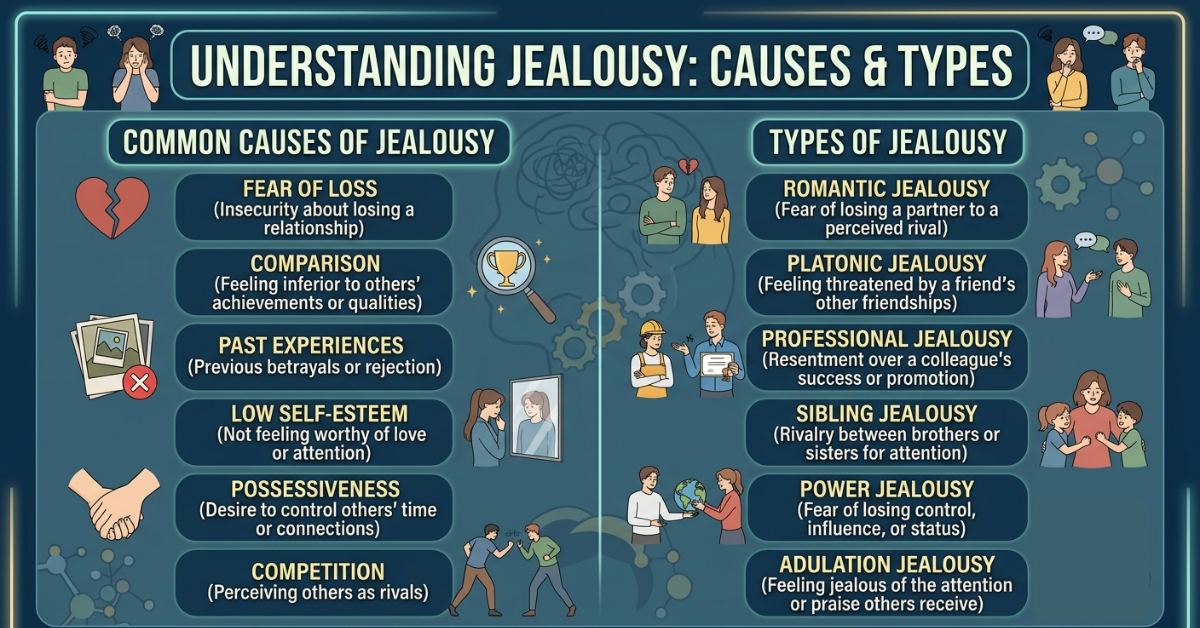
Common Types of Jealousy
Understanding different forms of jealousy helps in identifying emotional patterns.
1. Romantic Jealousy
This happens in relationships when one partner fears losing the other to someone else.
2. Social Jealousy
Occurs when someone feels inferior compared to others in social status, appearance, or success.
3. Sibling Jealousy
Common in childhood when attention from parents feels unequal.
4. Retroactive Jealousy Meaning
This type focuses on jealousy about a partner’s past relationships, experiences, or history. The retroactive jealousy meaning refers specifically to obsessive thoughts or emotional discomfort about something that happened before you were in the picture.
Causes of Jealousy
Jealousy doesn’t appear randomly. It often develops due to deeper emotional triggers.
Key psychological causes include:
- Low self-esteem
- Fear of abandonment
- Past relationship trauma
- Insecure attachment style
- Comparison with others
- Overthinking tendencies
When someone struggles with self-confidence, jealousy becomes more likely to appear in both small and intense situations.
Signs of Jealousy
Jealousy can show up in different behaviors and thoughts, such as:
- Constant overthinking about a partner
- Checking social media frequently
- Feeling anxious without clear reason
- Needing constant reassurance
- Imagining worst-case scenarios
- Difficulty trusting others
If these signs become repetitive, they may point toward deeper emotional insecurity.
Understanding Retroactive Jealousy Meaning in Depth
The retroactive jealousy meaning is often misunderstood. It is not just curiosity about a partner’s past—it can become obsessive and emotionally distressing.
People experiencing it may:
- Compare themselves to past partners
- Feel hurt by stories of previous relationships
- Create mental images that cause anxiety
- Struggle to accept a partner’s history
This type of jealousy is more about internal insecurity than the partner’s actual behavior.
How Jealousy Affects Relationships
Uncontrolled jealousy can create serious challenges, such as:
- Trust issues between partners
- Frequent arguments
- Emotional distance
- Controlling behavior
- Anxiety and stress in relationships
However, when managed properly, jealousy can also encourage open communication and emotional growth.
Healthy Ways to Deal with Jealousy
Managing jealousy starts with self-awareness and emotional regulation.
Practical steps include:
- Identify your triggers – Understand what exactly causes jealousy.
- Improve self-confidence – Focus on personal growth and achievements.
- Communicate openly – Honest conversations reduce misunderstandings.
- Avoid comparisons – Everyone’s journey is different.
- Challenge negative thoughts – Question irrational fears.
- Practice emotional grounding – Stay present instead of overthinking.
For those dealing with retroactive jealousy meaning, acceptance of a partner’s past and focusing on the present relationship is essential.
Can Jealousy Be Positive?
Yes, in moderation. Healthy jealousy can:
- Strengthen emotional bonds
- Highlight personal values
- Encourage self-improvement
The key is balance. Too much jealousy becomes harmful, but no emotional awareness at all can also weaken relationships.
FAQs About Jealousy Meaning
1. What is jealousy meaning in simple words?
Jealousy meaning is the feeling of insecurity or fear of losing someone or something important to you.
2. Is jealousy normal in relationships?
Yes, mild jealousy is normal, but excessive jealousy can harm trust and emotional connection.
3. What is retroactive jealousy meaning?
It refers to jealousy about a partner’s past relationships or experiences before you met them.
4. Why do I feel jealous easily?
Common reasons include low self-esteem, fear of abandonment, and past emotional experiences.
5. Can jealousy be controlled?
Yes, with self-awareness, communication, and emotional regulation techniques, jealousy can be managed effectively.
Conclusion
Jealousy meaning is deeply tied to human emotions like love, fear, and insecurity. While it is a natural feeling, it becomes problematic when it takes control of thoughts and behavior.
Understanding different forms, including retroactive jealousy meaning, helps you recognize emotional patterns and improve relationships. The key is not to eliminate jealousy completely, but to manage it in a healthy, balanced way.
If you want stronger emotional well-being, start by building self-confidence, improving communication, and focusing on the present instead of the past.