Have you ever heard someone say, “Can you scooch over a bit?” and instantly understood what they meant—even if the word sounded funny? That’s the charm of everyday slang. Scooch meaning is one of those curious little language quirks that people use all the time without thinking much about where it came from.
In simple terms, scooch means to move slightly, shift over, or make a little space. It’s often used casually in conversations when someone wants another person to move just a tiny bit. But there’s more to this word than meets the eye, including debates about scooch meaning Italian, pronunciation, and regional usage.
Let’s unpack everything you need to know.
What Is the Meaning of Scooch?
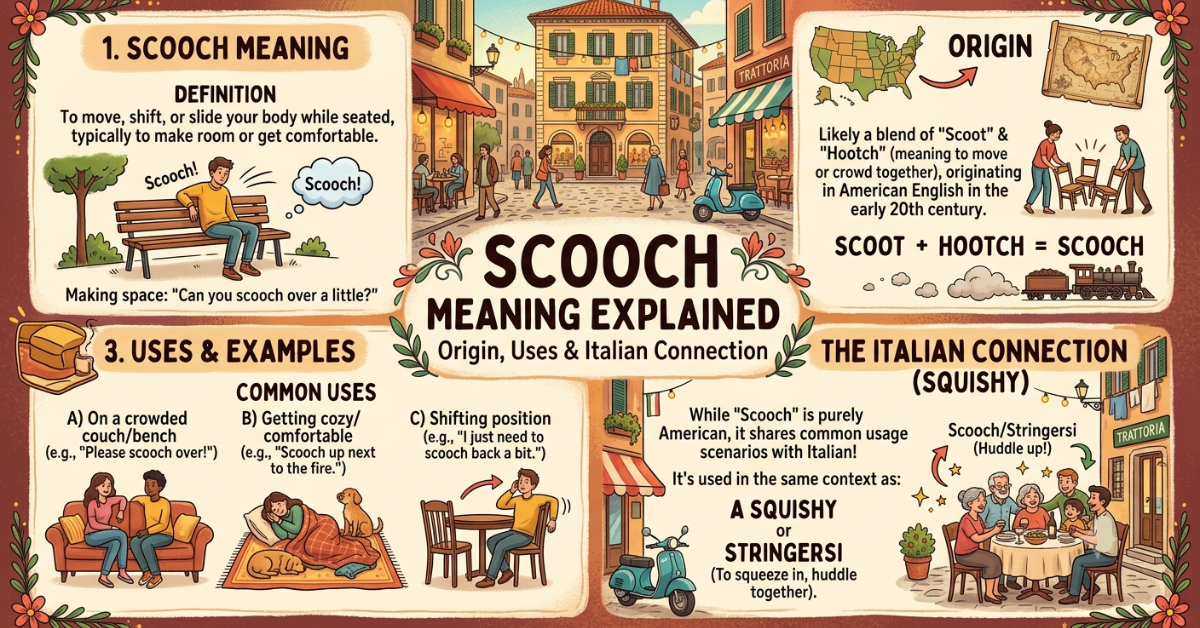
The word scooch generally means to move a short distance or shift slightly from one position to another. It’s commonly used in informal settings and often implies a small movement.
For example:
- “Could you scooch over so I can sit?”
- “I need to scooch my chair closer.”
- “Scooch forward a little for the photo.”
The word is friendly, casual, and conversational. You’re more likely to hear it in spoken English than see it in formal writing.
Scooch Definition in Simple Words
If you want a straightforward explanation, scooch means:
“Move a little” or “shift slightly.”
Usually, the movement is small and gentle rather than dramatic.
Where Did the Word Scooch Come From?
The exact origin of scooch isn’t fully certain, but language experts believe it may have evolved from regional American slang. Some suggest it could be related to words like scutch or scoutch, which were used in older dialects to describe shifting or squeezing into a space.
Over time, scooch became popular in casual American English and spread into everyday speech.
Interestingly, spelling variations also exist, including:
- Scooch
- Scootch
- Skootch
Despite the spelling differences, the meaning remains largely the same.
Scooch Meaning Italian: Is Scooch an Italian Word?
A common question people ask is about scooch meaning Italian. Many assume the word sounds Italian or comes from Italian culture, but that’s not entirely accurate.
The confusion may come from the similarity between scooch and the Italian word “scocciare,” which means to annoy or to bother. However, there is no strong evidence that scooch directly comes from Italian.
In modern English, scooch is considered an informal slang term rather than an Italian loanword.
So, if you’re wondering whether scooch is officially Italian, the short answer is:
No, not really—but there may be distant linguistic similarities.
How People Use Scooch in Everyday Conversations
One reason scooch remains popular is because it feels warm and non-demanding. Instead of saying “Move,” people often choose “scooch” because it sounds friendlier.
Here are some everyday situations where you might hear it:
1. Making Room
Someone asks for space on a couch or bench:
“Can you scooch over a little?”
2. Adjusting Position
A photographer may say:
“Scooch closer together!”
3. Moving Furniture or Objects
People also use it for objects:
“Scooch the table to the left.”
The word naturally softens instructions, making conversations feel more polite.
Scooch vs Similar Words
You may wonder how scooch compares with other movement-related words.
| Word | Meaning | Tone |
| Scooch | Move slightly | Casual & friendly |
| Shift | Change position | Neutral |
| Slide | Move smoothly | Descriptive |
| Move | Change place | Direct |
| Shuffle | Move slowly | Informal |
While all these words involve movement, scooch specifically suggests small movement with little effort.
Why Is Scooch So Popular in Spoken English?
Language evolves around convenience and emotion. People like words that sound approachable, and scooch has a soft, playful quality.
Here’s why it works so well:
- Easy to say
- Feels polite
- Sounds less commanding
- Fits casual conversation naturally
That emotional tone makes a difference. Saying “scooch over” often sounds kinder than “move over.”
Regional Differences in Using Scooch
Not everyone uses the word equally.
In the United States, scooch is widely recognized, especially in casual family conversations. In other English-speaking countries, people may prefer alternatives like:
- Move over
- Shift a bit
- Slide across
Still, thanks to movies, TV shows, and internet culture, the word is increasingly understood worldwide.
Is Scooch Formal or Informal?
Scooch is definitely informal language.
You’ll hear it in:
- Family conversations
- Friendly chats
- Everyday speech
- Casual social settings
You probably wouldn’t use it in professional or academic writing.
For example:
Incorrect: “Please scooch the meeting schedule.”
Correct: “Please adjust the meeting schedule.”
Context matters.
Fun Facts About the Word Scooch
Here are a few interesting things about this quirky word:
- It’s often associated with friendliness and warmth.
- Some people spell it scootch instead.
- It’s more common in spoken English than books.
- Kids often learn the word naturally from parents.
- It usually describes a very small movement.
These tiny language habits reveal how informal speech develops over time.
FAQs About Scooch Meaning
What does scooch mean in slang?
In slang or casual speech, scooch means to move slightly or make a little room.
Is scooch a real word?
Yes, scooch is considered a real informal English word and appears in many dictionaries.
What is scooch meaning Italian?
Many people search for this phrase, but scooch is not officially an Italian word. The confusion likely comes from similar-sounding Italian words.
Is scooch the same as scoot?
Not exactly. Scoot usually means moving quickly, while scooch suggests moving only a tiny amount.
How do you use scooch in a sentence?
Example: “Can you scooch over so I can sit down?”
Conclusion
Understanding scooch meaning is surprisingly simple once you hear it in context. It’s a casual, friendly word that means moving a little or shifting slightly to create space. While many people are curious about scooch meaning Italian, the term is primarily rooted in informal English rather than Italian language history.
The next time someone says, “Scooch over,” you’ll know exactly what they mean—and maybe even appreciate the playful charm behind the word. If you enjoy exploring quirky words and language origins, consider checking out more everyday expressions that shape modern conversation.