One of the most common spelling confusions in English is receive or recieve. Many people get stuck wondering which form is correct, especially in writing emails, assignments, or professional content.
The correct spelling is receive, but the misspelling recieve appears frequently due to confusion about English vowel order rules. In this article, we’ll break down why this mistake happens, how to remember the correct form, and how to avoid it in the future.
Receive or Recieve: What Is the Correct Spelling?
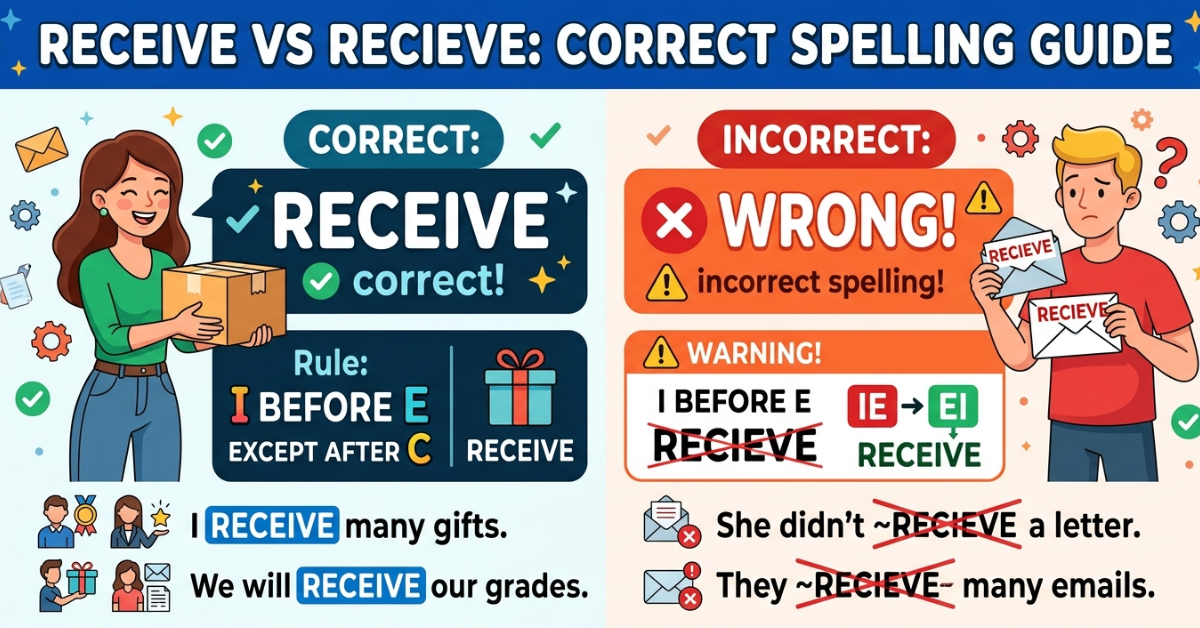
The correct spelling is receive, not recieve. This follows a common English spelling rule:
“i before e except after c”
Since the word has the letter “c” before the vowel combination, the correct order becomes ei, not ie.
Why “Recieve” Is Wrong
The form recieve is a spelling error caused by:
- Misapplication of pronunciation
- Overgeneralizing spelling patterns
- Lack of exposure to correct written forms
Even though it may look right when spoken quickly, it is incorrect in formal writing.
Easy Spelling Rule to Remember Receive or Recieve
To avoid confusion with receive or recieve, remember this simple trick:
1. The “C Rule”
If a word has “c” before the vowel pair, use ei:
- receive
- ceiling
- conceive
2. Sound It Out Carefully
The word sounds like “ri-seev,” not “ri-see-iv,” which helps reinforce the correct spelling.
3. Practice in Writing
The more you write correctly, the faster your brain memorizes the pattern.
Common Mistakes with Receive or Recieve
Many learners mix up spelling in different situations:
- Incorrect: I will recieve your message
- Correct: I will receive your message
- Incorrect: She didn’t recieve the letter
- Correct: She didn’t receive the letter
These small errors can affect your writing quality, especially in academic or professional communication.
Why Correct Spelling Matters
Using the correct form of receive or recieve is important because:
- It improves your writing credibility
- It helps in exams and academic performance
- It makes communication clearer and more professional
- It avoids misunderstandings in formal writing
Even small spelling mistakes can change how your writing is perceived.
Tips to Never Misspell Receive Again
Here are some practical ways to master it:
- Write it 5–10 times daily for practice
- Use spelling apps or grammar checkers
- Read more English content to reinforce correct usage
- Create flashcards with tricky words
Consistency is the key to long-term improvement.
FAQs About Receive or Recieve
1. What is the correct spelling: receive or recieve?
The correct spelling is receive. “Recieve” is incorrect.
2. Why do people write recieve instead of receive?
It happens due to confusion with English vowel rules and pronunciation.
3. Is recieve ever used in English?
No, recieve is always considered a spelling mistake.
4. What rule helps remember receive or recieve?
The “i before e except after c” rule helps you remember the correct spelling.
5. How can I avoid spelling receive incorrectly?
Practice writing it regularly and use grammar tools to correct mistakes.
Conclusion
Understanding receive or recieve is simple once you know the rule: the correct spelling is always receive. The mistake recieve is common, but it can be easily avoided with practice and awareness.
Improving small spelling details like this can significantly enhance your writing quality, whether you’re studying, working, or communicating online. Keep practicing, and soon the correct spelling will become automatic.