Ever seen a TikTok clip where someone puts a finger to their lips, stares off dramatically, and acts like they are “too busy mewing” to respond? That is the mewing meme in a nutshell. It blends internet humor, appearance culture, and a real but controversial tongue-posture concept into one of the strangest and most recognizable jokes online.
In this article, you will learn what the mewing meme means, where it came from, why the mewing meme guy format took off, and how spin-offs like the cat mewing meme and mewing meme face became part of the trend. You will also see how the meme differs from the actual practice of mewing, which has been widely discussed online but is not proven to reshape the jawline.
What Is the Mewing Meme?
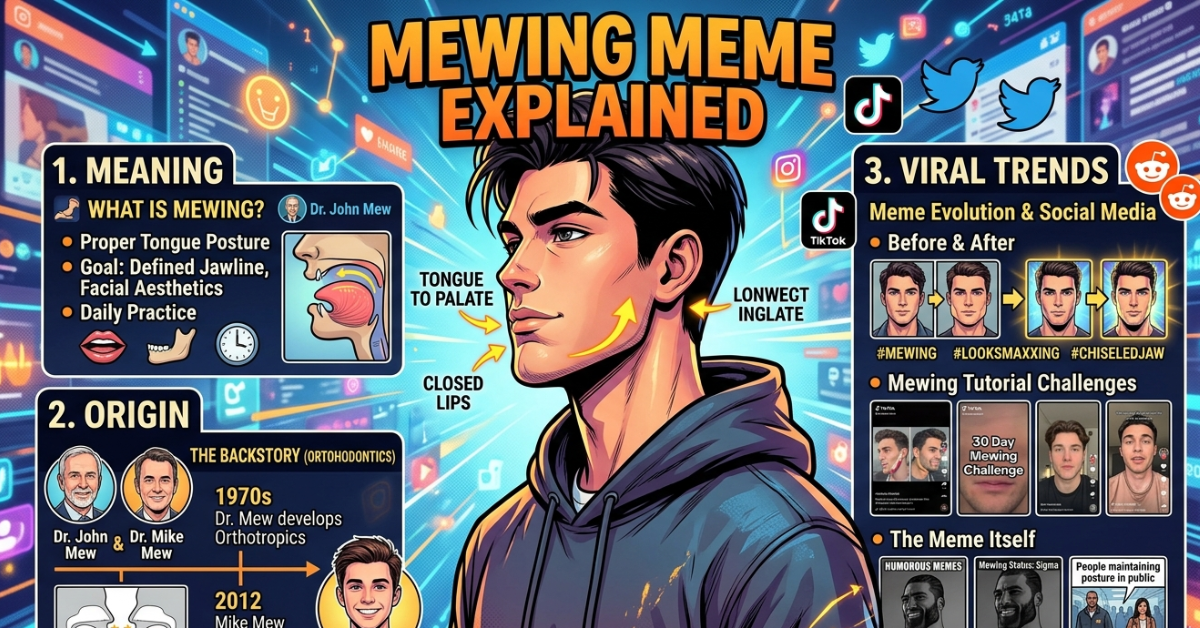
The simplest answer is that the mewing meme is an internet joke built around the idea of “mewing,” a tongue posture habit where the tongue is pressed against the roof of the mouth. Online, people turned that concept into a personality signal: the joke is that someone is so focused on mewing, jawlines, or “looksmaxxing” that they cannot behave normally.
On social platforms, the meme is usually exaggerated for comedy. A creator might freeze their face into a sharp side profile, hold a “shh” gesture, or act as if mewing is a serious life mission. Know Your Meme documents this as part of a wider meme ecosystem that also includes “mogging” and “looksmaxxing” jokes.
Where Did the Mewing Meme Come From?
The term “mewing” comes from British orthodontist John Mew and later spread online through discussions of orthotropics and facial posture. Know Your Meme describes mewing as a tongue exercise where the tongue rests against the roof of the mouth, and Merriam-Webster notes that it became slang among young people, especially young men, as a supposed way to improve jaw appearance.
The meme version took off much later, especially on TikTok and Instagram, where short-form video made it easy to turn a niche concept into a visual joke. By 2023 and 2024, videos tied to “Bye Bye Mewing Shh” were pairing the idea with a dramatic shushing pose and jawline-pointing gestures.
Why the Mewing Meme Became So Popular
The reason the mewing meme spread so fast is simple: it is visually funny, easy to imitate, and instantly recognizable. You do not need a lot of setup to understand the joke. One look at the pose, the jawline emphasis, or the dead-serious expression is enough to get it.
It also fits a larger internet trend where people use “self-improvement” language ironically. Mewing sits beside memes about posture, fitness, glow-ups, and “looksmaxxing,” but the humor comes from taking the idea too seriously. That tension between confidence and absurdity is what makes the joke work.
The Mewing Meme Guy: Why This Format Stuck
The are usually presented as a hyper-serious boy or young man who believes mewing is the key to looking better. The joke often makes him seem emotionless, overly disciplined, or comically obsessed with his jawline. That character works because it matches the internet’s favorite archetype: the person who treats a tiny habit like a grand transformation.
A lot of these posts use the same visual language: a sharp side profile, a confident stare, a finger-to-mouth “shh” pose, or a hand pointing toward the jaw. Know Your Meme’s coverage of the trend shows how those gestures became part of the visual shorthand for mewing content.
What People Mean by the Mewing Meme Face
The phrase usually refers to the specific expression people make in these posts: lips closed, jaw angled, cheeks tightened, and a distant or smug look. The face is part parody and part performance. It signals “I am mewing” while also making fun of how serious the pose looks.
This is why the meme often appears in reaction content. A character, celebrity, or cartoon face can be captioned as “mewing” when the expression seems oddly composed, blank, or self-aware. The joke is less about anatomy and more about attitude.
Cat Mewing Meme: The Absurd Pet Version
The cat takes the joke in a more absurd direction by applying human beauty logic to a cat. In one early example documented by Know Your Meme, a TikTok post from January 2024 used a calm cat and an angry caracal with the caption that the cat had started “mewing.”
That works because cats already fit internet humor perfectly: they are dramatic, expressive, and easy to caption with fake self-improvement narratives. The cat mewing version turns a serious-sounding trend into pure nonsense, which is exactly why people share it.
Does Actual Mewing Work?
This is where the meme and the real-world claim split apart. The internet version suggests mewing can sharpen the jawline or reshape the face, but Cleveland Clinic says mewing is not proven to work that way. Merriam-Webster also notes that the practice has not been found effective for those claimed cosmetic results.
That does not mean tongue posture is meaningless. Oral posture and jaw habits can matter in dental and oral-health contexts, and Cleveland Clinic discusses tongue thrusting as a real habit that can affect teeth and swallowing patterns. But that is different from the viral promise that mewing alone will build a chiseled jawline.
How to Recognize a Mewing Meme Fast
Most mewing jokes follow a familiar pattern:
- A dramatic side-profile or jawline-focused image.
- A shushing gesture, blank stare, or smug expression.
- Text that treats mewing as if it explains everything.
- A punchline that exaggerates self-improvement culture.
Once you know the pattern, the meme becomes easy to spot. Even when the subject changes from a teen boy to a celebrity or cat, the core joke stays the same: the character is “busy mewing,” and that supposed discipline becomes funny because it is so over-the-top.
Practical Takeaways
This is really about three things: a niche facial-posture idea, the internet’s obsession with appearance, and the comedy of taking small habits too seriously. It became popular because it is easy to copy, easy to parody, and flexible enough to fit humans, cats, and fictional characters alike.
If you are trying to understand it in context, the safest way to read the joke is this: the meme is not a medical claim, and it is not a guaranteed beauty hack. It is a viral shorthand for internet-era self-improvement humor.
FAQ
What does mewing meme mean?
The mewing meme is a joke based on the idea of tongue posture and jawline aesthetics. Online, it usually means someone is acting overly focused on mewing as a way to look better.
Who is the mewing meme guy?
The mewing meme guy is not one single person. It is a recurring character type: usually a teen or young man posing seriously, often with a jawline-focused profile or a shushing gesture.
Is the cat mewing meme real?
The cat mewing meme is real as an internet joke, but it is obviously not literal. It is a playful caption format that applies human mewing culture to cats for comedic effect.
Does mewing change your jaw?
There is no solid evidence that mewing alone reshapes the jawline in the way viral posts claim. Health sources note that the cosmetic promise is not proven, even though tongue posture itself is a real oral-health topic.
Why do people make the mewing meme face?
People use the mewing meme face because it is a fast visual cue. The expression helps sell the joke by making the person look overly serious, smug, or locked into the “mewing” mindset.
What is mewing meme used for online?
Online, the mewing meme is used to joke about looks, confidence, social awkwardness, and self-improvement culture. It is especially common in short-form video formats where a pose or expression can carry the entire punchline.
Conclusion
The mewing meme is one of those internet trends that looks simple at first, but says a lot about online culture. It mixes beauty trends, irony, and exaggerated self-discipline into a joke that works across TikTok, Reddit, and image macros. Whether you are seeing the guy mewing meme, the cat mewing meme, or a dramatic mewing meme face, the humor comes from the same place: turning a tiny habit into a huge personality.
Now that you know what it means, it becomes much easier to spot the joke, understand the context, and see why it keeps resurfacing in new forms online.