Have you ever heard someone say, “It’s just a trifle,” and wondered what they meant? The word trifle is a common English term that can describe something small, unimportant, or insignificant. It can also refer to a famous dessert enjoyed in many parts of the world. Understanding the trifle meaning can help you use the word correctly in everyday conversations, writing, and reading.
In this guide, we’ll explore the definition of trifle, its origins, different uses, examples, synonyms, and common expressions. By the end, you’ll have a clear understanding of how this versatile word fits into the English language.
What Is the Trifle Meaning?
The primary meaning of trifle is something that has little importance, value, or significance. It can be used as both a noun and a verb depending on the context.
Trifle as a Noun
When used as a noun, trifle refers to:
- Something minor or insignificant
- A matter of little importance
- A small amount of something
Examples:
- The mistake was only a trifle and easy to fix.
- She spent a trifle more than she had planned.
- Don’t worry about such trifles.
Trifle as a Verb
As a verb, trifle means to act frivolously, waste time, or treat something without seriousness.
Examples:
- He shouldn’t trifle with other people’s emotions.
- Stop trifling and finish your work.
- They trifled away the afternoon chatting.
Trifle Meaning in English
The trifle meaning in English generally centers around the idea of something being minor, trivial, or not worthy of serious attention. Depending on the sentence, it can imply:
- A small matter
- A slight amount
- Foolish behavior
- Lack of seriousness
Native speakers often use the word when discussing things that are not considered important enough to worry about.
Origin of the Word Trifle
The word “trifle” originated in Middle English and has been used for centuries to describe something insignificant or frivolous. Over time, the term expanded to include both noun and verb forms.
Historically, the word conveyed the idea of treating matters lightly or engaging in unimportant activities. Today, that core meaning remains largely unchanged.
Common Uses of Trifle in Everyday Language
You’ll often encounter trifle in various situations.
Referring to Small Problems
People use the term when discussing minor issues.
Example:
- The delay was a mere trifle compared to the overall success of the project.
Describing a Small Amount
Trifle can indicate a slight difference or quantity.
Example:
- The room felt a trifle warmer than yesterday.
Talking About Lack of Seriousness
When someone isn’t taking a matter seriously, trifle may be used as a verb.
Example:
- You shouldn’t trifle with important decisions.
Trifle as a Dessert
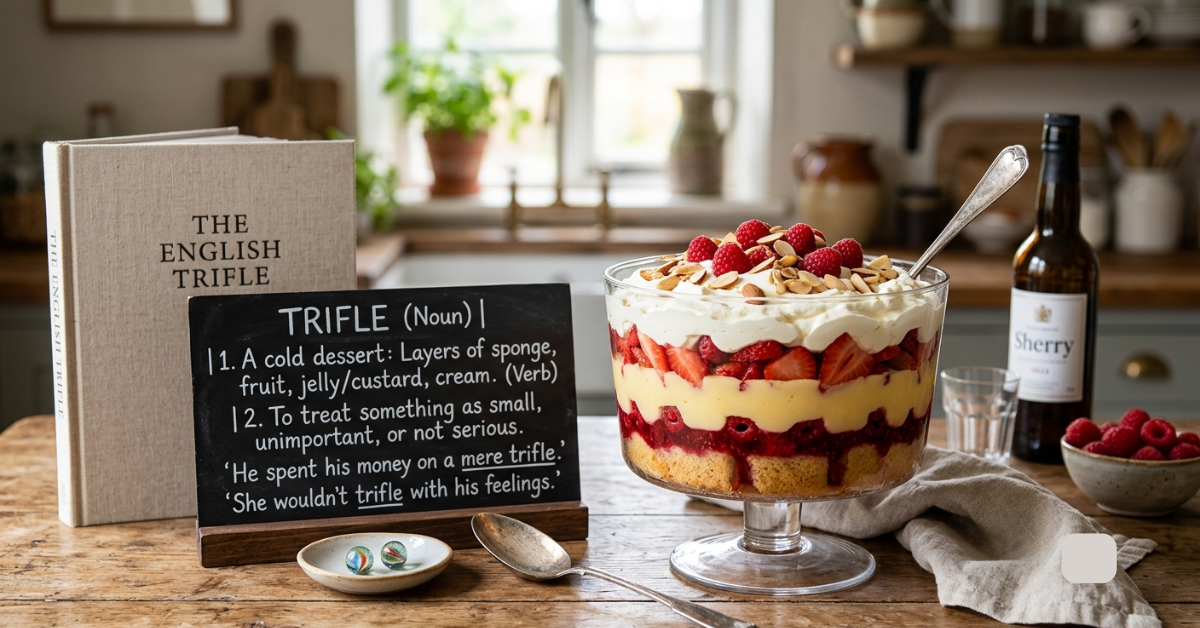
Interestingly, trifle also refers to a popular dessert.
What Is a Trifle Dessert?
A trifle is a layered sweet dish typically made with:
- Sponge cake
- Custard
- Fruit
- Jelly
- Whipped cream
This dessert is especially popular in the United Kingdom and many Commonwealth countries.
Why Is It Called a Trifle?
The dessert likely received its name because it was originally considered a simple or light dish compared to more elaborate desserts.
Synonyms of Trifle
Depending on context, several words can be used instead of trifle.
Synonyms for the Noun Form
- Triviality
- Small matter
- Insignificance
- Minor issue
- Detail
- Bagatelle
Synonyms for the Verb Form
- Fool around
- Dabble
- Toy
- Waste time
- Mess around
Remember that not all synonyms work in every situation, so context matters.
Antonyms of Trifle
Words with opposite meanings include:
- Importance
- Significance
- Serious matter
- Major concern
- Necessity
These terms emphasize weight, value, or seriousness.
Examples of Trifle in Sentences
Here are some examples that show different uses of the word:
- The cost difference was only a trifle.
- She laughed at what she considered a trifle.
- Don’t trifle with your future opportunities.
- His concerns seemed like trifles compared to the larger problem.
- We enjoyed a delicious fruit trifle after dinner.
These examples highlight how context changes the meaning.
Common Expressions Using Trifle
English speakers often use phrases that include the word.
A Trifle
Meaning: slightly or somewhat.
Example:
- The soup is a trifle salty.
Mere Trifle
Meaning: something completely insignificant.
Example:
- Compared to the total budget, the expense was a mere trifle.
Trifle With
Meaning: to treat carelessly or not seriously.
Example:
- Never trifle with someone’s trust.
When Should You Use the Word Trifle?
Use the word when:
- Discussing minor matters
- Describing small quantities
- Referring to insignificant details
- Talking about lack of seriousness
- Mentioning the layered dessert
Avoid using it when discussing major problems or important issues, as it may sound dismissive.
Common Mistakes People Make
Confusing Trifle With Important Matters
Some learners mistakenly use trifle for serious situations. Since the word implies smallness or insignificance, it doesn’t fit major concerns.
Forgetting the Dessert Meaning
Many people know only the figurative meaning and are surprised to discover that trifle is also a dessert.
Misusing the Verb Form
The verb often carries a negative tone, suggesting carelessness or irresponsibility.
Why Understanding Trifle Matters
Learning nuanced English vocabulary improves communication skills. Words like trifle help speakers express subtle differences in importance, seriousness, and quantity.
Whether you’re reading literature, watching English-language films, or having everyday conversations, understanding this word can make communication more precise and natural.
FAQs
What is the exact trifle meaning?
A trifle is something small, unimportant, or insignificant. It can also refer to a layered dessert made with cake, custard, fruit, and cream.
What is the trifle meaning in English grammar?
In English grammar, trifle functions as both a noun and a verb. As a noun, it means a minor thing. As a verb, it means to act without seriousness or waste time.
Is trifle a positive or negative word?
It depends on context. It can be neutral when referring to something small, but negative when describing careless or irresponsible behavior.
What is an example of trifle in a sentence?
Example: “The difference in price was only a trifle.”
What does “trifle with someone” mean?
It means to treat someone or their feelings carelessly or without proper respect.
Is trifle still commonly used today?
Yes, although it is somewhat more formal than words like “small issue” or “minor problem,” it remains common in both spoken and written English.
Conclusion
Understanding the trifle meaning helps you recognize and use the word accurately in different contexts. Whether referring to a minor issue, a small amount, careless behavior, or a traditional dessert, trifle is a versatile term with a long history in the English language. The trifle meaning in English revolves around the idea of something insignificant or not deserving serious attention, making it useful for expressing subtle distinctions in everyday communication.
As you expand your vocabulary, pay attention to how native speakers use words like trifle in conversations, books, and media. The more examples you encounter, the more naturally you’ll be able to use them yourself.