A meet and greet meeting is often the first interaction between team members, clients, or professionals who are about to work together. It helps create a comfortable environment where people can introduce themselves, understand roles, and start building trust.
In today’s fast-paced workplaces, this type of introductory session plays an important role in improving communication and teamwork. A well-planned setup ensures that everyone feels included and aligned from the beginning.
This guide explains how to structure it, how to design an effective invitation, and what a strong agenda should include.
What is a Meet and Greet Meeting?
A meet-and-greet session is a simple introductory gathering where individuals connect in a relaxed setting before starting formal collaboration.
It is commonly used for:
- New employee onboarding
- Client introductions
- Team formation
- Networking sessions
The main goal is to help people become familiar with each other rather than discuss complex project details.
Why This Type of Introduction Matters
A well-executed introductory session brings several benefits:
Builds Early Connections
People feel more comfortable when they know who they are working with.
Improves Communication
When familiarity increases, communication becomes smoother and more natural.
Encourages Team Confidence
It reduces hesitation among new members.
Sets Expectations Clearly
Everyone understands roles and responsibilities early on.
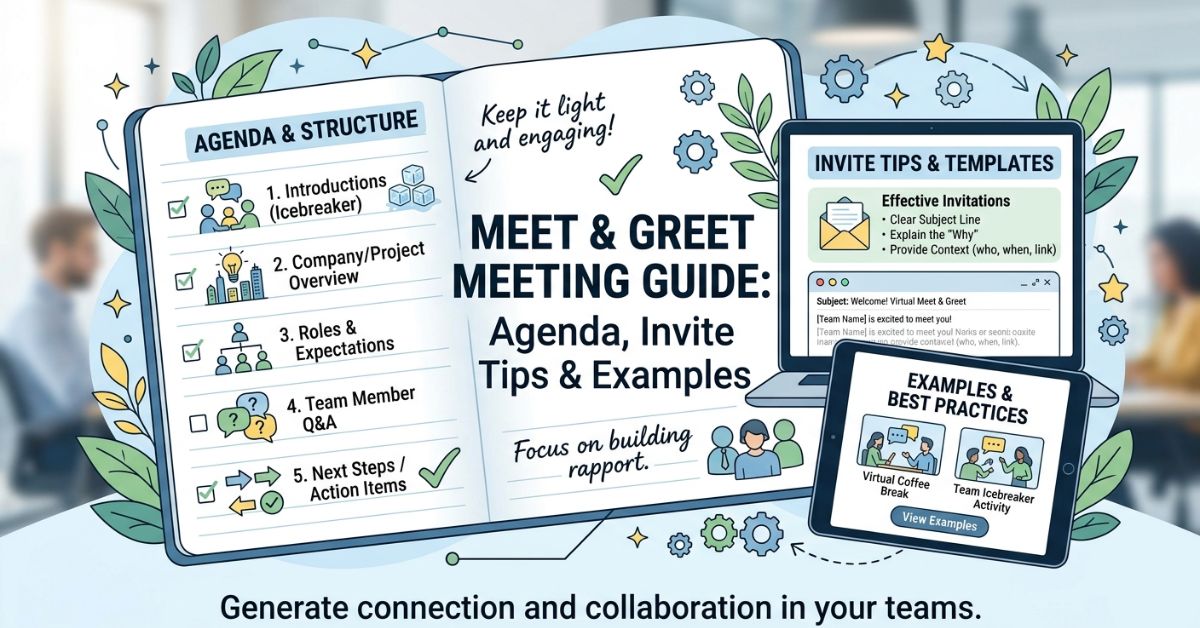
How to Write an Effective Meeting Invitation
A clear invitation ensures the right people attend and understand the purpose.
Key Elements to Include:
- Clear subject line
- Purpose of the session
- Date, time, and duration
- List of participants
- Access link or venue details
- Brief outline of discussion points
Example Structure:
A well-written invite might include:
- Warm welcome message
- Purpose of introduction
- Simple breakdown of what will happen
- Encouragement for participation
Keeping the tone friendly increases attendance and engagement.
Sample Meeting Agenda for Introductions
A structured plan helps keep things smooth without making the session too formal.
1. Welcome & Opening (5–10 minutes)
Host introduces the purpose and sets a relaxed tone.
2. Personal Introductions (10–15 minutes)
Each participant shares:
- Name
- Role
- Experience
- Optional personal detail
3. Purpose Overview (5 minutes)
Explain why the group is coming together.
4. Open Interaction (15–20 minutes)
A casual discussion where participants can ask questions or share thoughts.
5. Closing Summary (5 minutes)
Wrap up key points and explain next steps.
Best Practices for a Successful Session
To make the interaction effective, follow these tips:
Keep It Short
Avoid long discussions. 30–60 minutes is usually ideal.
Encourage Equal Participation
Everyone should get a chance to speak.
Use Icebreakers
Simple questions like hobbies or interests help ease tension.
Stay Flexible
Let conversations flow naturally instead of being too strict.
Common Mistakes to Avoid
Even simple introductions can lose impact if not handled properly:
- Overloading the session with details
- Skipping introductions
- Making it too formal
- Ignoring remote participants
- Sending unclear invitations
Benefits of a Well-Planned Introduction Session
When structured properly, this type of meeting leads to:
- Better workplace relationships
- Stronger collaboration
- Faster onboarding process
- Improved trust among team members
- Clear communication from the start
FAQs
1. What is the purpose of an introductory meeting?
It helps individuals get familiar with each other before starting work or collaboration.
2. How long should it usually last?
Most sessions last between 30 to 60 minutes.
3. What should be included in the invitation?
It should include timing, purpose, participants, and basic agenda details.
4. Is it formal or informal?
It is usually semi-informal to encourage open communication.
5. Why is planning important?
Good planning ensures clarity, participation, and a smooth flow of conversation.
Conclusion
A well-organized introductory session helps people connect faster and work together more effectively. With a clear invitation and a simple agenda, you can create a positive environment that encourages communication and trust from the very beginning.
If you focus on keeping it natural and engaging, your future collaboration will start on a much stronger foundation.