The confusion between tomorrow or tommorow is more common than you might think. Many people accidentally double the “m,” while others are unsure which version is correct in formal writing. In reality, only one spelling is accepted in standard English, and knowing the difference can improve your writing accuracy and confidence.
In this article, we’ll break down the correct spelling, why the mistake happens, and simple tricks to help you never get it wrong again. The focus keyword tomorrow or tommorow will also help clarify this common language confusion.
Tomorrow or Tommorow – What’s the Correct Spelling?
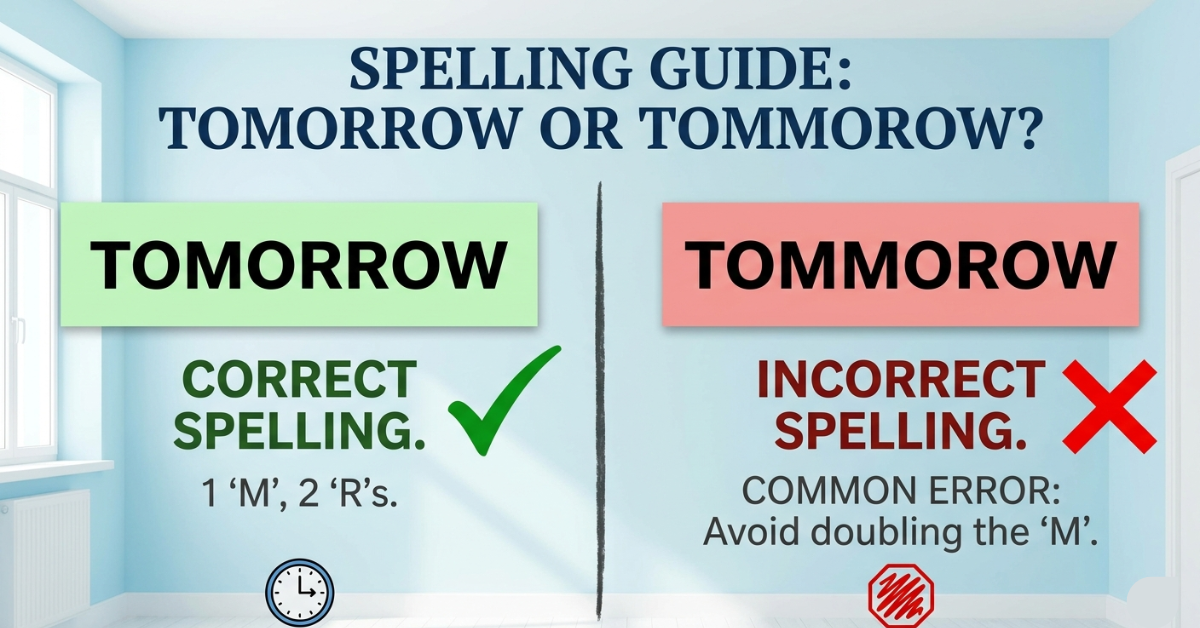
The correct spelling is tomorrow (with one “m” after the “to” and another later in the word). The version “tommorow” is a common spelling mistake.
So when comparing tomorrow or tommorow, only “tomorrow” is considered correct in English dictionaries and formal writing.
A quick breakdown:
- Correct: tomorrow
- Incorrect: tommorow
Even though the misspelled version is widely used online and in casual texting, it is not grammatically accepted.
Why “Tomorrow” Is the Standard Spelling
The word “tomorrow” comes from Old English roots, originally formed from phrases meaning “on the morrow.”
Over time, it evolved into a single standardized word:
- “to” + “morrow” → tomorrow
The spelling remained consistent in modern English, which is why tomorrow is used in:
- Academic writing
- Professional communication
- Published books and articles
When people write tomorrow or tommorow, they are usually mixing up pronunciation with spelling.
Common Reasons People Write “Tommorow”
There are several reasons why the incorrect spelling appears so often:
1. Pronunciation confusion
The word is spoken quickly in daily conversation, making it easy to mishear the double consonants.
2. Typing speed errors
On mobile phones, fast typing often leads to repeated letters like “mm.”
3. Autocorrect limitations
Sometimes devices do not correct the mistake properly, especially in informal apps.
4. Influence of social media
Casual writing styles online often ignore strict spelling rules.
Easy Tips to Remember Tomorrow Spelling
If you struggle with tomorrow or tommorow, these simple tricks can help:
1. Break it down
Think of it as:
- To + morrow → tomorrow
2. Remember the rule
Only ONE “m” comes after “to.”
3. Use a memory phrase
“Tomorrow has one middle ‘m’—not two.”
4. Practice writing it
Repetition helps your brain lock in the correct spelling.
FAQs
1. Is “tommorow” correct or wrong?
“Tommorow” is incorrect. The correct spelling is tomorrow.
2. Why do people write tomorrow or tommorow incorrectly?
It usually happens due to typing errors, pronunciation confusion, or lack of attention while writing.
3. How many times is “m” used in tomorrow?
The correct spelling contains two “m”s, but they are not placed together.
4. Can I use “tommorow” in informal texting?
Even in informal writing, it is better to use the correct spelling “tomorrow” to avoid mistakes.
5. What is the easiest way to remember tomorrow spelling?
Break it into “to + morrow” and remember that only one “m” appears after “to.”
Conclusion
Understanding the difference between tomorrow or tommorow is a small but important step toward better writing skills. The correct spelling is always “tomorrow,” and avoiding the common mistake helps improve clarity in both academic and professional communication.
With simple memory tricks and regular practice, you can easily avoid this spelling error and write more confidently. If you found this guide helpful, keep exploring more grammar topics to strengthen your English skills even further.