If you’ve ever typed “occassion or occasion” and paused for a second, you’re not alone. Many people get confused about the correct spelling of this word, even though it’s used in everyday English. The main focus keyword here is occasion or occassion, and understanding it properly can instantly improve your writing accuracy.
An occasion refers to a special event, moment, or time that holds significance—like a birthday, wedding, or celebration. However, the misspelling “occassion” often appears due to pronunciation confusion. In this article, we’ll break down the correct form, meaning, usage, and tips to avoid mistakes forever.
What is the Correct Spelling: Occasion or Occassion?
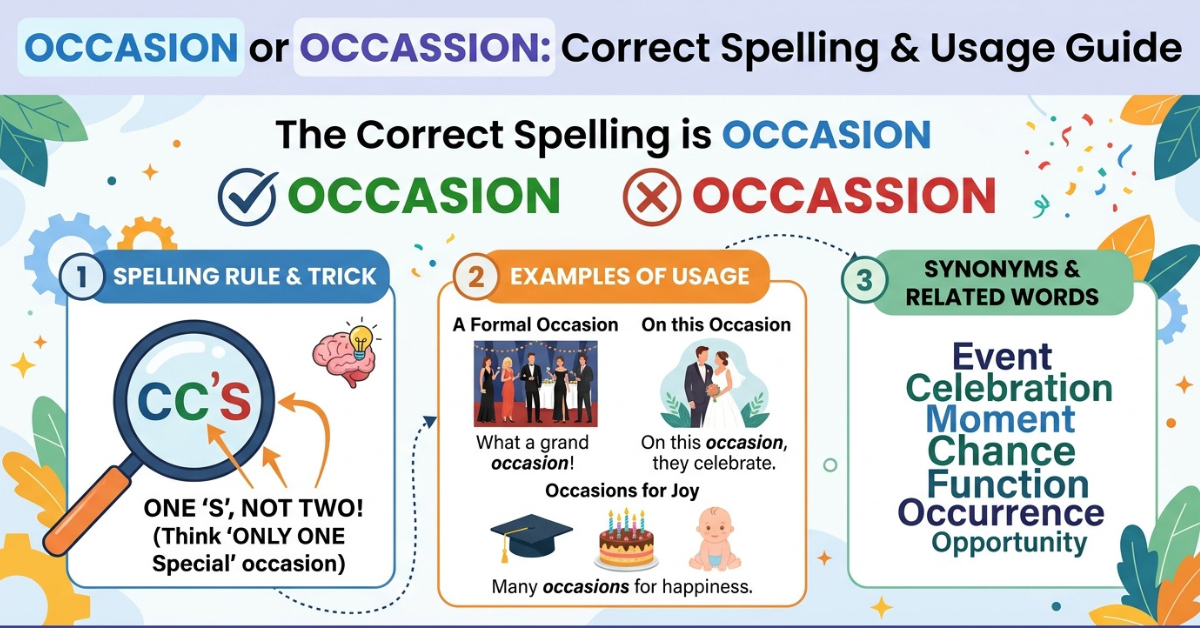
The correct spelling is occasion or occassion (correct form: occasion).
The double “s” in “occassion” is incorrect. The word comes from Latin roots and has only one “s” in standard English usage.
Why do people misspell it?
Here are a few common reasons:
- The word sounds like it has a double “s”
- Typing errors due to fast writing
- Lack of familiarity with spelling rules
- Influence from similar-sounding words
Remember: only occasion is accepted in formal writing.
Meaning of Occasion in Simple Words
The word occasion or occassion (correct: occasion) refers to:
- A special event or celebration
- A particular time when something happens
- A reason for doing something
Examples:
- “It was a happy occasion for the whole family.”
- “She rarely dresses up except on special occasions.”
- “This is a formal occasion, so dress appropriately.”
Common Usage of Occasion in Daily Life
Understanding usage helps you avoid spelling mistakes and improves fluency.
1. Social Events
Weddings, birthdays, and parties are all occasions.
2. Formal Situations
Meetings, award ceremonies, and official gatherings.
3. Emotional Moments
Farewells, reunions, or memorable milestones.
In all these cases, the correct spelling is always occasion or occassion (remember: only “occasion” is correct).
Occassion vs Occasion: Key Differences
Let’s clear the confusion once and for all.
| Incorrect Spelling | Correct Spelling | Usage Status |
| occassion | occasion | Wrong |
| occasion | occasion | Correct |
The incorrect version often appears in informal writing, but it should always be avoided in professional content.
Easy Tips to Remember the Correct Spelling
Here are some simple tricks to never forget it again:
- Think: “One special event = one ‘s’”
- Break it into: oc-ca-sion
- Link it with “special occasion = celebration”
- Practice writing it 3–5 times daily
These small habits can permanently fix the spelling in your memory.
Why Correct Spelling Matters in Writing
Using the correct form of occasion or occassion is important because:
- It improves your credibility
- It makes your writing more professional
- It helps in exams and academic work
- It enhances SEO if you’re writing online content
Even small spelling mistakes can change how readers perceive your work.
FAQs About Occasion or Occassion
1. What is the correct spelling: occasion or occassion?
The correct spelling is occasion. “Occassion” is incorrect.
2. Why do people write occassion instead of occasion?
Because of pronunciation confusion and typing habits.
3. What does occasion mean?
It means a special event, moment, or reason for something.
4. Is occassion used in English?
No, it is considered a spelling mistake.
5. How can I remember the correct spelling?
Think of it as a “single special event = single s.”
Conclusion
Understanding the difference between occasion or occassion is simple once you know the rule: only occasion is correct. Whether you’re writing an essay, social media post, or professional document, using the right spelling improves clarity and credibility.
If you often struggle with spelling, practice regularly and pay attention to commonly confused words. Small improvements in language skills can make a big difference in how confidently you communicate.