Embarrass or Embarass: Correct Spelling Explained Simply

One of the most common spelling confusions in English is embarass or embarrass. Many people are unsure whether the word has one “r” or two, and whether it ends with one “s” or two. If you’ve ever paused while writing this word, you’re not alone.
The correct spelling is embarrass, and in this article, we’ll break down why people often misspell it as embarass, what it actually means, and how you can remember it easily. Understanding this small detail can significantly improve your writing accuracy and confidence in English.
Why “Embarass or Embarrass” Confuses So Many People
English spelling rules are not always straightforward, and this word is a perfect example. The confusion between embarass or embarrass usually comes from pronunciation.
When spoken quickly, the double letters in embarrass are not clearly heard, so many assume a simpler spelling like “embarass” is correct. This leads to one of the most common spelling errors in academic writing, emails, and social media posts.
Common reasons for the mistake:
- Misleading pronunciation
- Over-simplification while typing
- Lack of awareness of double consonants
- Influence of informal writing habits
Correct Spelling: Embarrass
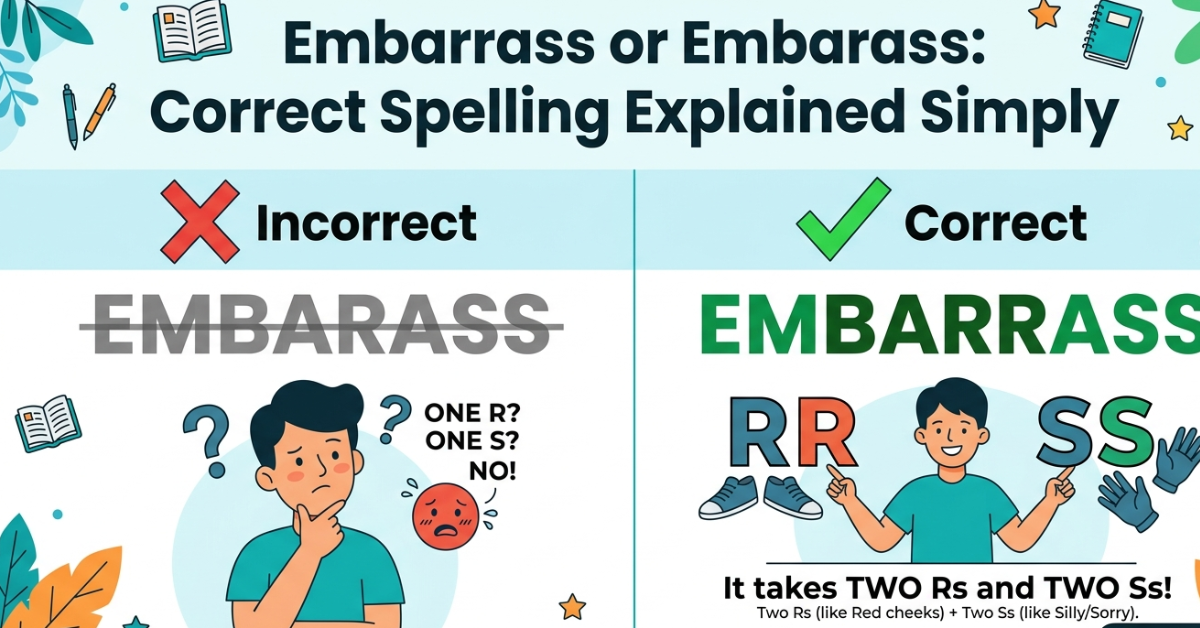
The correct spelling is embarrass, with:
- Two “r”s
- Two “s”s
It is important to remember that embarass is incorrect in standard English.
Meaning of Embarrass
The word embarrass means:
- To cause someone to feel awkward or ashamed
- To make someone uncomfortable in a social situation
- To put someone in a difficult or humiliating position
Example sentences:
- I didn’t mean to embarrass you in front of everyone.
- She felt embarrassed when she forgot her lines on stage.
- That mistake could embarrass the entire team.
Why the Word Has Double Letters
To understand the spelling better, it helps to look at its origin. The word embarrass comes from French, where double consonants are common in spelling patterns. When English borrowed the word, it kept the structure, including the double “r” and “s”.
This is why the correct form is not simplified to embarass, even though it may look easier.
Easy Tricks to Remember the Correct Spelling
If you often get stuck between embarass or embarrass, here are simple memory tricks:
1. The “R + R, S + S” Rule
Think of it like:
- Embarrass → double R
- Embass → double S
2. Break it into sounds
Break it like this:
- Em + bar + rass
This helps you remember the structure.
3. Think of “embarrassing situation”
The word “embarrassing” also follows the same pattern, reinforcing the correct spelling.
Common Mistakes People Make
Even advanced English learners sometimes struggle with this word. Here are a few frequent errors:
- Writing it as embarass (most common mistake)
- Missing one “r” or one “s”
- Incorrectly spelling related forms like “embarrased” instead of “embarrassed”
- Relying only on phonetic spelling
Being aware of these mistakes can help you avoid them in exams, professional emails, and everyday writing.
Embarrass in Different Forms
Like many English verbs, embarrass changes depending on tense and usage.
Present tense:
- I embarrass easily in crowds.
Past tense:
- He embarrassed himself during the presentation.
Adjective form:
- She felt embarrassed after the incident.
Noun form:
- The situation was an embarrassment for everyone involved.
Understanding these forms helps improve grammar accuracy along with spelling.
Quick Comparison Table
| Incorrect Form | Correct Form | Usage |
| embarass | embarrass | Verb (present) |
| embarassed | embarrassed | Past tense/adjective |
| embarassment | embarrassment | Noun |
Why Correct Spelling Matters
Using the correct spelling of embarrass is not just about grammar rules. It also impacts how others perceive your communication skills.
Good spelling helps you:
- Build credibility in writing
- Improve academic performance
- Make professional communication more polished
- Avoid misunderstandings
Small errors like this can change how your message is received, especially in formal writing.
FAQs About Embarrass or Embarass
1. What is the correct spelling: embarass or embarrass?
The correct spelling is embarrass, not embarass.
2. Why do people misspell embarrass?
People often misspell it because the double letters are not clearly pronounced.
3. Is embarass ever correct in English?
No, embarass is always incorrect in standard English.
4. What does embarrass mean?
It means to make someone feel awkward, ashamed, or uncomfortable.
5. How can I remember the spelling easily?
Remember the pattern: double “r” and double “s” — embarrass.
Conclusion
The confusion between embarass or embarrass is extremely common, but now you know the correct answer: it is always embarrass. The extra letters are part of its original structure and should never be removed.
By remembering simple tricks and understanding its origin, you can avoid this mistake in the future. Whether you’re writing essays, emails, or social media posts, using the correct spelling will make your communication clearer and more professional.
If you want to improve your English further, keep practicing tricky words like this and pay attention to spelling patterns—you’ll notice a big difference in your confidence and accuracy.