Have you ever come across the terms taping vs tapping and felt confused about why they sound so similar but mean completely different things? You’re not alone. Many people mix them up, especially in sports, therapy, and wellness contexts.
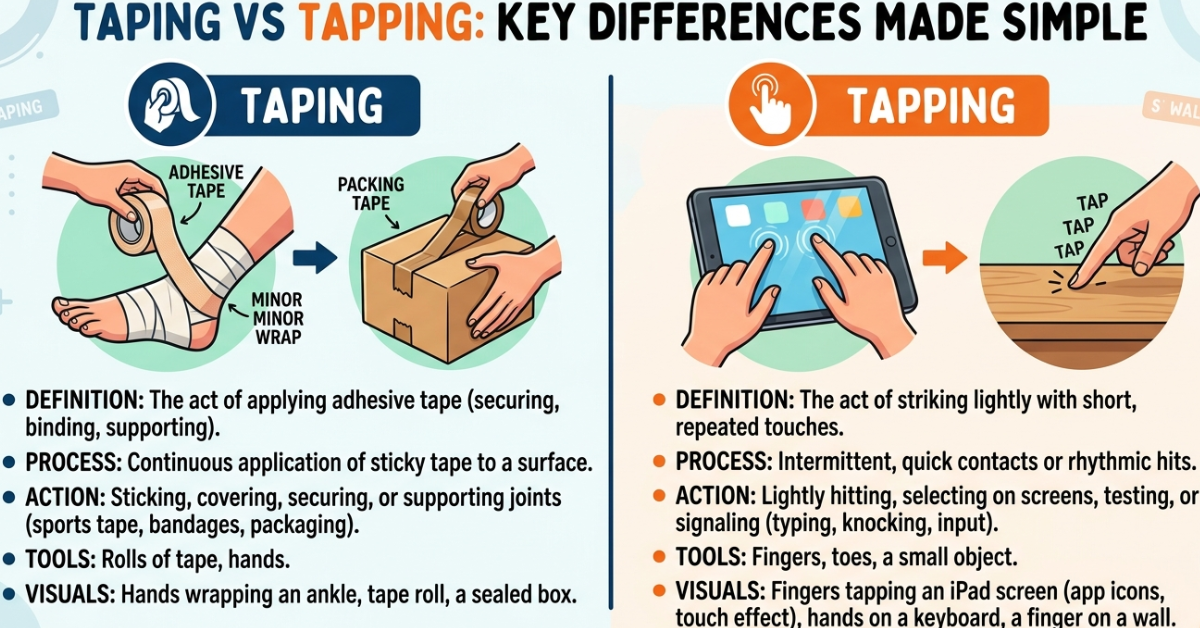
In simple words, taping vs tapping refers to two entirely different practices. Taping provides physical support to muscles or joints, while tapping involves rhythmic stimulation or gentle physical contact. In this guide, you will clearly understand both terms, how people use them, and why the difference matters in real life.
What is Taping? (Support and Stability in Action)
Taping refers to applying adhesive tape on the body to support muscles, joints, or ligaments. People mainly use it in sports medicine and physiotherapy.
Athletes and therapists actively use taping to improve performance and prevent injuries. For instance, they apply products like KT Tape or RockTape to stabilize movement.
How taping works
Taping actively supports the body in several ways:
- It stabilizes joints during physical activity
- It reduces stress on injured muscles
- It helps prevent further injury
- It supports recovery after strain or sprain
Moreover, kinesiology taping allows movement while still providing support, which makes it popular among athletes.
What is Tapping? (Rhythm, Therapy, and Stimulation)
Tapping refers to light, repeated contact using fingers or hands on a surface or body part. Unlike taping, it focuses on stimulation rather than support.
People commonly use tapping in therapy, relaxation techniques, and even everyday habits.
Where tapping is used
Tapping plays an important role in different areas:
- Emotional stress relief techniques (like EFT tapping)
- Massage and physical therapy sessions
- Neurological stimulation practices
- Simple habits like finger tapping for rhythm or focus
In addition, tapping can help improve awareness and relaxation in some therapeutic approaches.
Taping vs Tapping: Clear Differences Explained
Understanding taping vs tapping becomes easier when we compare them directly. Although the words look similar, their purpose and usage differ completely.
1. Purpose
- Taping: Provides support and stability
- Tapping: Stimulates nerves, rhythm, or relaxation
2. Method
- Taping: Uses adhesive tape applied to skin
- Tapping: Uses fingers or tools to create repeated contact
3. Field of Use
- Taping: Sports medicine, physiotherapy, rehabilitation
- Tapping: Psychology, therapy, music, relaxation
4. Physical Effect
- Taping: Restricts or supports movement
- Tapping: Encourages sensation and stimulation
Therefore, even though both terms relate to the body, they serve completely different functions.
When Do We Use Taping?
Taping is widely used in sports and rehabilitation because it actively supports injured or stressed body parts.
Common real-life uses
- Athletes tape ankles during matches
- Runners support knees during training
- Weightlifters stabilize shoulders
- Physiotherapists assist recovery after injuries
For example, kinesiology tape helps athletes continue movement safely while reducing strain. As a result, it becomes a key part of sports therapy.
When Do We Use Tapping?
Tapping works in completely different situations compared to taping. It focuses more on relaxation, stimulation, and sometimes emotional balance.
Common uses of tapping
- Reducing stress and anxiety through EFT
- Improving focus and mental clarity
- Stimulating muscles during therapy
- Creating rhythm in daily habits
For instance, in emotional freedom techniques, people tap specific points on the body to help regulate emotional responses. Similarly, therapists may use gentle tapping to activate muscle response.
Taping vs Tapping: Common Confusion Explained
Many people confuse taping vs tapping because the words look almost identical. However, this confusion disappears once you understand their purpose.
People often assume:
- Tapping involves tape (it does not)
- Taping is a relaxation method (it is not)
- Both work the same way in therapy (they do not)
However, once you understand their roles, the difference becomes very clear and logical.
Benefits of Taping and Tapping
Benefits of Taping
Taping offers strong physical advantages:
- It prevents sports injuries
- It supports weak or injured joints
- It improves movement control
- It enhances recovery speed
However, incorrect application may cause discomfort or skin irritation.
Benefits of Tapping
Tapping provides different types of benefits:
- It helps reduce stress
- It improves emotional balance in some cases
- It supports muscle stimulation
- It increases focus and awareness
Still, results may vary depending on the person and method used.
Simple Tips to Remember the Difference
If you still mix up taping vs tapping, use these simple tricks:
- Taping = Tape = Support and protection
- Tapping = Tap-tap = Rhythm and stimulation
Moreover:
- Think sports injury → taping
- Think stress relief or rhythm → tapping
This simple connection makes the difference easy to remember.
Key Takeaways
- Taping provides support, stability, and injury protection
- Tapping provides stimulation, rhythm, and relaxation
- Both belong to health-related fields but serve different purposes
- Understanding taping vs tapping prevents confusion in real-life use
FAQs About Taping vs Tapping
1. What is the main difference in taping vs tapping?
Taping supports muscles and joints using adhesive tape, while tapping uses rhythmic contact for stimulation or relaxation.
2. Is taping only used in sports?
Mostly yes, but physiotherapists also use it in rehabilitation and injury recovery programs.
3. Can tapping help with anxiety?
Yes, some techniques like EFT tapping may help reduce stress and anxiety, although results vary from person to person.
4. Do taping and tapping work together?
They may be used in the same therapy setting, but they serve completely different functions.
5. Why do people confuse taping vs tapping?
People confuse them because the words look and sound similar, even though their meanings are very different.
Conclusion
Understanding taping vs tapping helps clear up a common but important confusion. Taping focuses on physical support and injury prevention, while tapping focuses on stimulation, rhythm, and emotional relaxation.
Moreover, once you clearly understand their differences, you can easily recognize when each one is used in sports, therapy, or daily life. Ultimately, this knowledge helps you interpret health and wellness information more accurately and confidently.