Have you ever looked at a warm golden gemstone and wondered whether it’s gold or amber? At first glance, they can seem similar in color, but in reality, they are completely different in origin, value, and purpose. Understanding gold vs amber helps you make smarter choices whether you’re buying jewelry, collecting gemstones, or simply exploring natural materials.
In this guide on gold vs amber, you’ll learn how each material forms, how to tell them apart, their value in the market, and where they are commonly used. By the end, you’ll clearly understand which one suits your needs best.
What is Gold?
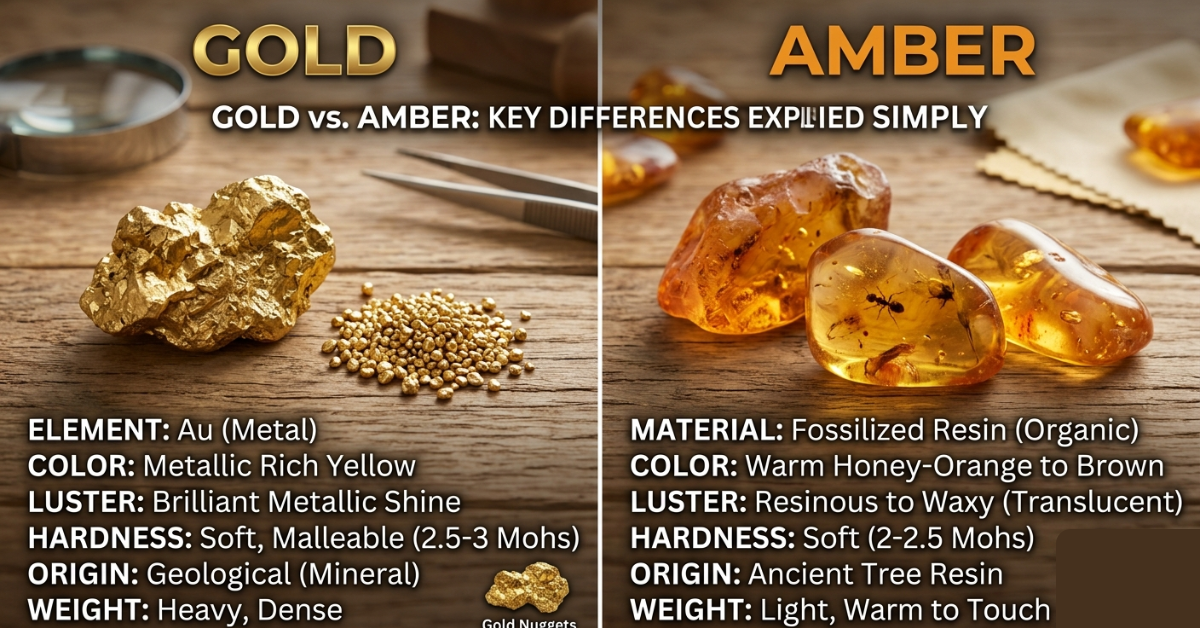
Gold is a naturally occurring precious metal known for its shine, rarity, and resistance to corrosion. It has been used for thousands of years in currency, jewelry, and trade.
Key characteristics of gold:
- Chemical symbol: Au
- Highly malleable and ductile
- Does not rust or tarnish
- Measured in karats (24K is pure gold)
Gold is often alloyed with other metals like copper or silver to improve strength for jewelry use. Its value is globally standardized, making it one of the most stable investment assets.
What is Amber?
Amber is not a metal or stone—it is fossilized tree resin that has hardened over millions of years. Most amber comes from ancient forests and is often found near the Baltic Sea.
Key characteristics of amber:
- Organic origin (tree resin, not mineral)
- Lightweight compared to metals
- Often contains preserved insects or plant material
- Warm, honey-like glow
Unlike gold, amber is valued more for its natural beauty and historical significance than for investment purposes.
Gold vs Amber: Key Differences
When comparing gold vs amber, the differences become clear in terms of origin, structure, and usage.
1. Origin
- Gold: Mined from the earth as a metal
- Amber: Fossilized resin from ancient trees
2. Composition
- Gold: Pure chemical element
- Amber: Organic compound (resin-based)
3. Value
- Gold: High monetary and investment value
- Amber: Moderate value based on quality and rarity
4. Appearance
- Gold: Bright metallic yellow shine
- Amber: Warm, translucent golden-brown glow
5. Durability
- Gold: Extremely durable and long-lasting
- Amber: Softer, can scratch more easily
This comparison shows that gold vs amber is not just about appearance—it’s about completely different natural identities.
Appearance, Texture & Visual Appeal
One of the most confusing parts of gold vs amber is how similar they can look in jewelry.
Gold appearance:
- Reflective metallic shine
- Consistent color across pieces
- Can be polished to mirror finish
Amber appearance:
- Slightly cloudy or translucent
- May contain natural inclusions
- Soft glow under sunlight
Jewelry designers often use amber to create vintage or earthy designs, while gold is used for luxury and formal pieces.
Value and Market Demand
The value difference in gold vs amber is significant.
Gold value factors:
- Global market price (traded daily)
- Purity level (karat system)
- Weight and demand
Amber value factors:
- Clarity and color quality
- Presence of inclusions (like insects)
- Origin (Baltic amber is highly prized)
Gold is considered a financial asset, while amber is more of a collectible or aesthetic gemstone.
Uses in Jewelry and Culture
Both materials have been used for centuries, but in very different ways.
Gold uses:
- Rings, necklaces, bracelets
- Investment bars and coins
- Religious and cultural artifacts
Amber uses:
- Beads and pendants
- Traditional healing jewelry
- Decorative art pieces
In ancient Roman and Greek cultures, amber was believed to hold protective energy, while gold symbolized power and wealth.
Which One Should You Choose?
Choosing between gold vs amber depends on your purpose:
- Choose gold if you want investment value, durability, and long-term wealth storage.
- Choose amber if you prefer natural, artistic, and lightweight jewelry with unique character.
Many modern designers even combine both materials for contrast and aesthetic appeal.
How to Identify Real Gold and Amber
Here are simple tips:
Identifying gold:
- Check for karat stamp (10K, 18K, 24K)
- Does not tarnish or change color easily
- Professional acid test confirms purity
Identifying amber:
- Lightweight and warm to touch
- Can float in saltwater
- Emits a resin-like smell when heated slightly
These tests help avoid confusion when evaluating gold vs amber products.
Key Takeaways
- Gold is a precious metal; amber is fossilized resin
- Gold holds higher financial value
- Amber is valued for beauty and uniqueness
- Both have deep cultural and historical significance
- They serve very different purposes in jewelry and design
FAQ: Gold vs Amber
1. Is amber more valuable than gold?
No, gold generally has higher market value due to its rarity and global demand. Amber value depends more on appearance and uniqueness.
2. Can amber be used like gold in jewelry?
Yes, amber is commonly used in jewelry, but it is softer and less durable than gold.
3. How can I tell the difference between gold vs amber?
Gold is metallic and heavy, while amber is lightweight and has a natural resin glow.
4. Does amber have healing properties?
Some cultures believe amber has calming and healing energy, but this is not scientifically proven.
5. Why is gold more expensive than amber?
Gold has industrial, financial, and investment demand, while amber is mainly decorative.
6. Which is better for long-term investment: gold vs amber?
Gold is far better for investment due to its stable global pricing and economic value.
Conclusion
Understanding gold vs amber helps you appreciate two very different natural materials—one born from deep Earth processes and the other from ancient organic resin. While gold represents wealth, stability, and investment power, amber represents nature, history, and artistic beauty.
Whether you are choosing jewelry or simply exploring natural materials, knowing these differences allows you to make more informed and confident decisions.