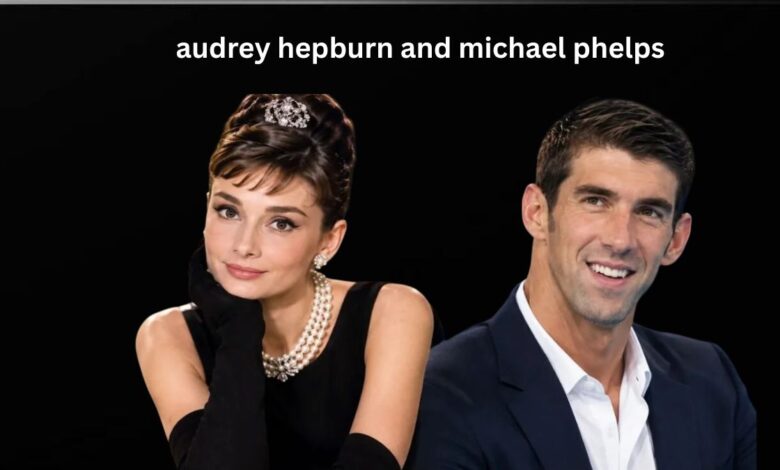
Audrey Hepburn and Michael Phelps belong to completely different generations and fields, yet their names continue to stand out in popular culture. Hepburn became one of Hollywood’s most admired actresses and a lasting fashion icon. Phelps became the most decorated Olympic swimmer in history, known for his extraordinary achievements in the pool.
At first glance, there seems to be little connecting the two. Hepburn was associated with classic cinema, elegance, humanitarian work, and timeless fashion. Phelps is known for swimming, Olympic competition, intense training, and athletic excellence. However, looking at their lives together reveals some interesting similarities.
Both built careers through discipline, dedication, and an ability to perform under pressure. They also became recognizable far beyond their original professions. Their stories show how talent can create fame, while personal values and long-term achievements can shape a lasting legacy.
Who Was Audrey Hepburn?
Audrey Hepburn was a British actress and humanitarian who became one of the most recognizable stars of classic Hollywood. She was born on May 4, 1929, in Brussels, Belgium. Her early life was shaped by the difficult conditions of World War II, particularly her experiences in the Netherlands during the German occupation.
Hepburn originally trained in ballet and hoped to become a professional dancer. Her career eventually moved toward acting, where her natural screen presence quickly attracted attention. She gained international recognition after starring in Roman Holiday in 1953, a performance that earned her the Academy Award for Best Actress.
Her film career continued with major productions such as Sabrina, Funny Face, Breakfast at Tiffany’s, and My Fair Lady. She became known for her graceful style, distinctive personality, and ability to bring warmth to her characters.
Who Is Michael Phelps?
Michael Phelps is an American former competitive swimmer whose career changed the way many people viewed Olympic swimming. Born on June 30, 1985, in Baltimore, Maryland, he began swimming at a young age and eventually developed into an elite international athlete.
Phelps competed at five Olympic Games, beginning with Sydney 2000 when he was only 15 years old. He went on to win a record total of 28 Olympic medals, including 23 gold medals. His Olympic career made him one of the most successful athletes in the history of the Games.
His achievements were not simply the result of natural ability. Years of training, competition, preparation, and commitment played major roles in his success. His career also demonstrated the physical and mental demands involved in reaching the highest level of professional sport.
Audrey Hepburn and Michael Phelps Come From Different Eras
One of the most obvious facts about Audrey Hepburn and Michael Phelps is that they belonged to completely different generations. Hepburn was born in 1929, while Phelps was born more than five decades later in 1985.
Their professional worlds were also completely different. Hepburn worked primarily in film, television, fashion, and humanitarian causes. Phelps dedicated most of his professional life to competitive swimming and international sport.
Because of these differences, there is no major professional partnership or direct career connection between them. They did not work together in films, sports, or charitable projects. Their connection mainly comes from the way both became globally recognizable figures whose influence extended beyond their original careers.
Their Shared Commitment to Excellence
Although their careers were unrelated, Hepburn and Phelps both demonstrated a strong commitment to excellence. Hepburn had to develop her acting abilities and adapt to the demanding environment of international cinema. Phelps faced an equally demanding path in competitive swimming.
Hepburn’s performances required preparation, concentration, and an understanding of character. Her success was not based only on appearance. She developed into a respected performer who could handle comedy, drama, romance, and more serious roles.
Phelps, meanwhile, spent countless hours training in the pool. Competitive swimming requires technical precision, physical conditioning, endurance, and the ability to perform under intense pressure. His Olympic record reflects years of preparation rather than a single moment of success.
Audrey Hepburn’s Influence on Fashion
Audrey Hepburn became one of the most influential fashion figures of the twentieth century. Her style was often associated with simplicity, elegance, and clean lines. Rather than relying on overly complicated looks, she often appeared in outfits that emphasized sophistication.
Her collaboration with designer Hubert de Givenchy became particularly important to her public image. Their professional relationship helped establish a visual style that remains strongly associated with Hepburn today.
Even decades after her major films were released, her fashion influence continues to appear in magazines, films, advertising, and modern fashion collections. Her image became larger than any individual movie, turning her into a cultural symbol.
Michael Phelps and the Culture of Olympic Sport
Michael Phelps had a similar kind of influence within athletics. His achievements helped bring greater attention to competitive swimming and the Olympic Games. Swimming is often a demanding but less commercially visible sport than some major professional leagues, yet Phelps became a household name.
His Olympic performances attracted audiences around the world. Every race brought attention not only to Phelps but also to the technical and competitive nature of swimming.
His success also influenced younger swimmers. Many athletes who watched his Olympic performances grew up viewing him as an example of what could be achieved through elite training and competition.
Their Experiences With Public Attention
Hepburn and Phelps both experienced intense public attention, although the nature of that attention was different.
For Hepburn, photographers, film audiences, fashion publications, and entertainment media followed her career closely. Her appearance became an important part of her public identity, but she also became known for her personality and humanitarian work.
Phelps experienced a different form of attention. Much of his public profile was connected to Olympic competition, records, medals, and athletic performance. Sports media regularly examined his races, preparation, and achievements.
Both situations demonstrate how global fame can make a person’s professional life highly visible. At the same time, each maintained aspects of life away from the public stage.
Audrey Hepburn’s Humanitarian Legacy
One of the most important parts of Hepburn’s later life was her humanitarian work. She became a UNICEF Goodwill Ambassador in 1989 and traveled to several countries to support children facing poverty, hunger, and difficult living conditions.
Her humanitarian activities changed the way many people viewed her public identity. She was no longer known only as a classic Hollywood actress. Her work with UNICEF became an important part of her legacy.
Hepburn died on January 20, 1993, at the age of 63. Her humanitarian efforts remain an important part of how she is remembered, alongside her film career and cultural influence.
Michael Phelps Beyond Swimming
Phelps also became known for activities beyond competition. After retiring from Olympic swimming, he continued to work with organizations and initiatives connected to swimming, wellness, and mental health awareness.
The Michael Phelps Foundation has focused on helping young people develop healthy lifestyles and learn swimming skills. His post-competition work reflects an effort to use his public platform for purposes beyond athletic achievement.
Phelps has also spoken publicly about mental health and the pressures associated with elite competition. His openness has contributed to broader conversations about the challenges athletes can face away from the scoreboard.
A Look at Their Major Achievements
| Category | Audrey Hepburn | Michael Phelps |
|---|---|---|
| Field | Film and humanitarian work | Competitive swimming |
| Born | 1929 | 1985 |
| Nationality | British | American |
| Major recognition | Academy Award and global film career | Record Olympic medal haul |
| Famous for | Acting, fashion, humanitarian work | Olympic swimming |
| Major era | 1950s–1980s | 2000s–2010s |
| Olympic connection | None as an athlete | Five Olympic Games |
| Humanitarian work | UNICEF Goodwill Ambassador | Foundation and youth-focused initiatives |
The table shows just how different their professional paths were. Hepburn built her reputation through entertainment and humanitarian work, while Phelps built his through competitive sport.
Yet both eventually developed identities that extended beyond their primary professions.
Why People May Search for Audrey Hepburn and Michael Phelps Together
The phrase “Audrey Hepburn and Michael Phelps” can seem unusual because there is no widely recognized professional partnership between the two. Search interest may arise from comparisons involving famous personalities, cultural icons, historical timelines, or online discussions.
People sometimes connect famous individuals because they represent different forms of achievement. Hepburn represents classic cinema and timeless style, while Phelps represents modern Olympic excellence.
There may also be curiosity because both names are extremely recognizable. Search engines frequently group public figures together when users explore celebrity comparisons, cultural discussions, or unusual connections.
It is important, however, not to assume that a search phrase proves that the two people had a direct relationship. Their documented careers developed separately.
Their Lasting Cultural Impact
Audrey Hepburn remains a major cultural figure decades after her death. Her movies continue to attract new audiences, and her fashion style continues to influence designers and celebrities. Her humanitarian work adds another dimension to her legacy.
Michael Phelps remains an important figure in Olympic history. His medal record is one of the most recognizable achievements in modern international sport. His career is frequently discussed when people examine the greatest Olympic performances.
Their influence also demonstrates two different ways a public figure can remain relevant. Hepburn’s legacy is closely tied to cinema, fashion, humanitarianism, and cultural memory. Phelps is strongly associated with athletic achievement, Olympic history, and sports culture.
What Their Stories Have in Common
The biggest similarity between Audrey Hepburn and Michael Phelps is not their profession. It is their ability to turn exceptional performance into a lasting public legacy.
Hepburn became successful by developing her skills as an actress while creating a distinctive personal style. Phelps became successful through years of disciplined swimming and competition. Neither career was built overnight.
They also show how fame can evolve over time. Hepburn eventually became known for humanitarian work in addition to acting. Phelps continued his public work after leaving competitive swimming.
Their stories suggest that long-term influence can come from more than awards or records. The way a person uses their platform can become an important part of how future generations remember them.
Frequently Asked Questions
Did Audrey Hepburn and Michael Phelps know each other?
There is no well-established public record of a significant personal or professional relationship between Audrey Hepburn and Michael Phelps. They belonged to different generations and worked in completely different fields.
What was Audrey Hepburn famous for?
Audrey Hepburn was famous for her film career, especially movies such as Roman Holiday, Breakfast at Tiffany’s, Sabrina, and My Fair Lady. She was also known for her fashion influence and humanitarian work with UNICEF.
What is Michael Phelps famous for?
Michael Phelps is famous for his record-breaking Olympic swimming career. He won 28 Olympic medals, including 23 gold medals, making him the most decorated Olympian in history.
Were Audrey Hepburn and Michael Phelps both athletes?
No. Audrey Hepburn was an actress and humanitarian. She trained in ballet when she was young but did not become a professional athlete. Michael Phelps was an elite competitive swimmer.
Did Audrey Hepburn work with UNICEF?
Yes. Hepburn became a UNICEF Goodwill Ambassador in 1989 and participated in humanitarian missions supporting children and communities facing serious hardships.
When did Michael Phelps retire?
Michael Phelps retired from competitive swimming after the 2016 Rio Olympics. He had previously announced retirement after the 2012 London Olympics but returned to competition.
Final Thoughts
Audrey Hepburn and Michael Phelps represent two very different forms of global achievement. Hepburn became an enduring figure in film, fashion, and humanitarian work, while Phelps established an extraordinary record in Olympic swimming.
There is no major documented professional connection between them, but placing their names together offers an interesting look at how public figures can leave lasting marks on different areas of culture. Hepburn’s influence continues through cinema, fashion, and humanitarian memory. Phelps’s legacy continues through Olympic history, swimming, and his work after competition.
Their careers also highlight an important point about lasting fame. Success can begin in one profession but eventually become part of a much larger cultural story.