Karen Lynch and Elizabeth Taylor: Decoding the Search Trend and Comparing Iconic Trailblazers

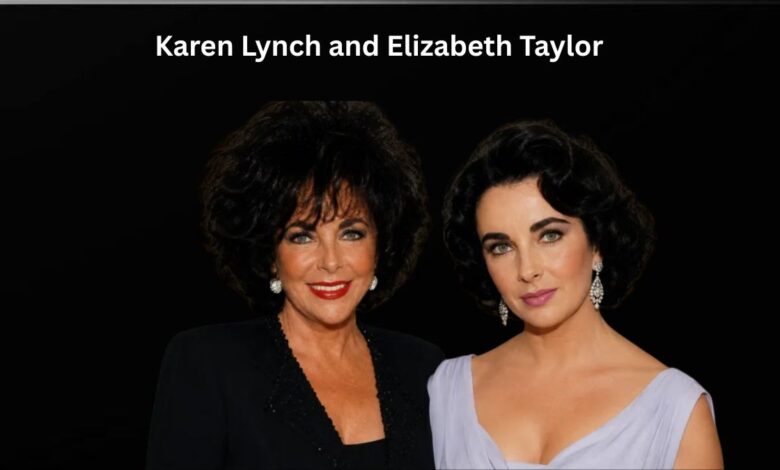
When you search for two influential women like Karen Lynch and Elizabeth Taylor together, you might naturally expect to uncover a dramatic story of a corporate partnership, an unexpected personal friendship, or a quiet family connection. However, the literal reality is that these two world-renowned figures belong to entirely different eras, industries, and social spheres. Karen Lynch made her mark as a corporate powerhouse who rose through the ranks of American finance and healthcare to lead Fortune 500 giant CVS Health, whereas Elizabeth Taylor was Hollywood royalty whose cinematic legacy, personal glamour, and ground-breaking activism defined twentieth-century pop culture. There is no documented record of them ever meeting, working together, or sharing a family tree.
So why do their names end up paired across search engines and online discussion boards? The phenomenon is primarily a modern quirk driven by algorithmic search trends, digital media roundups, and comparison algorithms. Content creators frequently group landmark historical figures alongside contemporary corporate titans to explore broader themes of female leadership, influence, and breaking glass ceilings in male-dominated industries. Over time, as users repeatedly click on these curiosity-inducing keywords, search engines begin pairing the names dynamically, creating an artificial search trend where curious readers end up asking how the two women are connected.
Unpacking this digital pairing actually offers a fascinating lens through which to examine modern influence. While one woman mastered the intricacies of managing multi-billion-dollar healthcare organizations, the other mastered the arts of performance, global brand building, and high-impact celebrity philanthropy. By looking closely at both of their journeys, we can see how leadership, public perception, and industry transformation evolved over the course of a century.
Karen Lynch: Transforming Modern Corporate Healthcare
Karen Lynch’s professional rise stands as one of the most compelling corporate growth stories in recent business history. Born in Ware, Massachusetts, Lynch faced profound personal tragedy early in life when she lost her mother at the age of twelve, an experience that instilled in her an immense sense of resilience and empathy. She went on to study finance and accounting at Boston College, later earning an executive MBA from Boston University. She began her professional career as a Certified Public Accountant at Ernst & Young, grounding her future executive leadership in sharp financial rigor and complex operational management.
Lynch gradually built a formidable executive profile across the health insurance sector, holding pivotal executive roles at Cigna, Magellan Health Services, and Aetna. In 2015, she made history by becoming the first female president of Aetna. When CVS Health acquired Aetna for nearly $70 billion in 2018, Lynch’s instrumental role in managing the integration solidified her position as a central leader in the combined company. By February 2021, she was named President and Chief Executive Officer of CVS Health, making her the highest-ranking female executive on the Fortune 500 list at the time.
Her tenure as CEO of CVS Health was defined by massive strategic shifts aimed at turning a traditional pharmacy chain into a comprehensive, community-focused healthcare enterprise. Steering the company through the height of the COVID-19 pandemic, Lynch spearheaded nationwide vaccine rollouts and diagnostic services. Under her guidance, CVS executed major strategic acquisitions, including Oak Street Health and Signify Health, to expand direct primary care and home care capabilities. Recognized repeatedly on Fortune’s “Most Powerful Women in Business” list, Lynch demonstrated how technical financial mastery, operational scale, and clear strategic vision can reshape critical public infrastructure.
Elizabeth Taylor: From Hollywood Legend to Cultural Icon
Elizabeth Taylor remains one of the most enduring figures in global entertainment history. Born in London in 1932 to American parents, her family relocated to California shortly before the outbreak of World War II. Taylor’s screen presence was undeniable from a young age; she captured international attention as a child star in classics like National Velvet. Unlike many young performers of her era, she successfully transitioned into mature, dramatically complex roles, becoming a cornerstone of MGM’s Golden Age during the 1950s and 1960s.
Across her six-decade acting career, Taylor earned critical acclaim, massive box office draw, and two Academy Awards for Best Actress—first for BUtterfield 8 in 1960 and later for her fierce, iconic performance in Who’s Afraid of Virginia Woolf? in 1966. Beyond her cinematic talents, her public persona commanded unprecedented global media fascination. Her high-profile personal life, landmark movie contracts, and iconic style made her one of the most recognizable people on Earth, effectively setting the blueprint for how fame and public image would function in the modern media age.
However, Taylor’s lasting influence extended far beyond the silver screen. She was an astute businesswoman who fundamentally pioneered the celebrity fragrance industry with hits like White Diamonds, creating a personal commercial brand empire that grossed hundreds of millions of dollars. Furthermore, following the loss of her close friend Rock Hudson to AIDS in 1985, Taylor threw her global star power behind HIV/AIDS activism. Co-founding the American Foundation for AIDS Research (amfAR) and establishing the Elizabeth Taylor AIDS Foundation, she raised immense funding and fought tirelessly against social stigma during a era of profound public indifference.
Parallel Paths of Female Leadership and Cultural Impact
While Karen Lynch and Elizabeth Taylor built their reputations in vastly different sectors, comparing their career trajectories highlights the changing nature of authority, fame, and executive leadership over the last century. Both women operated at the absolute summit of heavily male-dominated fields. Taylor navigated the rigid studio system of mid-century Hollywood, eventually gaining unprecedented creative control, financial leverage, and commercial autonomy. Decades later, Lynch navigated the entrenched corporate hierarchies of American finance and healthcare, steadily rising through performance and operational leadership until reaching the top of the corporate ladder.
Each woman also understood the necessity of transforming personal visibility into lasting structural impact. For Elizabeth Taylor, fame was not merely a side effect of stardom—it was a strategic asset she harnessed to force mainstream public attention onto the HIV/AIDS crisis, raising hundreds of millions for medical research and patient care. For Karen Lynch, holding corporate authority provided the leverage needed to reimagine how ordinary Americans access everyday health services, shifting corporate focus toward preventive care, mental health resources, and patient-centered solutions.
Ultimately, examining figures like Karen Lynch and Elizabeth Taylor side-by-side reveals how female leadership manifests across different spheres. Whether through corporate strategy or cultural advocacy, both women demonstrated how personal ambition, strategic thinking, and resilience can reshape major industries. The online interest in their names may have started as an algorithmic anomaly, but it serves as a great reminder of how distinct leadership journeys leave permanent marks on society.