Money in Different Languages: Global Guide & Meanings

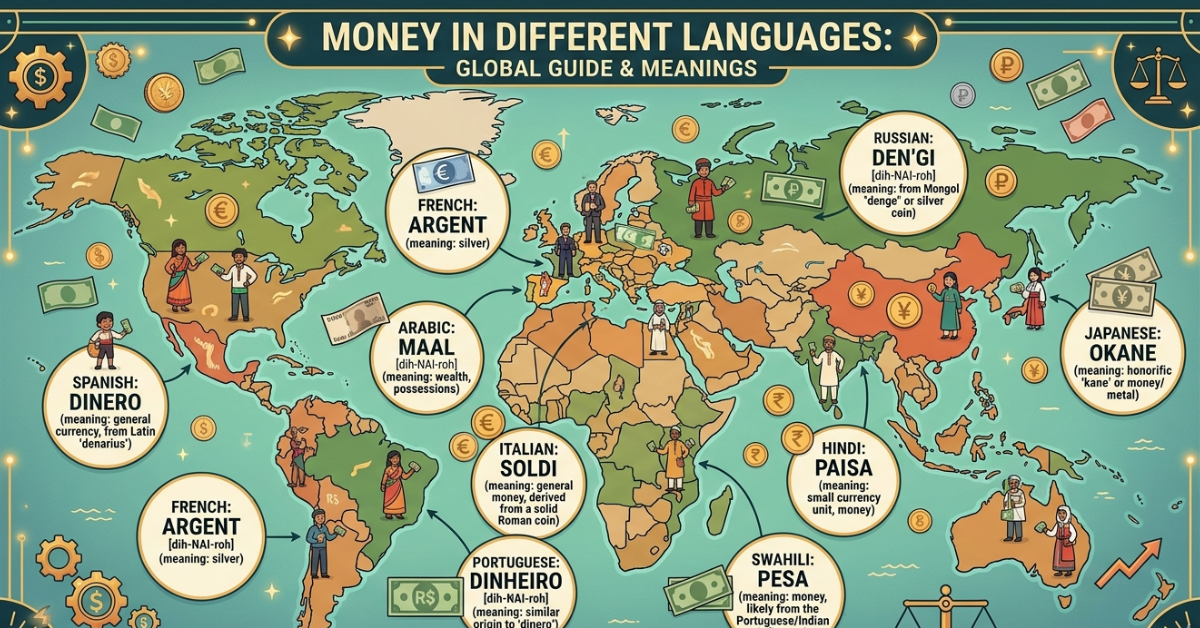
Have you ever wondered how people around the world talk about wealth, currency, or cash in their own languages? It’s interesting how a single concept like “money” can sound completely different depending on where you are.
Understanding money in different languages, how do you say money in different languages, and how to say money in different languages helps you not only learn vocabulary but also understand cultures, travel conversations, and global communication better.
In this guide, you’ll discover translations of “money” across major world languages, cultural meanings behind the word, real-life usage examples, and practical tips to remember them easily.
What Does “Money” Mean Across Cultures?
Before jumping into translations, it’s important to understand that “money” is more than just a word. It represents:
- Currency used for trade and exchange
- Value and economic power
- Cultural expressions and idioms
- Everyday survival and lifestyle
In many languages, the word for money also connects to ideas like wealth, gold, or coins. This makes not just linguistic learning—but also cultural learning.
Money in Different Languages: Global Translations
Here’s a breakdown of how “money” is expressed around the world.
European Languages
- English (English language): Money
- Spanish (Spanish language): Dinero
- French (French language): Argent
- German (German language): Geld
- Italian (Italian language): Denaro
- Portuguese: Dinheiro
- Russian: Деньги (Dengi)
Asian Languages
- Arabic (Arabic language): مال (Māl)
- Chinese (Mandarin) (Chinese language): 钱 (Qián)
- Japanese (Japanese language): お金 (Okane)
- Korean: 돈 (Don)
- Hindi: पैसा (Paisa) / धन (Dhan)
- Urdu: پیسہ (Paisa)
Other Major Languages
- Swahili: Pesa
- Turkish: Para
- Greek: Χρήματα (Chrímata)
- Thai: เงิน (Ngern)
- Vietnamese: Tiền
This global view shows how diverse human communication really is.
Common Patterns Behind the Word “Money”
When studying money in different languages, you’ll notice some interesting patterns:
1. Words Derived from Trade or Coins
Many languages link money to physical currency:
- “Geld” (German) originally related to payment or tribute
- “Paisa” (Urdu/Hindi) refers to small coin units
- “Denaro” (Italian) comes from Roman currency “denarius”
2. Words Connected to Wealth or Value
Some languages focus on value rather than coins:
- “Argent” (French) literally means silver
- “Dhan” (Hindi) refers to wealth or prosperity
3. Short, Simple Words in Modern Usage
In informal speech, many languages shorten or simplify the word:
- “Cash” is globally understood
- Slang terms vary widely (bucks, dough, etc.)
How to Say Money in Different Languages (Real Usage Examples)
Understanding vocabulary is useful, but seeing it in action makes it easier.
- English: I need money for travel.
- Spanish: Necesito dinero para viajar.
- French: J’ai besoin d’argent pour voyager.
- German: Ich brauche Geld zum Reisen.
- Arabic: أحتاج المال للسفر
- Chinese: 我需要钱去旅行
- Japanese: 旅行のためにお金が必要です
These examples help you understand in real conversations.
Cultural Meaning of Money Around the World
Money isn’t just a word—it reflects cultural attitudes.
Western Perspective
In many Western cultures, money is associated with independence, success, and freedom.
Eastern Perspective
In many Asian cultures, money is often connected with family responsibility, stability, and respect.
Middle Eastern Perspective
Wealth is frequently linked with generosity and hospitality.
So when learning, you’re also learning how societies think about value and prosperity.
Why Learning “Money” Words Matters
You might wonder why this topic is important. Here’s why:
- Essential for travel conversations
- Useful in business and freelancing
- Helps in currency exchange situations
- Improves cultural understanding
- Builds basic multilingual vocabulary
If you’re learning a new language, “money” is one of the first practical words you’ll use in real life.
Practical Tips to Remember “Money” in Different Languages
Here are simple ways to memorize vocabulary faster:
1. Group Similar Words
For example:
- Spanish “dinero”
- Italian “denaro”
- Portuguese “dinheiro”
They sound similar because they share Latin roots.
2. Use Flashcards
Write:
- English on one side
- Foreign word on the other
3. Practice in Real Context
Instead of memorizing alone, use sentences like:
- “How much money is this?”
- “I need money for food.”
4. Watch Foreign Content
Movies, dramas, and YouTube videos help reinforce how to say money in different languages naturally.
Key Takeaways
- “Money” changes in form across languages but keeps similar meanings
- Many words come from trade, coins, or wealth concepts
- Learning translations improves travel and communication skills
- Cultural understanding is just as important as vocabulary
- Practice helps you remember faster and longer
Frequently Asked Questions (FAQs)
1. How do you say money in different languages?
Money is translated differently across languages—for example, “dinero” in Spanish, “argent” in French, and “geld” in German. Each language reflects its own cultural and historical background.
2. What is the most common word for money worldwide?
“Cash” and “money” are widely understood in global communication. However, native terms like “paisa,” “dollar,” or “euro” are used in specific regions.
3. Why does money have different names in languages?
Languages develop independently, and words for money often come from historical trade systems, coins, or cultural values.
4. Is learning money vocabulary useful for travel?
Yes, knowing money in different languages helps you handle payments, exchange currency, and communicate effectively while traveling.
5. Are there slang words for money in other languages?
Yes, almost every language has slang. For example, English uses “bucks,” while Spanish speakers may use “plata” informally.
6. What is the easiest way to remember money words?
Practice in sentences, group similar languages together, and use them in real-life conversations or language apps.
Conclusion
Understanding money in different languages, opens the door to both language learning and cultural awareness. From “dinero” in Spanish to “geld” in German and “paisa” in Urdu, each word carries history, identity, and meaning.
If you’re learning or planning to travel, start with everyday words like money—they are small but incredibly powerful in real communication.