If you’ve ever paused while texting and wondered whether to write yea vs yeah vs yay, you’re definitely not alone. These three tiny words look similar, sound alike, and often get mixed up in casual writing.
The focus keyword yea vs yeah vs yay is especially confusing because each word expresses agreement or excitement—but in very different ways. Understanding the difference helps you sound more natural in English, whether you’re chatting, posting on social media, or writing informally.
In this guide, we’ll break everything down in a simple, human way so you never mix them up again.
Yea vs Yeah vs Yay: What Do They Really Mean?
Let’s start with the basics. Even though yea vs yeah vs yay are often used interchangeably online, they actually serve different purposes in English communication.
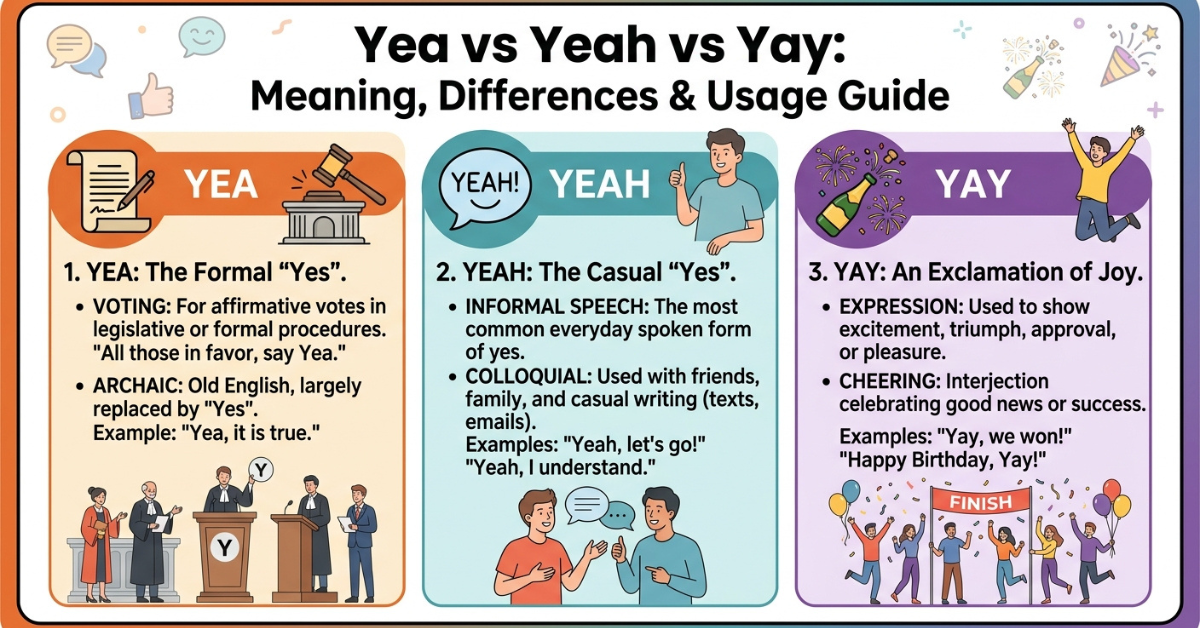
1. Yea: The Formal or Voting Word
“Yea” is the oldest and most formal of the three. You’ll rarely see it in everyday texting, but it still exists in formal or official contexts.
When to use “yea”:
- In formal voting (yes/no decisions)
- In old-fashioned or literary English
- In official records or proceedings
Example:
- The committee voted yea on the proposal.
Think of “yea” as a serious, old-school version of “yes.”
2. Yeah: The Everyday Casual Yes
Among yea vs yeah vs yay, “yeah” is the most commonly used in modern English. It simply means “yes,” but in a relaxed, informal tone.
When to use “yeah”:
- Casual conversations
- Text messages and chats
- Informal agreement
Examples:
- “Are you coming?” → “Yeah, I’ll be there.”
- “Do you like coffee?” → “Yeah, I love it.”
Key point:
“Yeah” is neutral—it’s not excited, just casual agreement.
3. Yay: The Expression of Excitement
“Yay” is all about emotion. Unlike the other two, it doesn’t just mean agreement—it shows happiness, excitement, or celebration.
When to use “yay”:
- Celebrating good news
- Expressing joy or excitement
- Social media reactions
Examples:
- “We’re going on vacation!” → “Yay!”
- “You passed your exam!” → “Yay, congratulations!”
Key point:
“Yay” is emotional, upbeat, and expressive.
Quick Comparison of Yea vs Yeah vs Yay
To make it even clearer, here’s a simple breakdown:
- Yea → Formal yes (used in voting or official language)
- Yeah → Casual yes (everyday conversation)
- Yay → Excited cheer (emotion and happiness)
Even though yea vs yeah vs yay look similar, their tone and usage are completely different.
Common Mistakes People Make
Many learners mix these words because they sound alike. Here are some common errors:
1. Using “yay” instead of “yeah”
- Incorrect: “Do you want tea?” → “Yay”
- Correct: “Yeah”
2. Using “yea” in casual chat
- Incorrect: “Are you free?” → “Yea”
- Correct: “Yeah”
3. Overusing “yeah” for excitement
- Incorrect: “We won!” → “Yeah”
- Better: “Yay!”
Understanding yea vs yeah vs yay helps you avoid sounding awkward in different situations.
Simple Memory Trick to Remember the Difference
Here’s an easy way to never forget:
- Yea = Election (formal, serious)
- Yeah = Everyday talk
- Yay = Yippee (joyful emotion)
This mental shortcut works surprisingly well when deciding between yea vs yeah vs yay in real-time conversations.
Where You’ll Commonly See These Words
Social Media
- “Yay” dominates Instagram captions and reactions.
- “Yeah” is common in comments and replies.
Text Messaging
- “Yeah” is the default casual response.
- “Yay” appears when something good happens.
Formal Settings
- “Yea” appears in voting records or formal documents.
Why These Words Matter in English Communication
Even though they are small words, they play a big role in tone. Choosing correctly between yea vs yeah vs yay can change how your message feels.
- “Yeah” keeps conversations natural
- “Yay” adds emotion and positivity
- “Yea” maintains formal correctness
Using the right one helps you sound more fluent and context-aware in English.
FAQs About Yea vs Yeah vs Yay
1. What is the difference between yea vs yeah vs yay?
“Yea” is formal approval, “yeah” is casual yes, and “yay” expresses excitement or joy.
2. Is “yea” still used in modern English?
Yes, but rarely. It’s mostly used in formal voting or legal contexts.
3. Can I use “yeah” in writing?
Yes, “yeah” is widely accepted in informal writing like chats, blogs, and social media.
4. Is “yay” a real English word?
Yes, “yay” is an informal interjection used to show happiness or excitement.
5. Why do people confuse yea vs yeah vs yay?
They sound similar and are often used in casual digital communication, which leads to confusion.
Conclusion
Understanding yea vs yeah vs yay is all about recognizing tone and context. While they may look and sound similar, each word serves a unique purpose in English communication.
To sum it up:
- Use yea in formal or voting situations
- Use yeah in everyday casual conversation
- Use yay when you want to express excitement
Once you get comfortable with these differences, your English will sound more natural, expressive, and confident. If you enjoyed learning this, keep exploring similar grammar distinctions to sharpen your language skills even further.