Ever come across the words wharf and warf and wondered if they mean the same thing? The confusion around Wharf vs Warf is more common than you might think, especially for students, writers, and English learners. While both words look similar, only one is actually correct in standard English.
In this article, we’ll break down the meaning, spelling, and usage of wharf, clear up why warf appears in writing, and help you confidently use the right term in real-life contexts like shipping, travel, and geography.
Wharf vs Warf: What’s the Real Difference?
The main issue in Wharf vs Warf is spelling, not meaning.
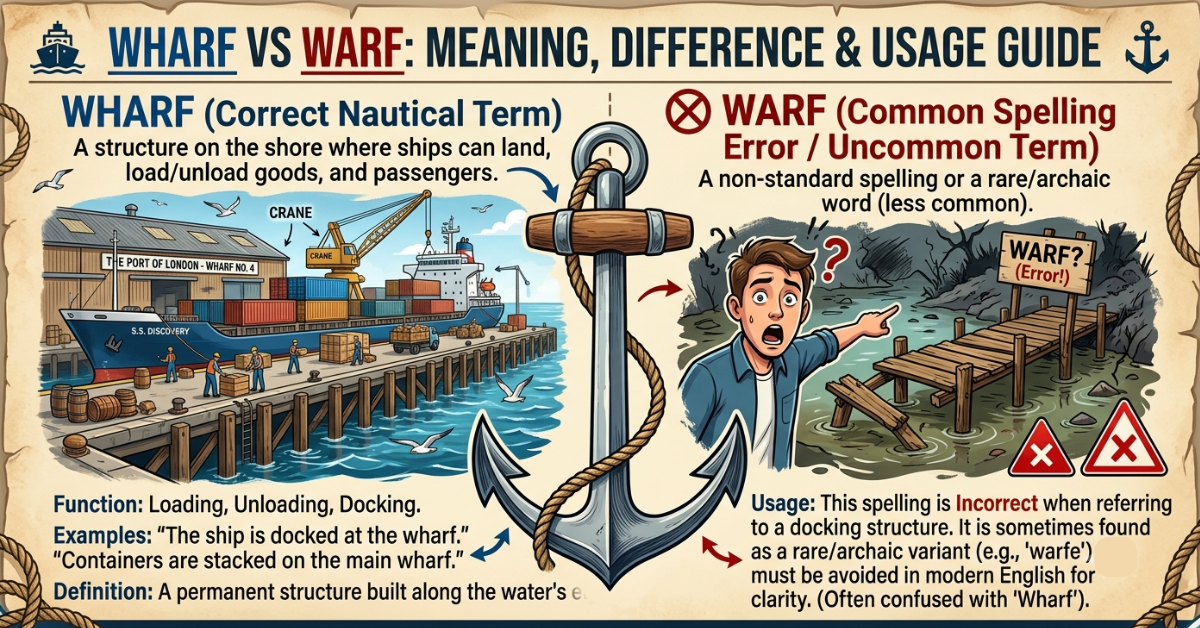
- Wharf (correct spelling): A structure built on the shore of a harbor where ships load and unload cargo or passengers.
- Warf (incorrect spelling): A common misspelling of “wharf” with no official meaning in standard English.
So, if you’re writing formally or academically, always use wharf.
Meaning of Wharf in Simple Words
A wharf is basically a platform near water where boats and ships stop. Think of it as a parking area for ships, but on the sea or river instead of land.
Common features of a wharf:
- Built along rivers, seas, or harbors
- Used for loading and unloading goods
- Often made of concrete, wood, or steel
- Connected to trade, transport, and tourism
This makes the correct usage of Wharf vs Warf very important in geography and transportation topics.
Why Do People Write “Warf”?
The misspelling warf usually happens because of pronunciation confusion. Since “wharf” is pronounced like worf in some accents, people often assume it’s spelled the same way it sounds.
Other reasons include:
- Typing errors
- Lack of exposure to written English
- Auto-correct mistakes
- Mishearing the word in spoken English
Even though warf is widely used informally online, it is not considered correct.
Wharf vs Warf in Real-Life Usage
To understand Wharf vs Warf better, let’s look at how the correct word is used in real situations:
Correct Usage Examples:
- The cargo ship docked at the wharf early in the morning.
- Fishermen returned to the wharf after a long day at sea.
- The city built a new wharf to support tourism.
Incorrect Usage:
- The ship docked at the warf
Small spelling differences can change how professional your writing looks, especially in academic or business contexts.
Quick Tips to Remember the Correct Word
Here are some easy ways to avoid confusion:
- Remember: “Wharf has an H, just like Harbor.”
- Think of “whale + arf = wharf” (fun memory trick)
- Always double-check spelling in formal writing
- Use spell-check tools when unsure
These tricks make it easier to avoid mistakes in Wharf vs Warf usage.
Common Synonyms and Related Terms
While wharf is specific, you might also see related words like:
- Dock
- Pier
- Jetty
- Harbor
- Quay
Each has slightly different meanings, but they all relate to structures near water.
FAQs About Wharf vs Warf
1. Is “warf” a real word?
No, warf is not a standard English word. It is simply a misspelling of wharf.
2. What is the correct spelling: wharf or warf?
The correct spelling is wharf.
3. Why do people confuse Wharf vs Warf?
The confusion comes from pronunciation and typing errors, since “wharf” can sound like “warf” in casual speech.
4. What does a wharf mean in geography?
A wharf is a structure built along water where ships load and unload goods or passengers.
5. Can I use “warf” in informal writing?
It’s best to avoid it completely. Even in informal writing, wharf is the correct and widely accepted spelling.
Conclusion
Understanding Wharf vs Warf is simple once you know the rule: only wharf is correct. The word refers to an important structure in ports and harbors, while warf is just a common spelling mistake.
If you’re writing essays, reports, or even online content, always stick to the correct spelling to keep your writing clear and professional. Paying attention to small details like this can significantly improve your language accuracy and confidence.