
Have you ever experienced that sudden burning sensation while urinating and immediately looked for fast relief at the pharmacy? That uncomfortable urgency often leads people straight to over-the-counter urinary pain relievers like Uristat and AZO.
Understanding uristat vs azo is important because both are commonly used for urinary tract discomfort, but many people don’t realize they are closely related yet not exactly identical in branding, formulation, and availability.
In this article, you’ll learn how these two products compare, what they contain, how they work in the body, and which one might be a better option depending on your needs.
What Are Uristat and AZO?
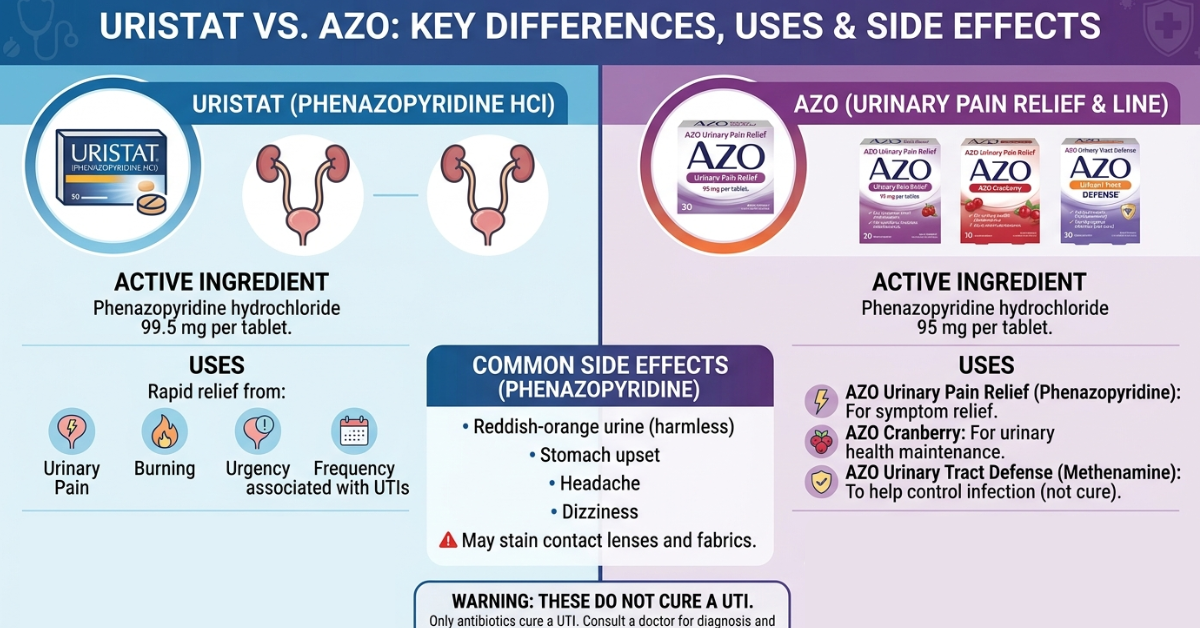
Both Uristat and AZO are over-the-counter medications primarily used to relieve urinary pain, burning, and urgency caused by irritation or urinary tract infections (UTIs).
They belong to a class of drugs known as urinary analgesics. The key active ingredient in both products is:
- Phenazopyridine hydrochloride
This compound does not treat infections directly but helps numb the urinary tract lining, reducing discomfort while the underlying cause is addressed with proper medical treatment.
What is Uristat?
Uristat is a urinary pain relief medication that typically contains phenazopyridine in lower-dose OTC formulations. It is often used for short-term symptom relief.
What is AZO?
AZO offers a wider range of urinary health products, including standard phenazopyridine tablets and UTI-support supplements. AZO is more widely recognized and commonly available in pharmacies.
Uristat vs AZO: Key Differences Explained
When comparing uristat vs azo, the most important thing to understand is that both often rely on the same active ingredient—but differ in branding, product range, and availability.
1. Active Ingredient
Both usually contain:
- Phenazopyridine hydrochloride (99–100%)
This means both work similarly in terms of pain relief.
2. Brand Positioning
- Uristat: More generic OTC pain relief product
- AZO: Established brand with multiple urinary health solutions
AZO has expanded beyond pain relief into:
- UTI prevention supplements
- Bladder health products
- Probiotic-based urinary support
3. Product Variety
- Uristat → Limited product line
- AZO → Wide range (including AZO Standard, AZO Cranberry, AZO Bladder Control)
4. Availability
- AZO is widely available in international pharmacies and online stores
- Uristat may be less common depending on region
5. Packaging & Branding
- AZO is heavily marketed and recognizable
- Uristat is simpler and more generic in appearance
How Do They Work in the Body?
Understanding uristat vs azo also requires knowing how phenazopyridine works.
Once consumed, it:
- Acts directly on the lining of the urinary tract
- Produces a local analgesic (pain-relieving) effect
- Reduces burning sensation and urgency
- Starts working within 30–60 minutes
However, it’s important to note:
- It does NOT cure infections
- It only masks symptoms temporarily
When Should You Use Uristat or AZO?
Both are used in similar situations:
Common Use Cases:
- Burning sensation during urination
- Urgency and frequent urination
- Pain caused by UTIs (alongside antibiotics)
- Post-procedure urinary discomfort
Important Warning:
Do not use either product as a standalone treatment for infection. Always consult a healthcare provider if symptoms persist beyond 2 days.
Side Effects and Safety Considerations
While both products are generally safe for short-term use, there are some known effects:
Common Side Effects:
- Orange or red urine (completely normal)
- Headache
- Stomach upset
- Dizziness
Serious but Rare Risks:
- Kidney issues (in long-term misuse)
- Allergic reactions
- Hemolytic anemia in rare cases
Safety Tips:
- Do not exceed recommended dose
- Avoid long-term use (usually max 2 days without medical advice)
- Not recommended for people with severe kidney disease
Uristat vs AZO: Which One Should You Choose?
When evaluating uristat vs azo, the choice depends on your needs:
Choose AZO if:
- You want a widely trusted brand
- You prefer product variety
- You may need additional urinary health supplements
Choose Uristat if:
- You want basic, no-frills pain relief
- It is more affordable or locally available
- You only need short-term symptom relief
In reality, both perform similarly when it comes to pain relief because they share the same active ingredient.
Key Takeaways
- Both contain phenazopyridine and work the same way
- AZO offers more product variety and brand trust
- Uristat is a simpler, often more generic option
- Neither treats infections—only symptoms
- Short-term use only is recommended
Practical Tips for Users
If you’re dealing with urinary discomfort:
- Drink plenty of water to flush bacteria
- Use phenazopyridine products only for short-term relief
- Pair with medical consultation if symptoms persist
- Avoid delaying antibiotics if prescribed
- Track symptoms carefully for improvement
Frequently Asked Questions (FAQs)
1. Is Uristat the same as AZO?
In most cases, yes. Both contain phenazopyridine, so their pain-relieving effect is very similar when comparing uristat vs azo.
2. Which works faster, Uristat or AZO?
Both work within 30–60 minutes, so there is no significant difference in speed of relief.
3. Can I take AZO or Uristat for a UTI?
They can only relieve symptoms, not treat the infection itself. Antibiotics are required to cure a UTI.
4. Is AZO safer than Uristat?
Both are equally safe when used correctly. Safety depends more on dosage and duration than brand choice.
5. Why does my urine turn orange after taking these?
Phenazopyridine naturally changes urine color to orange or reddish—this is harmless and expected.
6. How long can I use Uristat or AZO?
Usually no more than 48 hours without medical supervision. Longer use should be guided by a doctor.
Conclusion
When it comes to uristat vs azo, the real difference is not effectiveness but branding, availability, and product range. Both rely on the same active ingredient and provide similar fast relief from urinary discomfort.
If you need simple, affordable symptom relief, either option will work. However, if you prefer a trusted brand with multiple urinary health products, AZO may be the better long-term choice.
At the end of the day, these medications are only a temporary solution—real recovery comes from treating the underlying cause.