Bougie vs Boujee: Correct Spelling and Meaning

Have you ever seen someone write bougie or boujee and wondered which spelling is right? You are not the only one. This slang term shows up everywhere, from captions and memes to everyday conversations, but the spelling often confuses people.
In this guide, we will clear up the difference between the two spellings, explain what the word means, and show you how to use it naturally. By the end, you will know which version fits best in different contexts.
What Does Bougie Mean?
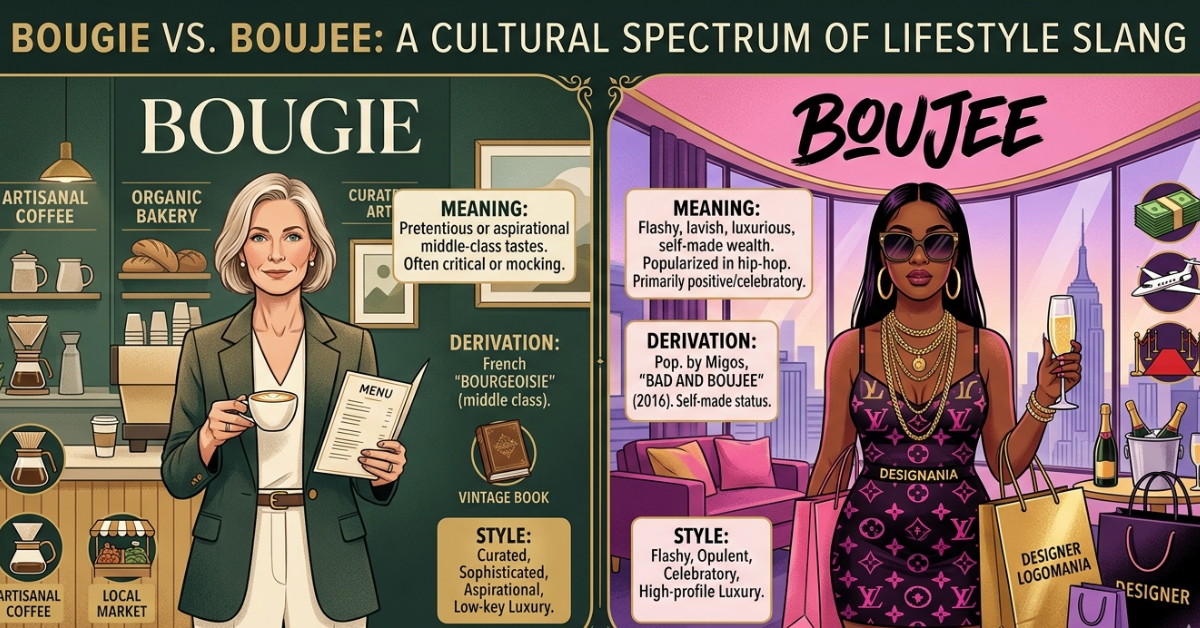
“Bougie” is slang used to describe someone or something that seems fancy, polished, expensive, or a little high-maintenance. It can be used seriously, but it is often playful or teasing.
The word comes from bourgeois, a French term connected to the middle class. Over time, English speakers shortened and softened it into “bougie,” and the meaning shifted into modern slang.
Examples:
- “She ordered sparkling water at the restaurant — so bougie.”
- “That place has a bougie vibe.”
- “He started acting bougie after his promotion.”
What Does Boujee Mean?
“Boujee” means almost the same thing, but it is the more stylized, pop-culture version. It became especially popular through music, social media, and online humor.
This spelling is often used when people want the word to feel more trendy, fun, or exaggerated. It is common in captions, lyrics, and casual speech.
Examples:
- “Her apartment is so boujee.”
- “We had a boujee brunch downtown.”
- “That whole look is boujee in the best way.”
Bougie or Boujee: Which Spelling Is Correct?
Both spellings are used in modern English, but they are not exactly the same in tone.
- Bougie is closer to the original root and is often seen as the more traditional spelling.
- Boujee is the more fashionable, internet-friendly version.
So when people ask is it bougie or boujee, the answer is that both are acceptable in informal language. The better choice depends on the style you want.
How to Spell Bougie or Boujee
If you are trying to remember how to spell bougie or boujee, here is the simplest way to think about it:
- Bougie = B-O-U-G-I-E
- Boujee = B-O-U-J-E-E
A useful shortcut is this:
- Use bougie when you want the spelling to look a little more standard.
- Use boujee when you want a playful, trendy, social-media feel.
When to Use Each Version
Both spellings work in casual writing, but the context matters.
Use Bougie when:
- You want a more familiar or traditional look
- You are writing a comment, caption, or casual explanation
- You want the word to feel slightly less exaggerated
Use Boujee when:
- You are going for a fun or stylish tone
- You are writing something inspired by pop culture
- You want the word to feel more modern and expressive
Real-Life Examples
Here are a few examples that show the difference in tone:
- “This coffee shop feels bougie.”
- “Her birthday party was very boujee.”
- “He likes bougie things now.”
- “That hotel was giving total boujee energy.”
The meaning stays close in all these examples. The difference is mostly in style and vibe.
Common Mistakes People Make
A lot of people get confused because both versions sound similar and are used interchangeably. Here are the most common mistakes:
- Thinking only one spelling is valid
- Using the word in formal writing
- Mixing both spellings in one piece without a reason
- Using it when a simpler word like “fancy” would be clearer
If you are writing for school, work, or a professional audience, it is better to avoid slang altogether.
Why the Word Became So Popular
The rise of this slang reflects how language changes through music, social media, and internet culture. People enjoy words that sound expressive, funny, and a little extra.
That is why this term became so popular in captions, memes, and everyday speech. It gives people an easy way to describe luxury, style, or attitude without sounding too serious.
Key Takeaways
- Both spellings are used in informal English
- “Bougie” is closer to the original word
- “Boujee” is the more modern, pop-culture version
- The best choice depends on tone and audience
- Avoid using either spelling in formal writing
FAQs
1. Is it bougie or boujee?
Both are used, but bougie is the more traditional spelling and boujee is the more stylized one.
2. What does bougie or boujee mean?
It usually means fancy, luxurious, stylish, or a little extra in attitude or taste.
3. How do you spell bougie or boujee?
You can spell it either bougie or boujee, depending on the tone you want.
4. Is boujee a slang word?
Yes, it is modern slang used in casual speech, social media, and pop culture.
5. Can I use bougie or boujee in formal writing?
No, both are informal and are best kept out of professional or academic writing.
Conclusion
Whether you prefer bougie or boujee, both spellings are widely understood in casual English. The main difference is style: one feels more traditional, while the other feels more playful and modern.
Now that you know the meaning, spelling, and usage, you can choose the version that best fits your writing.