Have a Great Day Ahead Meaning Explained Clearly

Have you ever wondered why people say “have a great day ahead” at the end of a conversation, email, or message? It sounds simple, but it carries warmth, intention, and positivity. Understanding the have a great day ahead meaning helps you use it more naturally in daily communication and also respond appropriately in both formal and informal settings.
The phrase have a great day ahead meaning refers to a polite and friendly way of wishing someone positivity, success, and happiness for the rest of their day. In this article, you’ll learn its true meaning, emotional tone, correct usage, real-life examples, and how to respond confidently in different situations.
What Does “Have a Great Day Ahead” Mean?
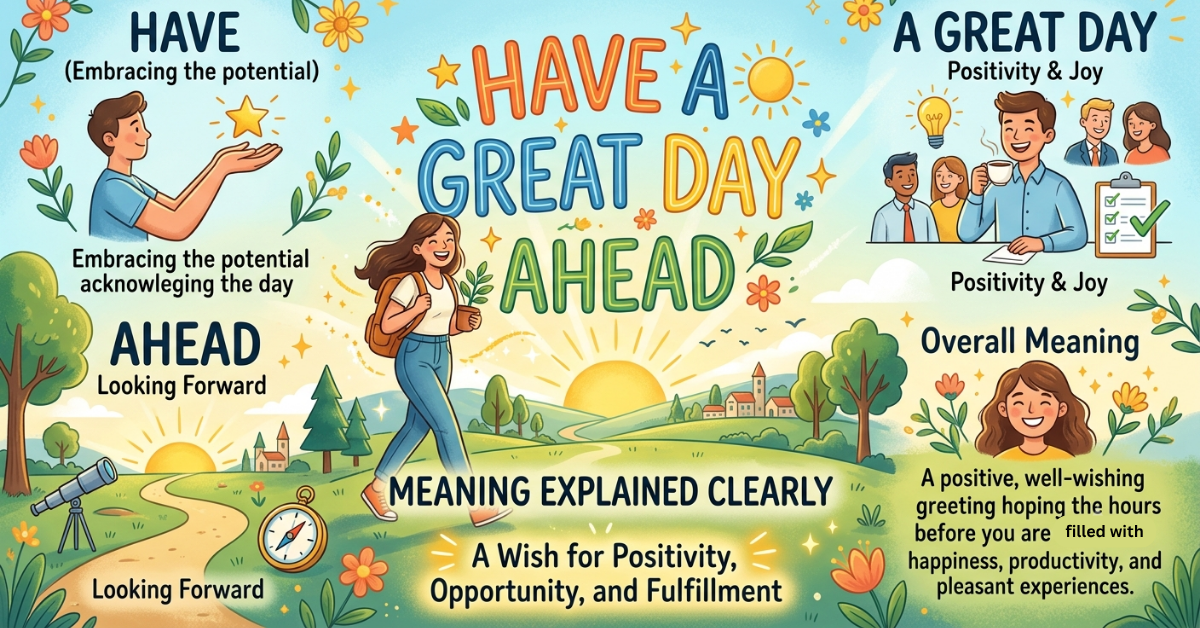
At its core, “have a great day ahead” is a goodwill expression used to wish someone well for the rest of their day.
Simple Meaning Breakdown:
- “Have a great day” → a general wish for a good day
- “Ahead” → refers to the remaining part of the day or future hours
So, the have a great day ahead meaning can be understood as:
A polite way of wishing someone positivity, happiness, or success for the rest of their day or upcoming hours.
It is commonly used in conversations, customer service interactions, emails, and casual goodbyes.
Emotional Tone Behind the Phrase
This phrase is more than just words—it carries emotional warmth and social courtesy.
Key emotional elements include:
- Positivity and encouragement
- Politeness and respect
- Friendly closure in communication
- Emotional goodwill toward others
When someone says “have a great day ahead,” they are essentially expressing kindness and leaving the interaction on a positive note.
When and How to Use “Have a Great Day Ahead”
Understanding usage is key to mastering the phrase.
1. In Daily Conversations
You can use it when ending a chat or meeting someone briefly.
Example:
- “It was nice talking to you. Have a great day ahead!”
2. In Emails and Professional Communication
It is widely used in workplaces to maintain politeness.
Example:
- “Thank you for your time. Have a great day ahead.”
3. In Customer Service
Brands and support teams use it to create a friendly impression.
Example:
- “We appreciate your feedback. Have a great day ahead!”
4. In Text Messages
Common among friends and family as a warm goodbye.
Difference Between “Have a Nice Day” and “Have a Great Day Ahead”
Many people confuse these phrases, but they have subtle differences.
| Phrase | Meaning | Usage Tone |
| Have a nice day | General wish for the whole day | Neutral & polite |
| Have a great day ahead | Focuses on remaining day/time | More warm & encouraging |
The have a great day ahead meaning feels slightly more personal and forward-looking compared to the standard phrase.
Why People Use “Have a Great Day Ahead”
This phrase is popular because it is simple yet meaningful.
Reasons include:
- It creates a positive impression
- It strengthens relationships
- It is universally understood
- It works in both formal and informal settings
- It helps end conversations gracefully
In modern communication, small phrases like this play a big role in emotional tone.
Real-Life Examples of Usage
Here are some natural ways you might hear or use it:
- “Thanks for your help today. Have a great day ahead!”
- “I’ll send the report shortly. Have a great day ahead.”
- “Take care and have a great day ahead!”
- “It was great meeting you. Have a great day ahead.”
These examples show how flexible the phrase is across different contexts.
Practical Tips for Using It Naturally
To sound more natural when using the phrase:
- Use it at the end of a conversation
- Keep your tone warm but not forced
- Combine it with gratitude (“thank you”) for better impact
- Avoid repeating it too often in the same message
- Match the tone to the situation (formal or casual)
Key Takeaways
- The have a great day ahead meaning is a polite expression of goodwill
- It is used to wish someone positivity for the rest of their day
- Works in both personal and professional communication
- Carries emotional warmth and friendliness
- Slightly more expressive than “have a nice day”
FAQs About “Have a Great Day Ahead Meaning”
1. What does “have a great day ahead” mean in simple words?
It means wishing someone a good and positive rest of the day. It is a polite way to express kindness when ending a conversation.
2. Is “have a great day ahead” formal or informal?
It can be both. The phrase is commonly used in emails, workplaces, and casual chats, making it very versatile.
3. Can I say “have a great day ahead” at night?
It is better used during the day, but you can still use it if someone still has part of their day left.
4. What is a good reply to “have a great day ahead”?
You can reply with:
- “Thank you, you too!”
- “Thanks, same to you!”
- “Appreciate it, have a great day as well!”
5. Is “have a great day ahead” grammatically correct?
Yes, it is grammatically correct and widely accepted in English communication.
6. What is the difference between “have a great day ahead” and “have a good day”?
“Have a great day ahead” feels slightly more expressive and focused on the remaining part of the day, while “have a good day” is more general.
Conclusion
The have a great day ahead meaning goes beyond a simple phrase—it reflects kindness, politeness, and emotional connection in everyday communication. Whether used in emails, chats, or conversations, it helps you leave a positive impression on others.
By understanding its meaning and proper usage, you can communicate more naturally and warmly in both personal and professional settings. Try using it in your next conversation and notice how a small phrase can create a meaningful impact.