Have you ever shared something you made or did, and the other person said they liked it? That moment often calls for a simple, gracious reply. Understanding glad you liked it meaning helps you respond in a way that feels polite, warm, and genuinely human.
This phrase shows appreciation without sounding too formal or too emotional. In this article, you will learn what it means, when to use it, how it differs from similar phrases, and how to reply naturally in everyday conversations.
What Does “Glad You Liked It” Mean?
At its core, “glad you liked it” means you feel happy that the other person enjoyed what you shared, gave, made, or did. It is a friendly response to positive feedback.
For example:
- Someone says, “I loved the painting.”
- You reply, “Glad you liked it.”
That simple reply means you appreciate their reaction and are pleased they enjoyed it. The phrase is casual, kind, and easy to use in speech, texting, and online conversations.
“I Am Glad You Liked It” Meaning in Simple Words
The phrase i am glad you liked it meaning is very straightforward: it expresses happiness that your effort was well received.
It can be used after:
- giving a gift
- sharing food
- showing a design or artwork
- sending a message, photo, or idea
- helping someone with something
For example:
- “I made this dessert for you.”
- “Thank you, it was delicious.”
- “I am glad you liked it.”
Here, the message is not just about the dessert. It also shows care, satisfaction, and a positive connection between two people.
When People Use This Phrase
This phrase is common in both personal and professional settings. It works well when you want to stay friendly and humble.
In daily conversation
People use it after compliments or positive reactions.
Examples:
- “Your gift was so thoughtful.”
- “Glad you liked it.”
- “That playlist was amazing.”
- “I’m glad you liked it.”
In work or creative settings
It is also useful when someone appreciates your effort.
Examples:
- A designer shares a logo.
- A client says they love it.
- The designer replies, “I’m glad you liked it.”
This keeps the conversation professional while still sounding warm.
In messages and social media
It is often used in texting, Instagram replies, DMs, or comments.
Examples:
- “Glad you liked the picture.”
- “I’m glad you liked it, thank you for saying that.”
Because it is short and natural, it fits easily into modern online communication.
Tone and Feeling Behind the Phrase
The phrase is simple, but the tone can change depending on how you say it.
Warm and sincere
When spoken naturally, it feels kind and appreciative.
- “I’m glad you liked it.”
Modest and polite
It can also sound humble, especially if you do not want to boast.
- “Glad you liked it. I just wanted to share something nice.”
Friendly and casual
In informal conversation, people often shorten it.
- “Glad you liked it!”
That version sounds relaxed and easygoing.
How It Differs from Similar Expressions
People often confuse this phrase with other polite replies. Here is how it compares.
“You’re welcome”
This is used when someone thanks you.
- “Thanks for the gift.”
- “You’re welcome.”
“Glad you liked it”
This is used when someone enjoys or appreciates something you gave, made, or shared.
- “I loved the cake.”
- “Glad you liked it.”
“I’m happy you enjoyed it”
This sounds a little warmer and slightly more expressive.
- “I’m happy you enjoyed it.”
- “Glad you liked it.”
“Thank you”
This is often used when the other person compliments your work.
- “Your design looks amazing.”
- “Thank you.”
The main difference is that glad you liked it meaning focuses on the other person’s enjoyment, not on gratitude or receiving thanks.
Natural Examples in Real Conversations
Here are a few everyday examples that show how the phrase works.
Example 1: After a gift
“Thank you for the mug. I really love it.”
“Glad you liked it.”
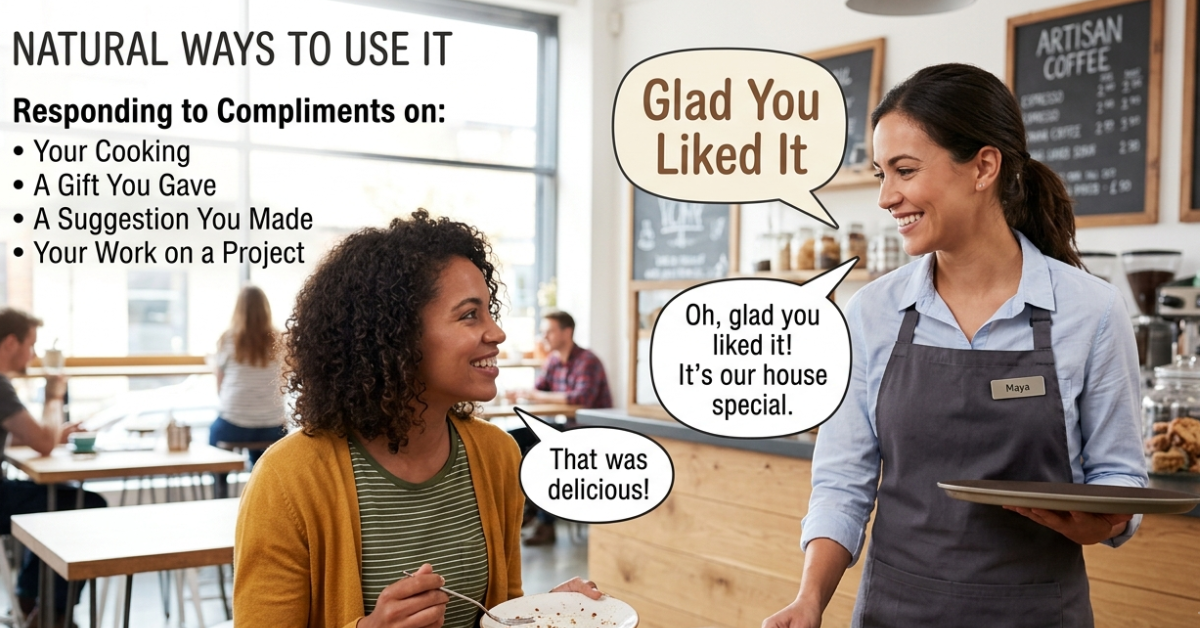
Example 2: After sharing food
“This pasta was delicious.”
“I’m glad you liked it.”
Example 3: After showing a project
“Your presentation was so helpful.”
“Glad you liked it. I worked hard on it.”
Example 4: After sending a thoughtful message
“Your words really made my day.”
“I’m glad you liked it.”
These examples show that the phrase is flexible and fits many situations.
How to Respond Naturally When Someone Says It
Sometimes you may receive this phrase and need to reply. A good response should match the tone of the conversation.
Here are some natural replies:
- “It really was lovely.”
- “Of course, it was great.”
- “You did a wonderful job.”
- “I truly appreciated it.”
- “Thank you again.”
If the situation is more personal, you can add warmth:
- “That means a lot.”
- “You are so thoughtful.”
- “I really enjoyed it.”
The best reply depends on whether the setting is casual, close, or professional.
Practical Tips for Using the Phrase Well
To sound natural, keep these tips in mind:
- Use it after positive feedback.
It works best when someone has already shown appreciation. - Keep it simple.
The phrase does not need extra words unless you want to sound more personal. - Match the relationship.
A short “Glad you liked it” works with friends, coworkers, and customers. - Add warmth when needed.
You can make it more personal with “I’m really glad you liked it.” - Avoid overusing it in one conversation.
Repeating it too often can sound mechanical.
Key Takeaways
- “Glad you liked it” is a polite and friendly response to positive feedback.
- The glad you liked it meaning centers on happiness that someone enjoyed what you shared.
- It works in casual, professional, and online conversations.
- The phrase sounds natural, humble, and warm when used correctly.
- Simple replies often feel more genuine than long explanations.
FAQ: Glad You Liked It Meaning
What does “glad you liked it” mean?
It means you are happy that the other person enjoyed something you gave, made, or shared. It is a friendly and appreciative response.
Is “I’m glad you liked it” polite?
Yes, it is very polite and commonly used. It sounds warm, simple, and respectful in both casual and professional conversations.
Can I say “glad you liked it” in texts?
Yes, it works very well in texting and social media replies. It is short, natural, and easy to understand.
What is the difference between “thank you” and “glad you liked it”?
“Thank you” is used when someone compliments you or thanks you. “Glad you liked it” is used when someone enjoys something you shared or gave them.
Is “I am glad you liked it meaning” the same as “glad you liked it meaning”?
Yes, both express the same idea. The first is a fuller version, while the second is shorter and more conversational.
How do I reply to “glad you liked it”?
You can say “It was really great,” “Thank you again,” or “I truly enjoyed it.” The best reply depends on how casual or formal the conversation is.
Conclusion
The phrase “glad you liked it” may be short, but it carries a lot of warmth. It shows kindness, appreciation, and a genuine happy reaction to someone else’s positive feedback. Understanding glad you liked it meaning helps you use it naturally in conversation, whether you are texting a friend, replying to a compliment, or responding at work.
In everyday communication, simple words often make the strongest impression. Use the phrase naturally, keep your tone sincere, and it will always sound thoughtful and human.