Truly or Truely: Which Spelling Is Correct?

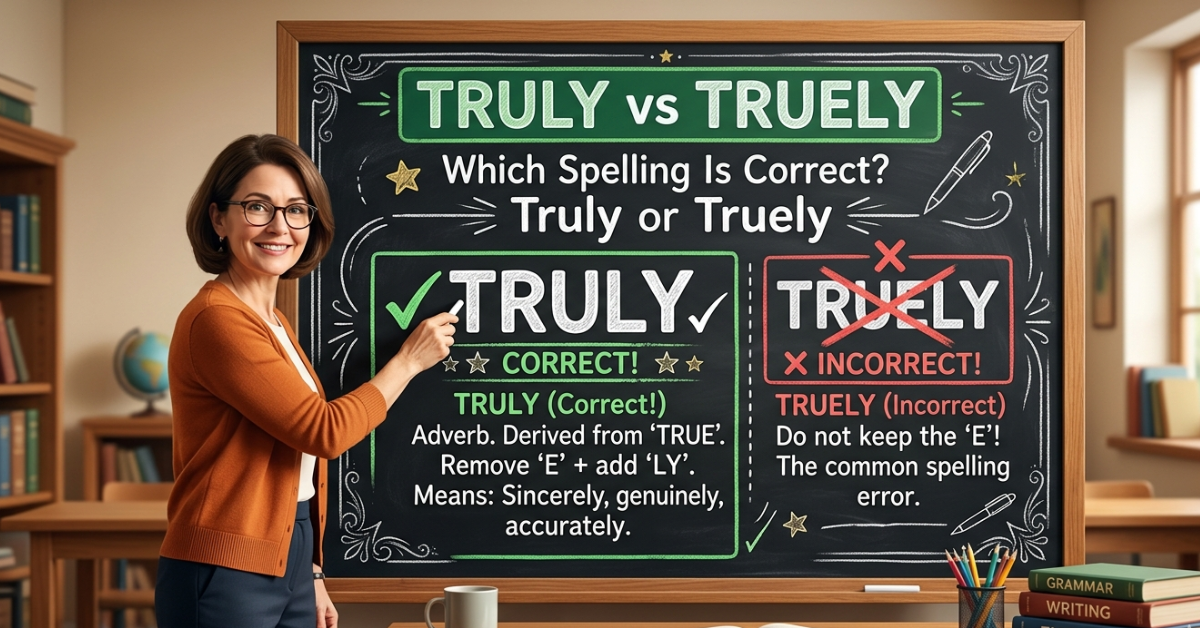
Have you ever stopped mid-sentence and wondered whether it’s truely or truly? You’re not alone. This is one of the most commonly confused English spelling mistakes, especially in everyday writing and social media posts.
The correct form is “truly,” but the confusion around continues to appear in searches, essays, and casual writing. In this article, we’ll clear up the confusion, explain the meaning, and show you how to use it correctly in real-life situations.
Let’s break it down in a simple and practical way.
Truely or Truly: Which One Is Correct?
When it comes to these words which one is correct, the answer is straightforward:
“Truly” is the correct spelling.
In correct: “Truely” is incorrect and considered a common spelling mistake.
The confusion happens because many English words that end in “-ue” (like argue → arguing) sometimes mislead writers into adding an extra “e.” But in this case, the correct adverb form drops the “e.”
So remember:
- Correct: truly
- Incorrect: truely
Meaning of Truly (Truely or Truly Meaning Explained)
The word is an adverb that means:
- Honestly
- Really
- Sincerely
- In a genuine way
When people search for its meaning, they usually want to understand how the word is used in sentences.
Examples:
- I am truly sorry for the mistake.
- She is truly talented in painting.
- That was a truly amazing experience.
Even though people often type, the meaning always belongs to “truly.”
Why Do People Write “Truely or Truly”?
The confusion between often comes from pronunciation and spelling habits. English learners sometimes assume the word follows a pattern like “true + ly = truely.”
However, English spelling rules often simplify words over time, and it is the standardized form.
Common reasons for the mistake:
- Overgeneralizing spelling rules
- Influence of spoken pronunciation
- Typing quickly on digital devices
- Lack of exposure to correct written form
Is It Truely or Truly British Spelling?
A common question is whether British spelling differs.
The answer is simple:
There is no British alternative spelling. Both British and American English use “truly.”
So whether you are writing in the UK, US, Canada, or anywhere else, the correct spelling remains the same.
Common Mistakes with “Truly”
Here are some frequent errors people make:
- Writing truely instead of truly
- Overusing “truly” in formal writing
- Confusing it with similar-sounding words like “truthfully”
Quick tip:
If you can replace it with “really” in a sentence, you are probably using it correctly.
How to Use “Truly” Correctly in Sentences
To better understand, here are correct usage examples:
- I am truly grateful for your help.
- This is a truly unique opportunity.
- She is a truly inspiring teacher.
- We had a truly wonderful time together.
FAQs About Truely or Truly
1. Is it truely or truly?
The correct spelling is truly. “Truely” is incorrect.
2. What does truly mean?
It means sincerely, honestly, or really.
3. Why do people write truely?
It’s usually due to spelling confusion or assuming English follows a “true + ly” pattern.
4. Is truely or truly British spelling different?
No, both British and American English use truly.
5. Can “truely” ever be correct?
No, “truely” is always considered a spelling mistake in standard English.
Conclusion
Understanding truely or truly is simple once you know the rule: only “truly” is correct in both British and American English. The incorrect form is just a common spelling error that appears due to confusion with word formation.
Now that you know the difference between truely or truly, you can confidently use the correct spelling in writing, emails, essays, and everyday communication. Small corrections like this make your English sound more polished and professional.
If you’re interested in improving your grammar further, exploring similar commonly confused words can be a great next step.