Wishing You the Best: Meaning and Best Alternatives

Few phrases feel as warm and flexible as wishing you the best. It works in professional emails, farewell notes, friendly messages, and even emotional goodbyes. At its core, the phrase is a simple way to show goodwill, encouragement, and respect.
In this guide, we will break down the wishing you the best meaning, when it fits best, and how to say it in more natural or polished ways. You will also find examples, alternatives, and FAQs so you can use the phrase with confidence.
What Does “Wishing You the Best” Mean?
The phrase wishing you the best is a polite and positive expression used to show that you hope someone has success, happiness, or good fortune ahead. It is broad enough to fit many situations, which is exactly why people use it so often.
Depending on the context, it can mean:
- I hope things go well for you.
- I want success and happiness for you.
- I am sending you encouragement for the future.
Because the phrase is neutral and kind, it is suitable in both personal and professional communication. It can sound heartfelt without being overly formal.
When to Use “Wishing You the Best”
This phrase works well when you are closing a message, ending a chapter, or encouraging someone during a transition. It is especially useful when you want to sound warm but not too emotional.
Common situations include:
- Saying goodbye to a coworker
- Congratulating someone on a new opportunity
- Supporting a friend through a change
- Ending an email respectfully
- Sending encouragement before an exam, interview, or move
The phrase is simple, but that is part of its strength. It feels natural in everyday writing and rarely sounds out of place.
Wishing You the Best on Your New Journey
One of the most common situations where this phrase appears is when someone is starting something new. Wishing you the best on your new journey is often used for students, graduates, employees changing jobs, or people moving to a new place.
This version feels slightly more personal and emotionally supportive. It suggests that the person is stepping into a meaningful new phase of life.
Examples:
- Wishing you the best on your new journey as you begin this exciting chapter.
- Wishing you the best on your new journey and all the success it brings.
- Wishing you the best on your new journey; you truly deserve this opportunity.
Wishing You the Best in Your Future Endeavors
In professional writing, wishing you the best in your future endeavors is a classic closing line. It sounds respectful, formal, and appropriate for business emails, recommendation letters, and farewell messages.
It is often used when someone is leaving a company, graduating, or moving toward a new role. Compared with more casual wording, it feels polished and slightly more official.
A few natural examples:
- Thank you for your contribution, and wishing you the best in your future endeavors.
- We appreciate your hard work and wishing you the best in your future endeavors.
- Congratulations on your next step, and wishing you the best in your future endeavors.
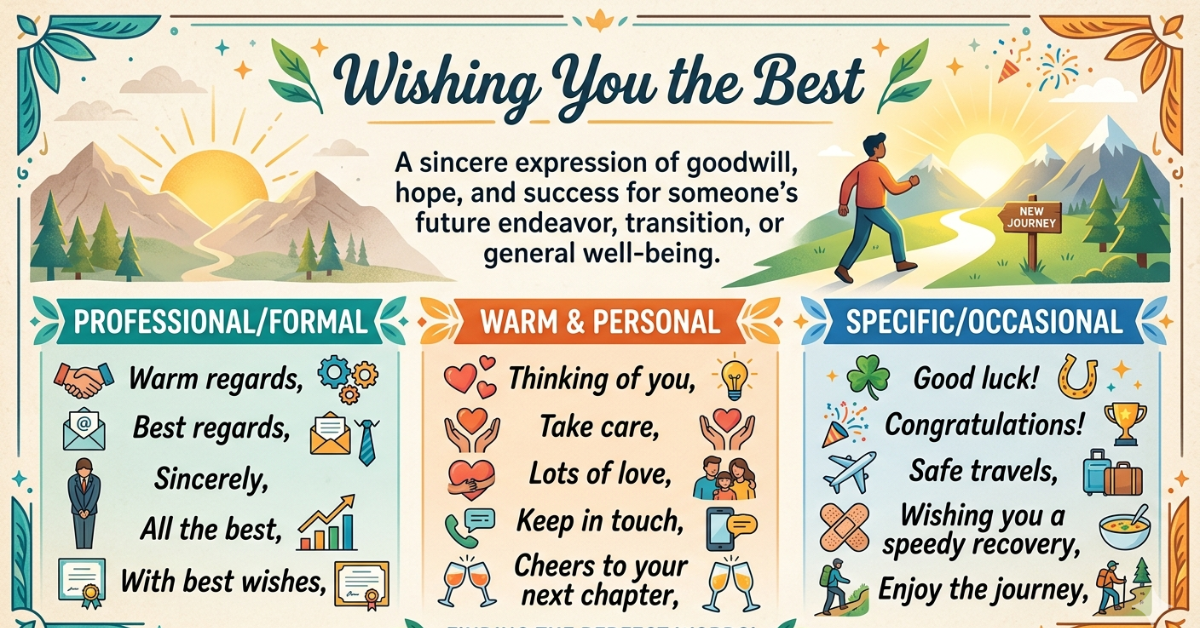
Another Way to Say Wishing You the Best
If the phrase feels too common, there are many natural alternatives. Choosing a different expression can make your message sound fresher and more personal.
Here are some good options:
- Best of luck
- All the best
- Take care and stay well
- Wishing you success
- Sending good wishes your way
- May everything go well for you
- Rooting for your success
The best alternative depends on tone. For example, “all the best” feels casual and friendly, while “wishing you success” sounds more professional.
How to Use It Naturally in Different Situations
The tone of the message matters more than the phrase itself. A simple line can feel warm in one context and too formal in another, so it helps to match your wording to the relationship and setting.
In Professional Messages
Use a polished version when writing to a manager, client, teacher, or colleague.
Examples:
- Wishing you the best as you take on this new role.
- We are grateful for your support and wish you success ahead.
In Personal Messages
A friend or family member may appreciate a softer, more heartfelt version.
Examples:
- Wishing you the best on your future endeavors and everything good ahead.
- I am so proud of you and truly wish you happiness.
In Short Farewells
Sometimes a short sentence is enough.
Examples:
- Best of luck with everything ahead.
- All the best for what comes next.
Tips for Writing a Better Farewell Line
A strong farewell message feels genuine, not copied. The easiest way to make it better is to add a small detail that shows you really mean it.
Keep these tips in mind:
- Mention the specific change or achievement.
- Add one positive quality about the person.
- Keep the message short if the situation is formal.
- Use warm, simple language instead of overcomplicated wording.
For example, instead of writing only “wishing you the best,” you could say, “Wishing you the best as you begin your next chapter — your hard work will carry you far.”
Common Mistakes to Avoid
Even a kind phrase can feel weak if it is used carelessly. The most common mistake is sounding too generic when the situation calls for something more personal.
Avoid these problems:
- Repeating the same phrase in every email
- Using overly formal wording in casual conversations
- Making the message sound empty or automatic
- Copying a farewell line without adjusting it to the person
A small amount of personalization makes a big difference.
FAQs
What is the wishing you the best meaning?
It means you hope someone has success, happiness, or good fortune in the future. It is a polite and positive way to show support.
Is wishing you the best formal or informal?
It can be both. In professional settings, it sounds respectful. In personal messages, it sounds warm and kind.
What is another way to say wishing you the best?
Common alternatives include “all the best,” “best of luck,” “wishing you success,” and “take care.” The best choice depends on the tone you want.
Is wishing you the best on your new journey appropriate for work?
Yes, especially in farewell messages or congratulatory notes. It is polite, supportive, and suitable for coworkers, employees, or colleagues.
Can I use wishing you the best in your future endeavors in an email?
Yes. It is a classic professional closing line and works well in formal emails, resignation replies, recommendation letters, and farewell notes.
Conclusion
Wishing you the best is a simple phrase, but it carries real warmth. Whether you are writing to a friend, coworker, student, or client, it helps you express encouragement in a clear and respectful way. Understanding the wishing you the best meaning also makes it easier to choose the right version for each situation.
From wishing you the best on your new journey to wishing you the best in your future endeavors, this phrase can be adapted for almost any occasion. The key is to keep it natural, specific, and sincere. Small wording choices make your message feel more human, more thoughtful, and much more memorable.