The confusion between Wining or Winning is more common than you might think. Many people mix these two terms in writing, especially in casual messages, social media captions, or even emails. But the truth is simple: only one of these is correct in the context of success, achievement, or victory.
Understanding Wining or Winning helps improve your grammar, writing clarity, and overall communication skills. In this article, we’ll break down the difference, explain common mistakes, and show you how to use the correct form confidently in everyday English.
Wining or Winning: What’s the Difference?
The main issue comes from spelling and meaning.
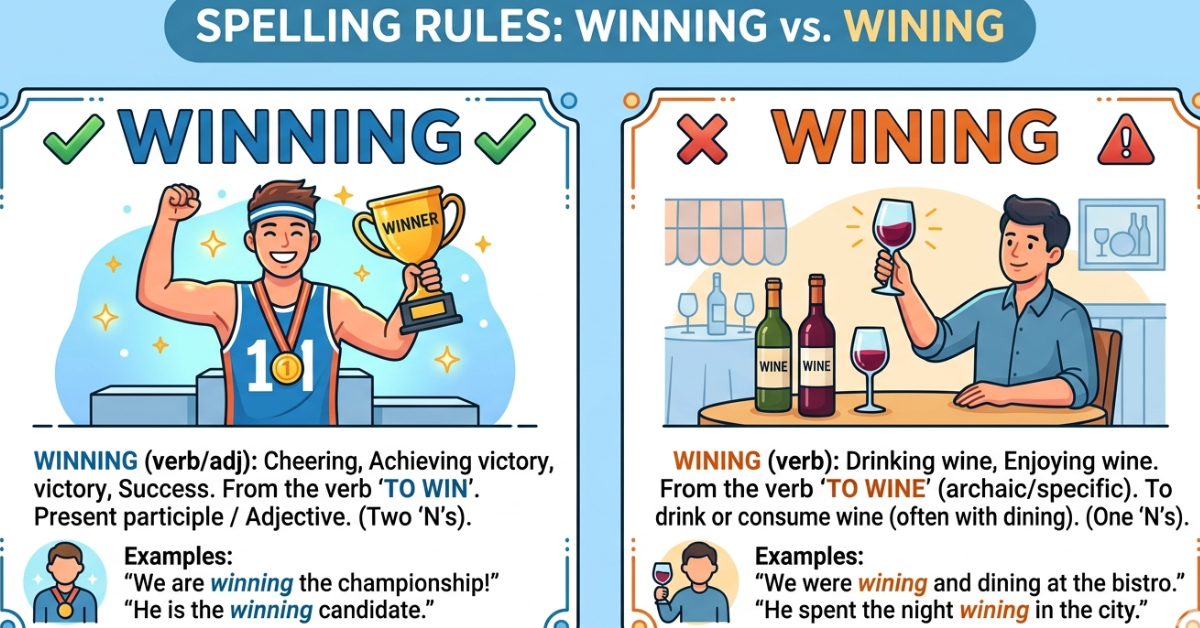
- “Wining” refers to the process of making or drinking wine. It is rarely used in everyday conversation unless talking about wine culture or production.
- “Winning” refers to achieving success, victory, or coming first in a competition.
So when people say they are “winning,” they are talking about success, not wine.
The confusion between Wining or Winning usually happens because of typing errors or autocorrect mistakes.
Why “Winning” Is the Correct Word in Most Cases
When discussing success or achievement, winning is the correct and widely accepted form. It is used in sports, exams, business, and daily life.
Here are a few examples:
- She is winning the competition with confidence.
- They are winning more clients this year.
- He keeps winning every match he plays.
In all these cases, the word describes progress, success, and achievement. Misusing winning as “wining” can completely change the meaning of a sentence.
Common Grammar Mistakes People Make
Many English learners and even native speakers sometimes confuse spelling patterns. The Wining or Winning issue is a classic example of this.
Common mistakes include:
- Writing “I am wining the game” instead of “winning”
- Assuming both words mean the same thing
- Not checking spelling in formal writing
To avoid errors, always proofread your text or use grammar tools before publishing.
Easy Tips to Remember the Correct Word
If you struggle with this spelling, here are some simple tricks:
- Think of “win” inside “winning” – it directly relates to success.
- Double “n” means double effort – success takes effort, just like the extra letter.
- Use context clues – if it’s about achievement, it is always “winning.”
These small memory tricks can help you avoid confusion in the future.
Why This Confusion Happens
The confusion between Wining or Winning often comes from:
- Fast typing on mobile devices
- Autocorrect errors
- Lack of grammar awareness
- Similar pronunciation in casual speech
Over time, people stop noticing the difference, which leads to repeated mistakes in writing.
FAQs
1. Is “wining” ever correct?
Yes, but only when referring to wine-related activities like making or drinking wine.
2. What does “winning” mean?
It means achieving success, victory, or coming first in something.
3. Why do people confuse Wining or Winning?
Because both words sound similar and typing errors often replace one with the other.
4. Can “winning” be used in daily conversation?
Yes, it is very common in sports, business, education, and motivation contexts.
5. How can I avoid this spelling mistake?
Always proofread your writing and remember that success-related contexts use “winning.”
Conclusion
The confusion between Wining or Winning is simple to clear once you understand the meaning. One relates to wine, while the other represents success and achievement. By remembering this difference, you can improve your grammar, avoid common mistakes, and write more confidently in English.
Mastering small details like this strengthens your communication skills and helps you express ideas more clearly in both academic and professional writing.