If you’ve ever wondered about noisey or noisy, you’re not alone. Many people get confused between these two spellings while writing or speaking English. The correct form is important because it affects clarity, professionalism, and even SEO when writing online content.
In this guide, we’ll break down the correct spelling, meaning, common mistakes, and practical examples so you never get stuck again.
Understanding noisey or noisy in English
The confusion around noisey or noisy usually comes from how English words sound. Since “noise” ends with an “e,” many assume adding “y” should become “noisey.” However, English spelling rules work differently here.
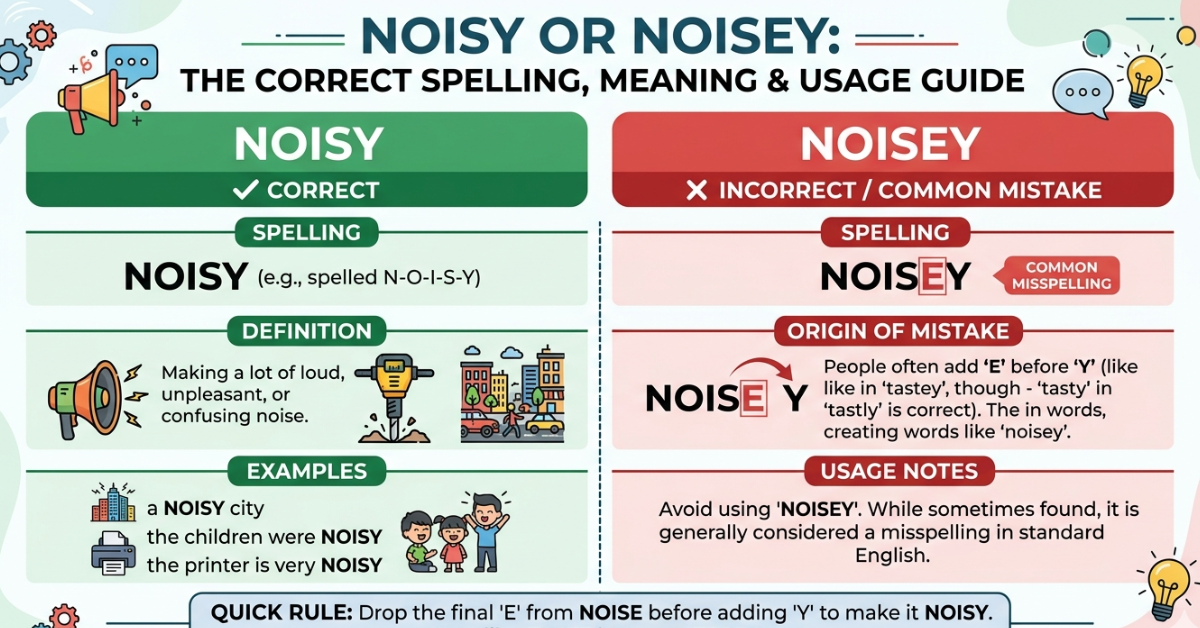
The correct word is noisy, which describes something that produces a lot of sound or disturbance.
Which spelling is correct: noisey or noisy?
When comparing noisey or noisy, only one is correct:
- Noisy (Correct)
- Noisey (Incorrect)
The word “noisy” follows standard English adjective formation rules. When a word ends in “e,” the “e” is usually dropped before adding “y.”
For example:
- Noise → Noisy
- Ice → Icy
- Shine → Shiny
This pattern helps you remember the correct spelling easily.
Meaning and usage of “noisy”
The word noisy is an adjective used to describe something loud or full of sound.
Common meanings include:
- A loud environment
- Constant or disturbing sound
- Lack of silence or peace
Examples:
- The classroom was very noisy during lunch break.
- The city becomes noisy at night.
- Please keep the room less noisy while I study.
Common mistakes with noisey or noisy
Many learners mistakenly write noisey or noisy interchangeably, especially in informal writing. Here are a few reasons why:
- Influence of pronunciation (it sounds like “nois-ee”)
- Lack of awareness of spelling rules
- Overgeneralization of adding “y” to words
Quick correction tip:
If the base word ends in “e,” drop the “e” before adding “y.”
Examples of correct usage
Here are some simple sentences using the correct word:
- The restaurant was too noisy for a quiet conversation.
- I couldn’t sleep because the street was noisy.
- The kids became noisy during the party.
- It’s hard to concentrate in a noisy environment.
These examples help reinforce the proper usage in daily communication.
Tips to remember the correct spelling
To avoid confusion between noisey or noisy, keep these tips in mind:
- Think of “noise” → drop “e” → add “y”
- Compare with similar words like “happy” or “sunny”
- Practice writing the word in sentences
- Read more English content to reinforce spelling patterns
FAQs about noisey or noisy
1. What is correct: noisey or noisy?
The correct spelling is noisy. “Noisey” is a common spelling mistake and not accepted in standard English.
2. Why do people write noisey or noisy incorrectly?
People often write noisey or noisy incorrectly due to pronunciation confusion and misunderstanding of English spelling rules.
3. What does noisy mean in simple words?
Noisy means something that produces a lot of sound or is not quiet.
4. Can noisey ever be used in English?
No, “noisey” is not a correct English word and should always be avoided in formal writing.
Conclusion
Understanding the difference between noisey or noisy helps improve your writing accuracy and communication skills. The correct spelling is always noisy, and remembering the simple rule of dropping the “e” can save you from common mistakes.
Next time you write, double-check your spelling and keep your English clear, correct, and professional.