Have you ever heard the term felicitation meaning in a ceremony, school event, or official announcement and felt unsure about it? You are not alone. Many people encounter this word but rarely pause to understand it properly.
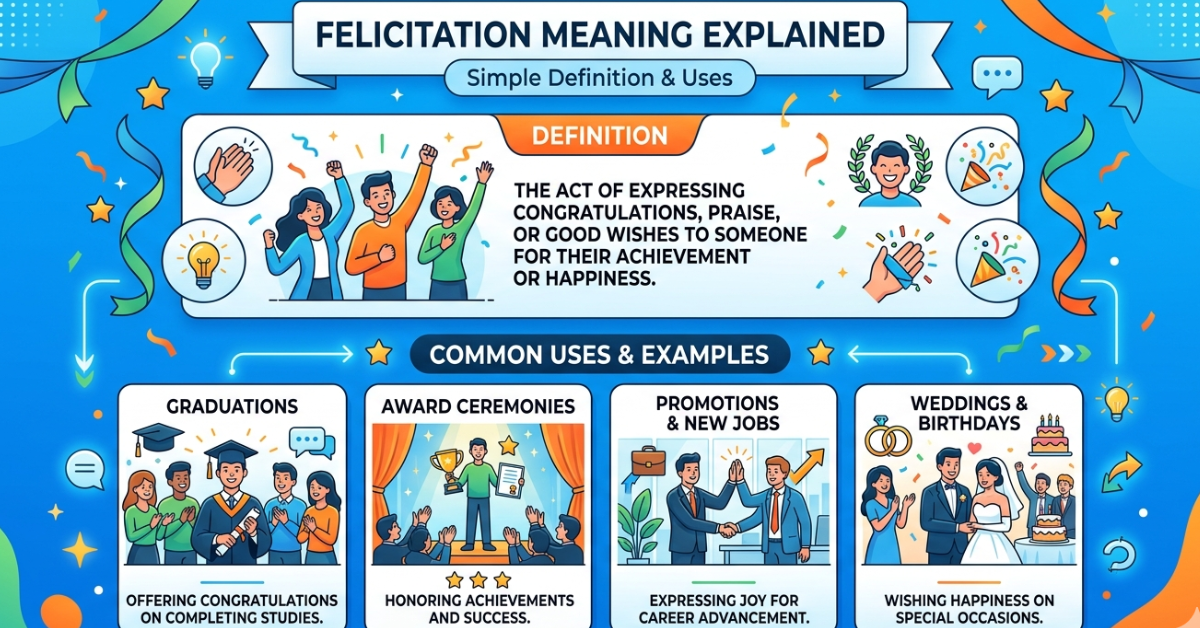
In simple terms, felicitation meaning refers to formally honoring, appreciating, or congratulating someone for their achievements or contributions. Moreover, this word usually appears in official or ceremonial settings rather than casual conversations.
In this article, you will clearly understand what it means, how people use it, and why it matters in real life.
What Does Felicitation Mean?
To begin with, the felicitation meaning comes from the Latin word felicitas, which means happiness or good fortune. Over time, English adopted it in formal communication.
Today, people use it to describe:
- Formal appreciation of someone’s success
- Public recognition of achievements
- Ceremonial honoring of individuals
Unlike simple congratulations, felicitation carries a more respectful and official tone.
Simple Felicitation Meaning in Everyday Language
To make it even easier, the felicitation meaning can be understood as:
A formal act of showing respect and appreciation to someone for their success or service.
For example:
- A school honors top students
- An organization appreciates retiring employees
- A community recognizes a public figure
In all these cases, people publicly acknowledge achievement rather than privately appreciating it.
Where Do We Commonly Use Felicitation?
In addition, understanding the felicitation meaning becomes easier when you see where it appears in real life.
1. Academic Events
Schools and universities organize ceremonies to honor students and teachers.
2. Professional Settings
Companies celebrate employees who achieve milestones or retire after long service.
3. Public Recognition
Societies and organizations appreciate individuals who contribute to social causes.
4. Cultural Functions
Artists, writers, and performers often receive formal recognition on stage.
Thus, felicitation always appears in structured and respectful environments.
Felicitation vs Congratulations
Although people often mix these terms, they are not identical. Therefore, it is important to understand the difference clearly.
- Congratulations → Informal expression of happiness
- Felicitation → Formal and ceremonial recognition
For instance, you say “Congratulations on your success” in daily life. However, in an official ceremony, an organization may arrange a felicitation event.
Examples of Felicitation in Sentences
To understand the felicitation meaning better, let’s look at some real examples:
- The university organized a felicitation ceremony for outstanding graduates.
- The government arranged a felicitation event for national heroes.
- The school held a felicitation program for retiring teachers.
- The company hosted a felicitation function for top-performing employees.
As a result, you can see how the word fits into formal communication.
Why Felicitation Is Important
Furthermore, felicitation plays an important role in society. It does more than just celebrate success.
- It motivates people to perform better
- It builds respect and recognition
- It strengthens social and professional relationships
- It encourages a culture of appreciation
In other words, felicitation helps create a positive and encouraging environment.
Different Types of Felicitation
The felicitation meaning also expands into different forms depending on the situation.
• Verbal Felicitation
People express appreciation through speeches or announcements.
• Written Felicitation
Organizations issue certificates, letters, or official notes.
• Public Felicitation
Events take place where audiences actively honor individuals.
• Award-Based Felicitation
Recipients receive trophies, medals, or formal titles.
Thus, felicitation can appear in multiple structured formats.
How to Use Felicitation Correctly
To use this word correctly, keep a few important points in mind:
- Use it only in formal contexts
- Avoid using it in casual conversations
- Pair it with events like ceremonies or awards
- Do not confuse it with simple congratulations
Therefore, understanding the felicitation meaning helps you use it with confidence.
Real-Life Importance of Felicitation
In real life, felicitation holds great value in schools, offices, and communities. For example, when institutions recognize people publicly, they:
- Encourage achievement
- Promote healthy competition
- Increase motivation
- Build a sense of pride
Consequently, felicitation becomes more than a formality—it becomes a powerful motivational tool.
FAQs About Felicitation Meaning
1. What is the simple felicitation meaning?
It means formally honoring or appreciating someone for their achievements or contributions.
2. Is felicitation used in daily conversation?
No, it is mostly used in formal or ceremonial settings.
3. What is the difference between felicitation and award?
An award is a physical object, while felicitation is the act of honoring someone.
4. Can students receive felicitation?
Yes, schools and colleges often felicitate students for academic excellence.
5. Is felicitation a formal word?
Yes, it is strictly used in formal and official contexts.
Conclusion
In conclusion, the felicitation meaning refers to a formal way of honoring and appreciating someone’s success or contribution. Unlike casual congratulations, it carries dignity, structure, and respect.
Therefore, whenever you hear this word in ceremonies or official events, you now understand its true value. Ultimately, felicitation strengthens recognition, boosts motivation, and celebrates human achievement in a meaningful way.