Language can be tricky, especially when two words look and sound almost identical. One such confusing pair is seel vs seal. Many people mix them up while writing or speaking, assuming they are the same. But in reality, they have very different meanings and usage.
In this guide, we’ll break down everything in a simple, human-friendly way so you never confuse these words again. Whether you’re a student, writer, or just someone curious about English grammar, this article will make things clear once and for all.
What is “Seal”?
The word seal is widely used in English and has multiple meanings depending on the context. It is far more common than its counterpart.
1. Seal as an Animal
A seal is a marine animal that lives in cold ocean waters. These creatures are known for their playful nature and smooth swimming ability.
Example:
- The seal was resting on the icy shore.
2. Seal as a Noun (Stamp or Mark)
A seal can also refer to an official stamp used to authenticate documents.
Example:
- The document had the royal seal on it.
3. Seal as a Verb (To Close or Secure)
To seal something means to close it tightly or make it secure.
Example:
- Please seal the envelope before sending it.
This is why seal is commonly used in everyday English, making it the more familiar term in the seel vs seal confusion.
What is “Seel”?
Now comes the less familiar word—seel. Unlike seal, this word is rare and mostly found in historical or specialized contexts.
Seel Meaning in English
Seel is an old verb that means to close or sew shut something, especially used in falconry. It specifically refers to sewing a bird’s eyelids shut temporarily to calm it.
Example (historical usage):
- The falconer would seel the bird’s eyes during training.
Modern Usage
Today, seel is almost obsolete and rarely used in modern English writing or conversation. You might only find it in literature, historical texts, or vocabulary studies.
So when comparing seel vs seal, remember that seel is outdated, while seal is still actively used.
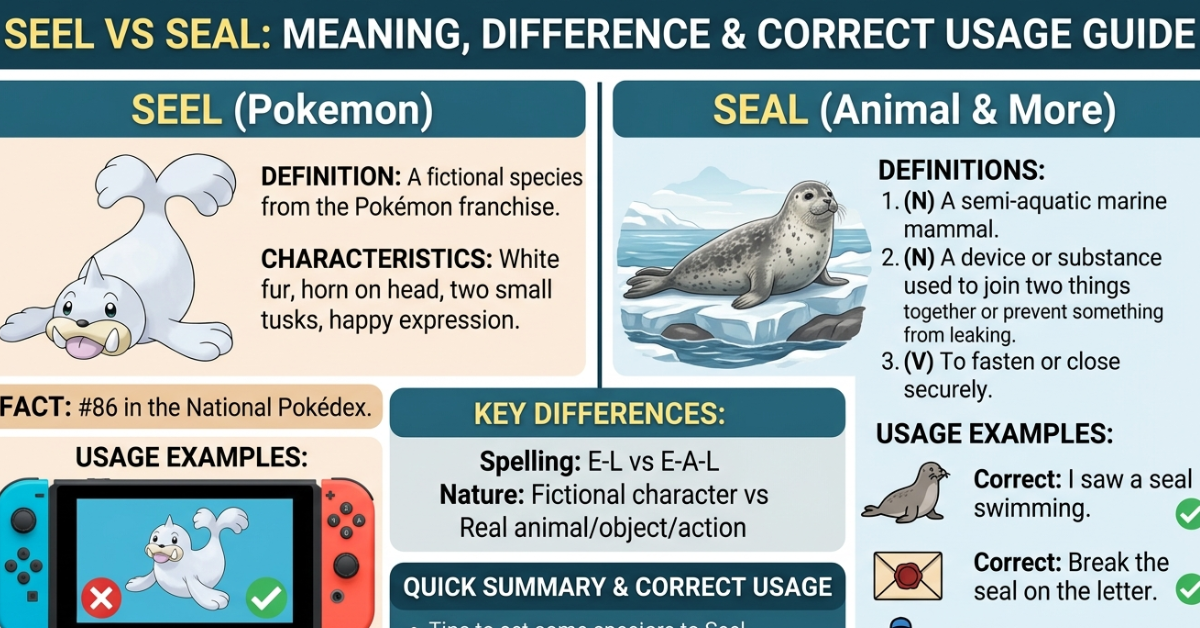
Seel vs Seal: Key Differences
Understanding the difference becomes much easier when we compare them directly.
| Feature | Seal | Seel |
| Usage | Common in modern English | Rare, archaic |
| Meaning | Animal, stamp, or to close | To sew or close (old usage) |
| Context | Everyday communication | Historical/falconry context |
| Relevance | Highly relevant today | Mostly obsolete |
In short, seal is practical and widely used, while seel is historical and rarely seen.
Why People Confuse Seel vs Seal
The confusion mainly happens due to:
1. Similar Pronunciation
Both words sound almost identical, making it hard to distinguish when spoken.
2. Spelling Similarity
Only one letter differs, which increases spelling mistakes in writing.
3. Lack of Awareness
Most people are unaware that seel even exists, so they assume every usage should be seal.
Easy Examples to Understand the Difference
Let’s simplify the usage with clear examples:
Seal Examples
- The envelope was carefully sealed.
- A seal swam near the iceberg.
- The contract requires an official seal.
Seel Examples
- The old text mentioned how hunters would seel birds’ eyes.
- Seel is no longer used in modern English.
These examples make the distinction between seel vs seal much clearer in practical usage.
When Should You Use Seal or Seel?
If you’re writing in modern English, the rule is simple:
Use “Seal” when:
- Talking about animals
- Referring to closing something
- Mentioning official stamps or marks
Use “Seel” when:
- Studying historical English
- Reading old literature
- Discussing falconry practices
For almost all real-life situations, seal is the correct choice.
Common Mistakes People Make
Here are some common errors related to seel vs seal:
- Writing “seel the envelope” instead of “seal the envelope”
- Assuming seel is a spelling variation of seal
- Using seel in modern communication (which is incorrect)
Avoiding these mistakes will improve your grammar accuracy instantly.
Quick Memory Trick
If you ever get confused, remember this simple trick:
- Seal = Still alive in modern English
- Seel = Something from the past
This mental shortcut helps you choose the correct word instantly.
FAQs About Seel vs Seal
1. Is seel a real English word?
Yes, but it is archaic and rarely used today.
2. What is the main difference between seel vs seal?
Seal is modern and widely used, while seel is an old term mostly found in historical texts.
3. Can I use seel in daily writing?
No, it is not recommended for modern writing or communication.
4. Is seal only used for animals?
No, seal also means to close something or an official stamp.
5. Why do people confuse seel vs seal?
Because they sound similar and differ by only one letter.
Conclusion
Understanding seel vs seal is actually quite simple once you break it down. One is a common, everyday English word with multiple meanings, while the other is an old, rarely used term from historical contexts.
If you stick to modern usage, seal is almost always the correct choice. Knowing this difference not only improves your grammar but also helps you write more confidently and accurately.
So next time you come across seel vs seal, you’ll know exactly which one belongs in your sentence.