Foreword vs Forward: Meaning, Differences & Usage

The confusion between Foreword vs Forward is more common than you might think. These two words look similar, sound slightly alike in quick reading, and often trip up writers, students, and even professionals. But here’s the truth—they have completely different meanings and uses.
In this article, we’ll break down Foreword vs Forward in a simple, practical way so you can confidently use both words without second-guessing yourself. Whether you’re writing a book, an email, or just improving your English skills, this guide will make things crystal clear.
What Does “Foreword” Mean?
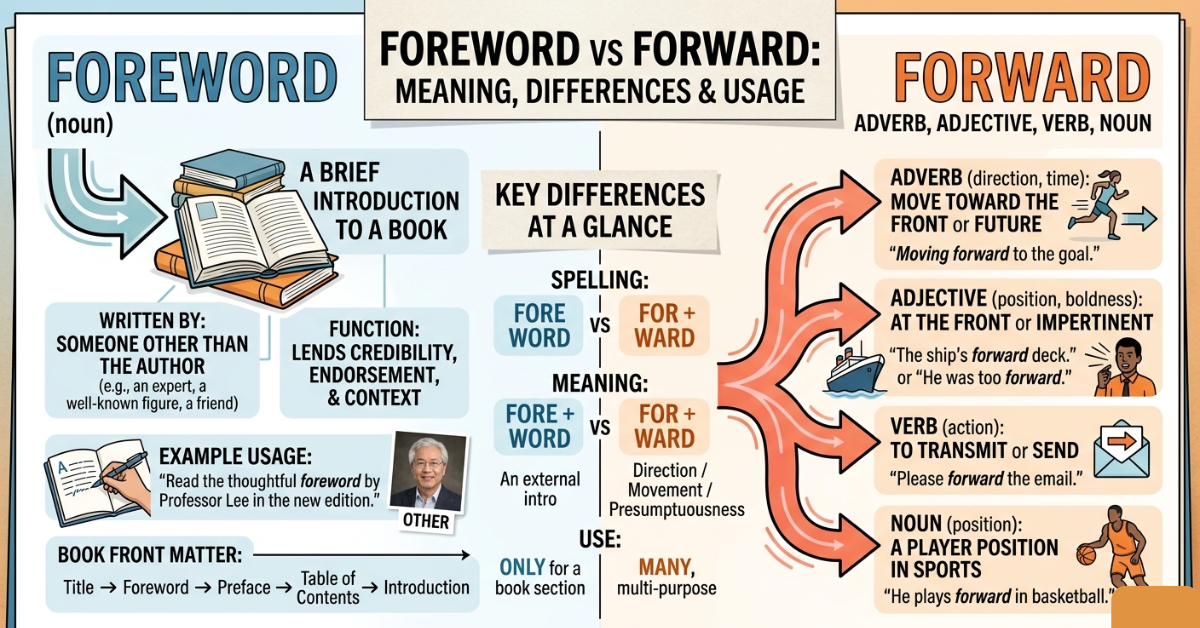
A foreword is a short introductory section found at the beginning of a book. It is usually written by someone other than the author, often an expert, celebrity, or respected figure in the field.
The purpose of a foreword is to:
- Introduce the book’s importance
- Highlight the author’s credibility
- Give readers context before they start reading
Think of it as a “warm welcome note” to the book.
Example:
A famous writer might write a foreword for a new novelist to introduce their work and encourage readers to trust the book’s value.
What Does “Forward” Mean?
Forward is a versatile English word used in multiple contexts. It can function as an adjective, adverb, noun, or verb.
Common meanings include:
- Moving ahead in direction or position
- Sending something onward (like forwarding an email)
- Looking ahead in time or progress
Examples:
- “Move forward in life with confidence.”
- “Please forward this message to your manager.”
Unlike a foreword, which belongs to books, “forward” is used in everyday communication and movement.
Foreword vs Forward: Key Differences
Understanding Foreword vs Forward becomes easier when you compare them side by side.
1. Meaning
- Foreword: An introduction in a book
- Forward: Direction, movement, or action of sending ahead
2. Usage Context
- Foreword: Literary and publishing world
- Forward: Daily English usage
3. Part of Speech
- Foreword: Noun only
- Forward: Noun, verb, adjective, adverb
4. Pronunciation Hint
- Foreword: Sounds like “FOR-word” (with emphasis on “fore”)
- Forward: Sounds like “FOR-ward” (smooth directional flow)
Common Mistakes People Make
Even confident writers sometimes mix up Foreword vs Forward. Here are the most common errors:
- Using “forward” when referring to book introductions
- Assuming both words mean “ahead”
- Spelling mistakes in formal writing or academic work
- Misuse in emails and publishing content
A simple trick? Remember that foreword belongs only to books.
Easy Memory Trick to Remember the Difference
If you struggle to remember Foreword vs Forward, this simple trick helps:
- Foreword = “Forward of a Book” (but spelled differently)
- Forward = everything about direction or sending ahead
Another way to remember:
- Foreword → “before the word starts” (introduction)
- Forward → “moving forward in life”
Why This Difference Matters in Writing
Using Foreword vs Forward correctly improves your writing clarity and professionalism. Small mistakes like this can change meaning or make writing look careless, especially in:
- Academic papers
- Business emails
- Book publishing
- Competitive exams
Clear word usage builds stronger communication skills and leaves a better impression on readers.
FAQs about Foreword vs Forward
1. What is the main difference between Foreword vs Forward?
The main difference is that a foreword is a book introduction, while forward refers to direction, movement, or sending something ahead.
2. Can “forward” be used in books?
Yes, but only in general sense like “move forward,” not as an introduction section. The correct term for book introduction is foreword.
3. Is foreword always written by someone else?
Usually yes. A foreword is typically written by someone other than the author to endorse or introduce the book.
4. Why do people confuse Foreword vs Forward?
They look and sound similar, but their meanings and usage are completely different, which leads to confusion.
5. What is the easiest way to remember the difference?
Remember: foreword belongs to books, forward belongs to movement or direction.
Conclusion
Understanding Foreword vs Forward is a small but powerful step toward improving your English accuracy. While one belongs to the world of books and introductions, the other is all about direction, progress, and action.
Once you clearly understand the difference, you’ll avoid one of the most common English mix-ups with ease. Keep practicing, stay mindful of context, and your writing will naturally become more polished and confident.