Have you ever been asked a simple question like “how’s your day going?” and wondered how to respond naturally? This everyday phrase is one of the most common ways people start conversations and show genuine interest in someone’s life.
Instead of being just small talk, it helps build connection, improve communication, and make interactions feel more human and friendly. In this guide, we’ll break down its meaning, usage, examples, and better ways to use it in real conversations.
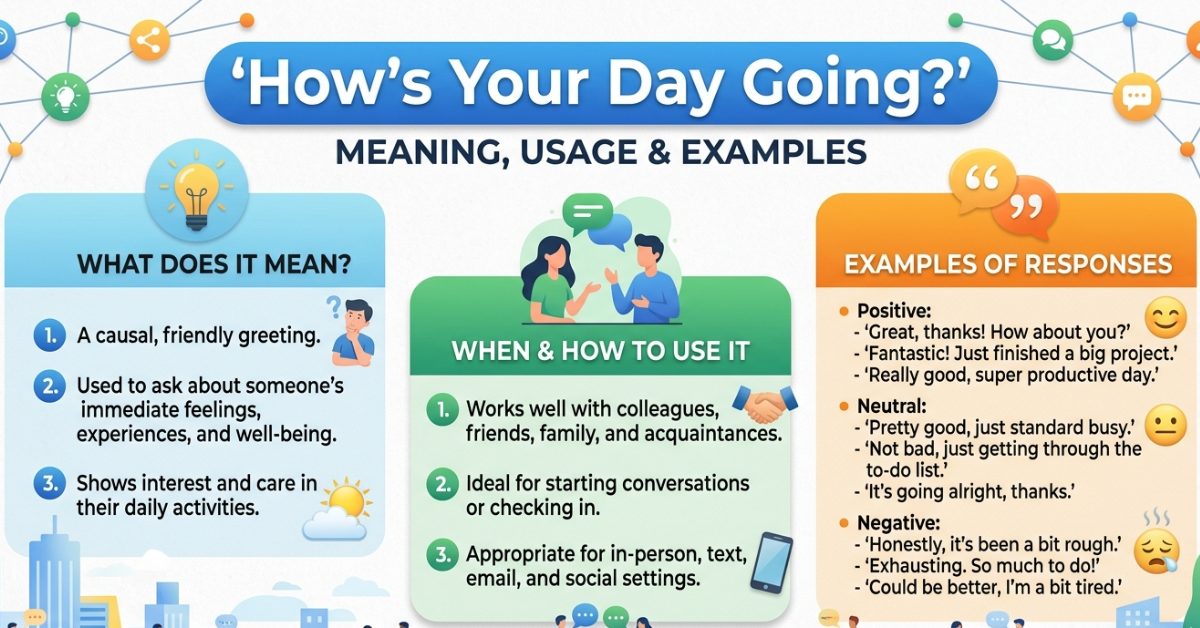
What Does “How’s Your Day Going?” Mean?
This phrase is a casual way of asking someone about their current experience or mood during the day.
Simple meaning:
- How is your day progressing?
- Are things going well for you today?
- What has your day been like so far?
It is commonly used in informal conversations instead of more formal greetings.
Why People Use This Phrase in Daily Life
People use this expression for more than just politeness. It plays an important role in social interaction.
1. Builds emotional connection
It helps people feel noticed and valued.
2. Starts natural conversations
It removes awkward silence and encourages dialogue.
3. Shows care and attention
Even a short question can show genuine concern.
4. Strengthens relationships
Regular check-ins help maintain friendships and trust.
When to Use This Greeting
You can use this phrase in many everyday situations:
- Talking to friends or classmates
- Messaging someone casually
- Starting workplace conversations
- Checking in on someone after a busy day
Example:
- “Hey, how’s your day going so far?”
- “It’s been a while—how’s your day been?”
- “Just checking in, how are things going today?”
Natural Alternatives You Can Use
To sound more natural and avoid repetition, try these variations:
Casual options:
- How’s everything going today?
- What’s your day been like?
- How are things on your side?
Friendly and caring:
- Hope your day is going well
- Everything okay today?
- How have you been today?
These variations keep conversations fresh and natural.
Psychological Impact of Simple Check-ins
Small greetings like this actually have emotional value.
They can:
- Reduce stress by encouraging expression
- Improve mood through social interaction
- Build stronger human connection
- Make communication feel more meaningful
Even a short message can positively impact someone’s day.
Common Mistakes to Avoid
- Repeating the same phrase too often
- Using it without real interest
- Asking in overly formal situations
- Ignoring the response afterward
Good communication is about both asking and listening.
Real-Life Conversation Examples
Example 1: Friendly Chat
A: “Hey! How’s everything going today?”
B: “Pretty good, just finished my work.”
Example 2: Workplace
A: “Good morning, how’s your day going so far?”
B: “Busy but productive.”
Example 3: Casual Check-in
A: “Long time no talk, how have you been?”
B: “It’s been a hectic day, but I’m managing.”
FAQs
1. Is this phrase grammatically correct?
Yes, it is commonly used in spoken English, although slightly informal.
2. What is a good reply?
You can say:
- “It’s going well, thanks!”
- “Pretty good so far.”
- “A bit busy but okay.”
3. Can I use it in professional emails?
It’s better to use “How are you today?” in formal writing.
4. Is it the same as “How are you?”
Not exactly. This phrase focuses more on the current day rather than general well-being.
5. Why do people ask this daily?
To maintain connection and show ongoing interest in others.
Conclusion
Simple daily greetings like this may seem small, but they play a big role in building relationships and improving communication. Instead of focusing only on words, the real value comes from the intention behind them.
Using natural variations and speaking with genuine interest can make your conversations more meaningful and engaging.