Tweak vs Tweek: Meaning, Difference & Usage Guide

The confusion between tweek vs tweak is more common than you might think, especially when typing quickly or learning English spelling rules. The correct form is tweak, but many people mistakenly write tweek.
In this guide, we’ll break down the meaning, correct usage, and differences between tweek vs tweak so you never mix them up again. You’ll also see real examples, common errors, and simple tips to remember the right spelling.
What Does “Tweak” Mean?
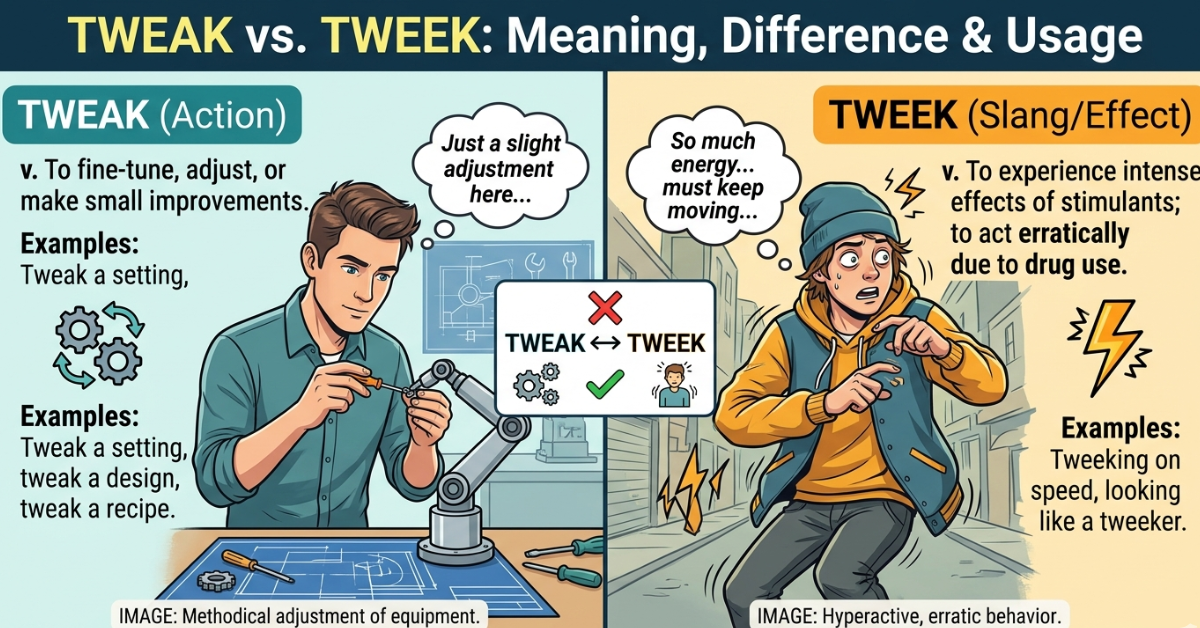
The word tweak is a verb that means to make small adjustments or improvements to something. It is commonly used in writing, design, technology, and everyday communication.
Meaning of tweak:
- To adjust slightly
- To improve or refine
- To change something in a minor way
Examples:
- I need to tweak my essay before submission.
- The engineer will tweak the software settings.
- She tweaked the design to make it more modern.
This is the correct spelling used in English dictionaries and professional writing.
What Does “Tweek” Mean?
Unlike tweak, the term tweek is not a standard English word. It is often a misspelling caused by typing errors or incorrect pronunciation assumptions.
Key points about “tweek”:
- Not recognized in formal English
- Common typo of “tweak”
- Sometimes seen in informal texting or online posts
If you are searching for tweek vs tweak, remember that “tweek” has no official meaning in grammar or vocabulary rules.
Tweek vs Tweak: Key Differences
Understanding tweek vs tweak becomes simple when you compare them side by side.
1. Spelling
- Tweak → Correct
- Tweek → Incorrect
2. Usage
- Tweak is used in professional and casual English
- Tweek is generally a spelling mistake
3. Meaning
- Tweak = to adjust or improve something
- Tweek = no defined meaning in standard English
4. Context
- Tweak appears in writing, editing, coding, design
- Tweek appears mostly as a typo or autocorrect error
Why Do People Get Confused?
The confusion in tweek vs tweak usually happens because:
- The pronunciation sounds similar
- Fast typing leads to extra “e”
- Autocorrect sometimes suggests incorrect forms
- Learners assume English spelling follows phonetics strictly
A simple trick: if you’re talking about improving something, it’s always tweak.
Common Mistakes with “Tweak”
Here are some frequent errors people make:
- Writing “tweek the settings”
- Saying “I will tweek it later”
- Using it in formal documents
Correct versions:
- “I will tweak the settings”
- “Let me tweak the design”
Examples of “Tweak” in Sentences
To fully understand tweek vs tweak, here are practical examples:
- The designer will tweak the logo before final approval.
- You can tweak your resume to make it stronger.
- The doctor may tweak the dosage if needed.
- I just need to tweak a few lines of code.
These examples show how versatile the word is in real communication.
FAQs About Tweek vs Tweak
1. Is “tweek” a correct word?
No, “tweek” is not a correct English word. The correct spelling is tweak.
2. What does “tweak” mean in simple words?
It means to make small changes or improvements to something.
3. Why do people write “tweek” instead of “tweak”?
It usually happens due to typing errors, pronunciation confusion, or autocorrect mistakes.
4. Is “tweak” formal or informal?
“Tweak” is both formal and informal and is widely used in professional writing.
5. How can I remember the correct spelling?
Think of “tweak” as something you “fix or adjust slightly”—and remember it has no extra “e”.
Conclusion
Understanding tweek vs tweak is simple once you know the rule: tweak is the correct spelling, while tweek is just a common mistake. Whether you’re editing a document, adjusting a design, or refining an idea, always use tweak when referring to small improvements.
Now that you know the difference, you can confidently use the right spelling in your writing and avoid one of the most common English errors.